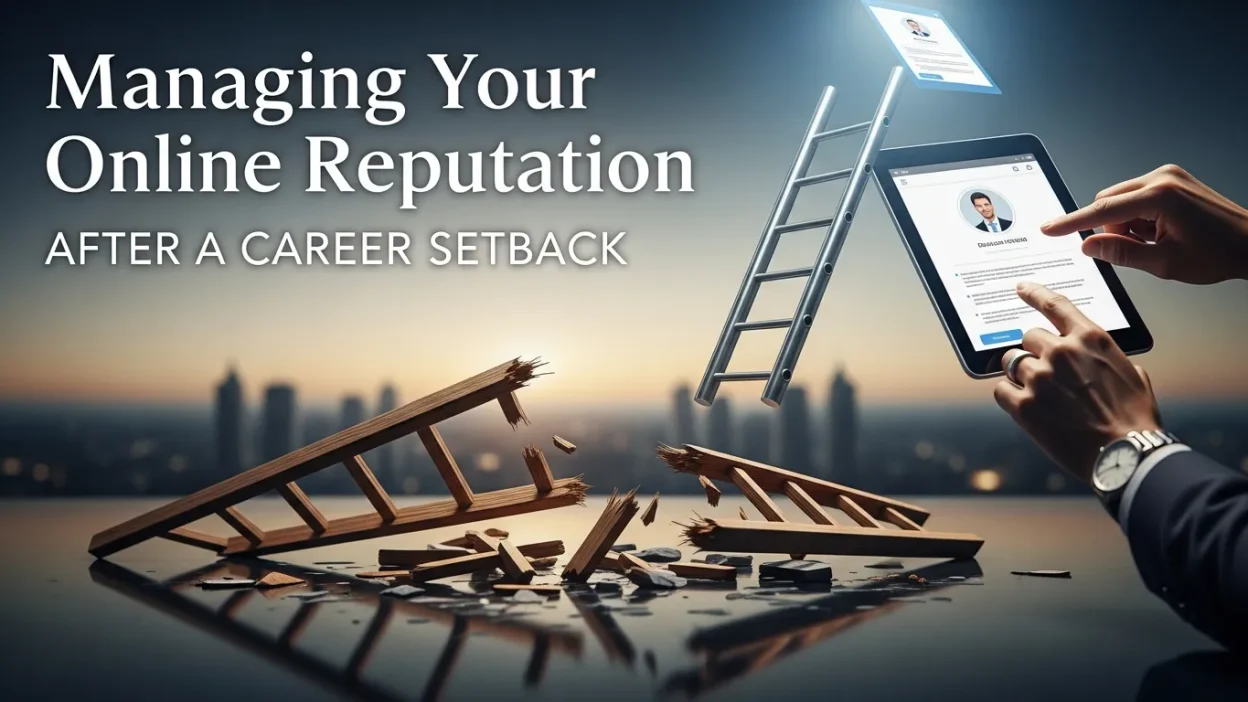
In the digital age, a single misstep can ripple across the web instantly. Managing your online reputation is the definitive skill for turning career setbacks into powerful comebacks.
This comprehensive guide details how managing your online reputation requires a blend of emotional intelligence, SEO strategy, and advanced technology. We explore damage assessment, the psychology of apologies, AI-powered sentiment monitoring, and content suppression techniques designed to restore your professional credibility and build a resilient digital brand for the future.
Managing Your Online Reputation After a Career Setback
Your digital footprint is your modern-day resume. Whether you are an executive, an entrepreneur, or a public figure, the way you appear in search results determines your access to future opportunities. When a crisis hits—be it a viral negative review, a public disagreement, or a professional failure—the process of managing your online reputation becomes your highest priority.
Why Online Reputation Management (ORM) is Critical
In 2026, the stakes for your digital image have never been higher. Online reputation management is the practice of shaping public perception by influencing the information available about an entity online.
The Statistics of Digital Trust
- 85% of consumers trust online reviews as much as personal recommendations.
- 75% of HR professionals are required to conduct online research on candidates before an interview.
- Search engine reputation management impacts your “prominence” score in local and global search algorithms.
Managing your online reputation isn’t just about hiding mistakes; it’s about brand positioning and ensuring that the narrative reflects your current values and expertise.
Understanding the Anatomy of a Reputation Crisis
A setback typically stems from one of three areas: professional performance, personal conduct, or systemic failures. Understanding the source is the first step in digital reputation management.
Common Catalysts for Career Setbacks
- Negative Feedback & Reviews: Systematic complaints on platforms like Glassdoor or Google.
- Social Media Scandals: Tone-deaf posts or misunderstood comments that trigger viral social media campaigns against you.
- Deepfakes & Misinformation: The rise of Deepfakes, AI reputation management issues, where non-consensual or fake content targets your image.
- Legal or Ethical Missteps: Publicly accessible records that tarnish your personal brand strategy.
6 Strategic Steps to Recovering Your Digital Image
1. Conduct a Comprehensive Digital Audit
You cannot fix what you cannot see. Start by learning how to monitor business reputation online.
- Incognito Search: Google yourself from a clean browser to see what a stranger sees.
- Social Listening: Use online reputation management with AI and social listening tools to track sentiment on Reddit, X, and industry forums.
- AI-Powered Sentiment Analysis: Leverage AI to categorize mentions as positive, negative, or neutral to identify the “hot zones” of the crisis.
2. The Art of the Strategic Apology
A defensive posture usually accelerates a crisis. Managing your online reputation often requires a “human-first” approach.
- Accountability: Acknowledge the specific error without shifting blame.
- Corrective Action: Detail the building business recovery plan you have put in place.
- Brand Voice: Ensure your apology matches your established brand personality in marketing.
“A sincere apology is the first step toward recovering online reputation. It shifts the focus from the mistake to the solution.”
3. Implementing Systemic Improvements
Empty promises won’t survive the scrutiny of 2026. You must improve reputation management by fixing the root cause. If the setback was a product failure, invest in CPG brand marketing quality controls. If it were a service issue, enhance your customer journey mapping to ensure better future outcomes.
4. Content Suppression and Positive Asset Creation
The most effective way to manage negative search results is to “push them down.” This involves search engine reputation management and SEO services.
- Video Testimonials: Use video testimonials in online reputation strategies to showcase satisfied clients.
- Thought Leadership: Publish articles on high-authority sites to build brand authority.
- Wikipedia Page Management: For public figures, ensuring your Wikipedia entry is neutral and cited is vital for personal reputation management.
5. Leveraging Social Media for Rapport
Social media is where emotional marketing happens. Managing your online reputation on these platforms involves:
- Real-Time Trend Marketing: Engaging with current positive trends to show you are forward-thinking.
- Building Brand Consistency: Posting regular updates that reinforce your brand purpose development.
- AMA (Ask Me Anything): Using transparency to dispel rumors and humanize your personal brand.
6. Professional Review Management
Reviews are the “social proof” of the digital age.
- Customer Review Management: Actively responding to every review shows engagement.
- How to Manage a Negative Review: Reach out privately to resolve issues, then ask for a review update.
- Removing Negative Content: If a review is fake or violates terms of service, pursue negative content management through official channels.
Advanced Tools for 2026: AI and ORM
Managing your online reputation is now an automated process for many high-level professionals.
Recovery is a marathon, not a sprint. Sustainable online reputation management focuses on brand longevity challenges.
Personal Branding vs. Reputation
It is crucial to understand the difference between personal branding and reputation. Your brand is what you say about yourself (your brand positioning strategy); your reputation is what others say about you (brand perception in marketing). A successful recovery aligns these two elements perfectly.
Building a Crisis Management Plan
Don’t wait for the next setback. Develop a reputation management policy that includes:
- Brand Crisis Management protocols.
- Social Media Management guidelines.
- Ethical Link Building to maintain search dominance.
The Psychology of Social Proof in Reputation Recovery
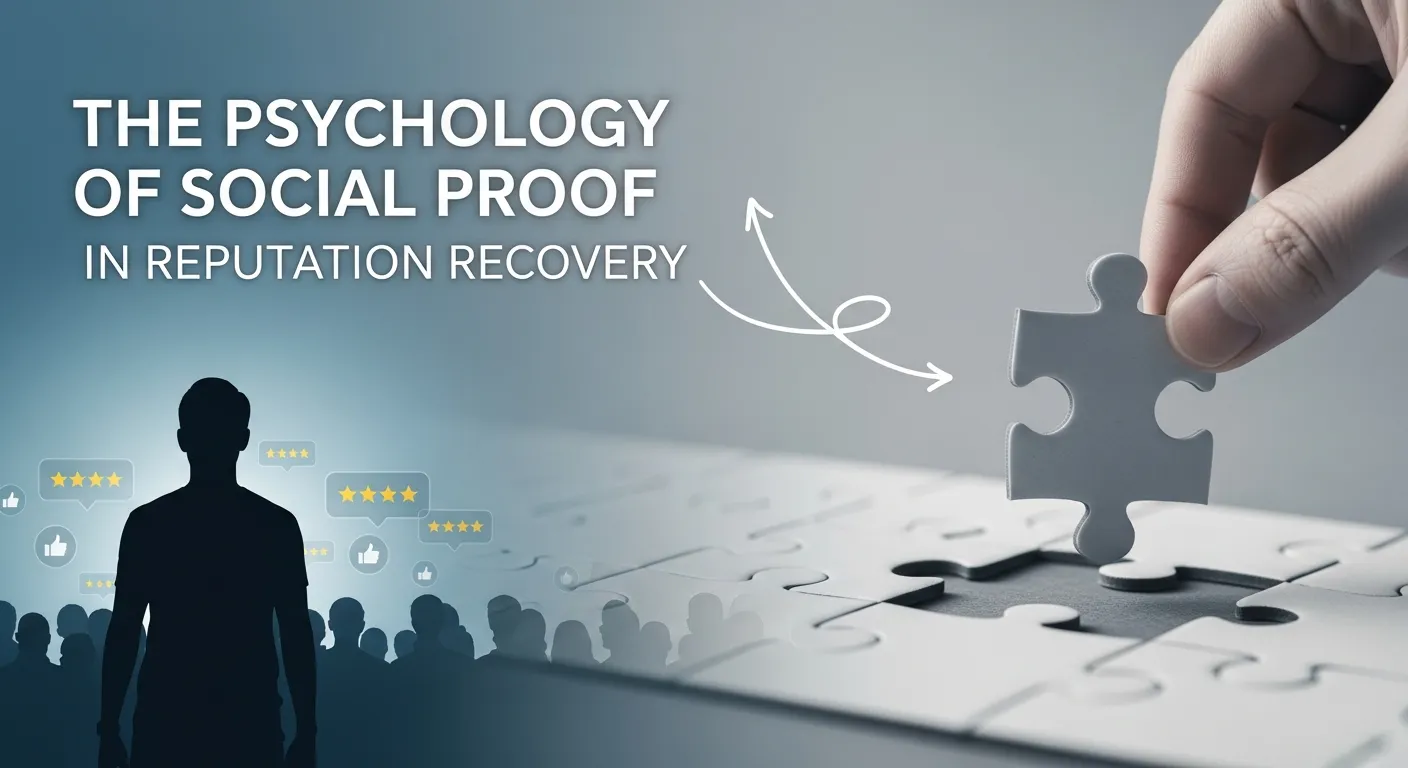
The foundation of managing your online reputation lies in the psychology of social proof. When a career setback occurs, the public’s “confirmation bias” often leads them to look for further negative information. To counteract this, you must flood the digital space with high-quality, authentic social signals that challenge the negative narrative. Humans are evolutionarily wired to trust the “herd,” and by strategically showcasing new endorsements, you signal that your professional value remains intact. Consistency is your greatest ally—sporadic updates won’t suffice. You need a steady stream of positive reinforcement to shift the collective consciousness of your audience and recalibrate brand perception in marketing.
- Harness Micro-Influencers: Partner with niche experts to validate your comeback within specific professional circles.
- Showcase Renewed Partnerships: Publicly highlight new collaborations to signal that industry leaders still trust your brand.
- Leverage User-Generated Content: Encourage your community to share their positive experiences to create a self-sustaining trust loop.
Leveraging AI-Powered Sentiment Analysis for Early Warning
In 2026, managing your online reputation is impossible without AI-powered sentiment analysis. These tools use natural language processing to understand the nuance and intent behind online mentions, going far beyond simple keyword matching. By implementing online reputation management with AI and social listening, you can detect a shift in public mood before it manifests as a viral crisis. This “early warning system” allows you to address grievances in their infancy, preventing a small spark from becoming a digital wildfire. AI can categorize feedback into “emotional buckets,” helping you see if a complaint is an isolated incident or a systemic issue that requires a brand crisis management response.
- Monitor Velocity of Mentions: Use AI to flag when negative sentiment begins to spread faster than your average engagement rate.
- Segment by Platform: Tailor your response based on whether the sentiment shift is happening on professional networks (LinkedIn) or visual platforms (TikTok).
- Automate Triage: Set up AI triggers to alert your legal or PR team the moment high-risk “crisis keywords” are detected.
The Role of Video Testimonials in Rebuilding Authority
One of the most effective tools for managing your online reputation after a misstep is the use of video. Building trust with video testimonial assets is superior to text because the human brain processes visual and auditory cues of sincerity much more effectively. A video allows the audience to see micro-expressions and hear tone, which are essential for gauging honesty. When a peer or client speaks on your behalf, it creates a “halo effect” that text reviews simply cannot replicate. High-quality video testimonials and online reputation strategies serve as a powerful shield, pushing down negative search results through sheer engagement and Video SEO authority.
- Prioritize Raw Authenticity: In 2026, low-production “selfie-style” testimonials often feel more trustworthy than over-produced corporate videos.
- Optimize for Search: Use transcriptions and closed captions to ensure search engines can index the positive keywords spoken in the video.
- Strategic Placement: Embed these videos on your “About” page and Google Business Profile to capture immediate user attention.
Advanced Content Suppression and Search Engine Dominance
When managing your online reputation, you often face the challenge of “sticky” negative content. This is where advanced search engine reputation management comes into play. The goal is not just to create content, but to create “authoritative pillars” that Google’s algorithm prioritizes. By dominating the top 10 search results with assets you control—such as a personal website, professional portfolios, and guest posting services—you effectively bury negative content on page two. This technical process requires SEO services expertise to ensure your positive assets have the backlink profiles needed to outrank older, negative news stories or reviews.
- Claim All Profile Real Estate: Ensure you have active, optimized profiles on every major platform, from Amazon Author pages to industry-specific directories.
- Utilize High-DA Platforms: Publish thought leadership on sites like Medium or Substack to leverage their existing search authority.
- Internal Link Strategy: Link your positive assets together to create a “moat” of authoritative content that is difficult for negative results to penetrate.
Crisis Communication and the Ethics of Transparency
A critical component of managing your online reputation is the “transparency paradox.” While it may be tempting to hide negative comments, doing so often triggers the “Streisand Effect,” where the act of suppression draws more attention. Instead, a proactive online reputation management strategy embraces radical transparency. By owning the narrative and speaking openly about the setback, you disarm your critics. This involves creating a brand crisis management plan that prioritizes the “Three A’s”: Acknowledge, Apologize, and Act. This ethical approach builds brand resilience strategies that foster a deeper, more forgiving connection with your audience.
- Avoid “Corporate Speak”: Use a human, relatable tone in your apologies to avoid sounding like you are reading from a legal script.
- Create a Dedicated FAQ: Host a “Facts” page that addresses the setback directly to prevent the spread of misinformation.
- Update the Public Regularly: Don’t just apologize once; provide ongoing updates on the progress of your corrective actions.
Digital Payment Solutions and Reputation Security
In 2026, managing your online reputation extends to financial security. For entrepreneurs, a reputation crisis can lead to “de-platforming” from digital payment solutions if the perceived risk becomes too high. Maintaining a clean digital record is essential for keeping your merchant accounts and payment gateways active. If your business is flagged due to a surge in negative reviews, it can trigger an audit of your payment gateway solutions. Integrating your CRM with your digital payment solution alerts can help you identify if a cluster of chargebacks is linked to a targeted reputation attack, allowing for a swift defensive response.
- Monitor Transaction Sentiment: Watch for spikes in refunds or disputes that correlate with negative social media trends.
- Diversify Gateways: Maintain relationships with multiple payment providers to ensure business continuity during a reputation audit.
- Maintain Compliance Records: Keep a documented trail of how you resolve customer complaints to present to financial underwriters if questioned.
Personal Branding vs. Reputation: A Strategic Alignment
To excel at managing your online reputation, you must master the balance of personal branding vs reputation. While branding is the proactive projection of who you want to be, reputation is the external reflection of who people believe you are. A career setback usually creates a “gap” between these two entities. Closing this gap is the primary goal of recovering online reputation. Your personal brand strategy should shift from “promotion” to “restoration,” focusing on themes of resilience and growth. By using a brand strategy framework, you can audit your messaging to ensure your brand and reputation are in perfect, authentic alignment.
- Conduct a Brand-Reputation Audit: Survey your most loyal clients to see if their perception of you matches your intended brand voice.
- Update Your Visual Identity: Sometimes a subtle “brand refresh” can signal a new chapter and a clean break from a professional setback.
- Focus on Value over Ego: Shift your content from self-promotion to solving audience problems to rebuild your “expert” status.
Managing Your Online Reputation in Hyper-Local Markets
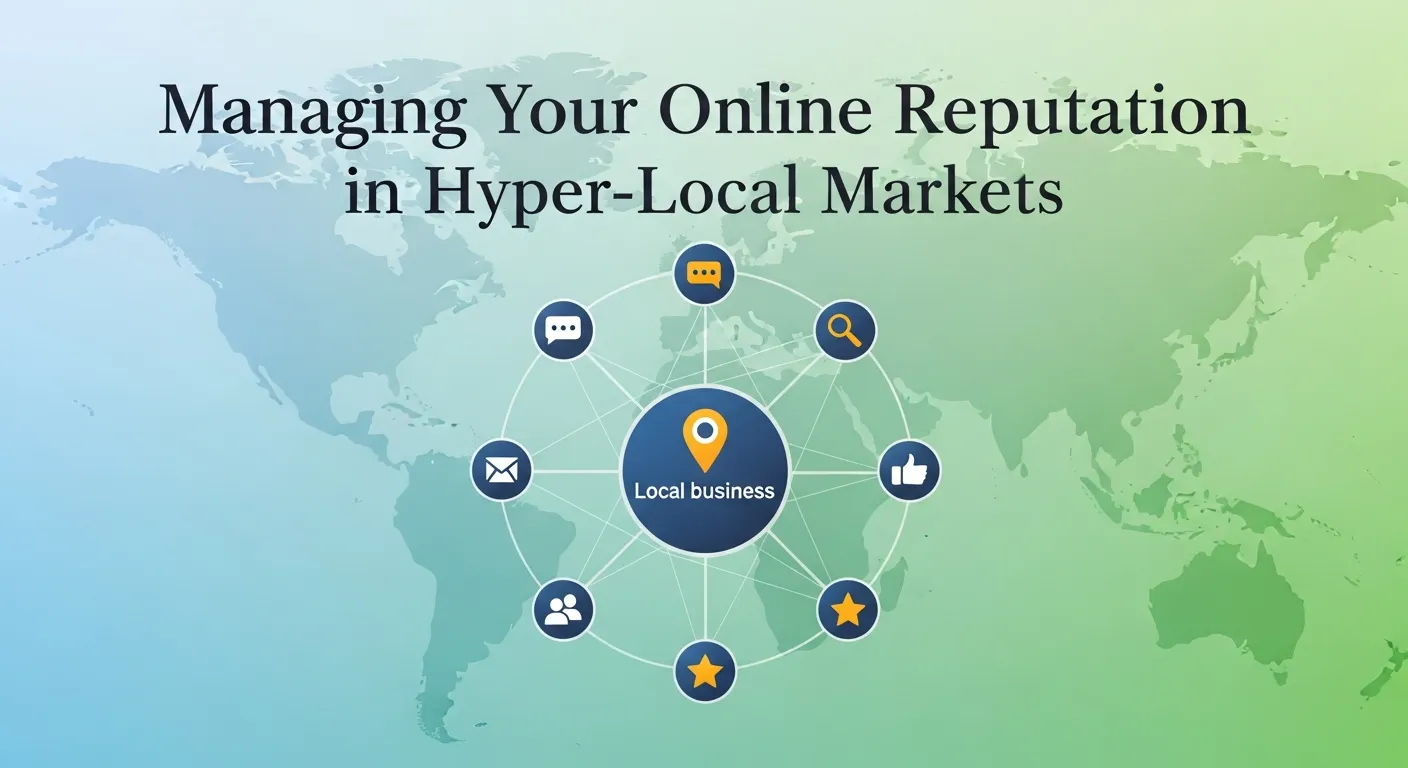
For many, the most important aspect of managing your online reputation happens at the neighborhood level. Local SEO services play a massive role in how you are perceived by your immediate community. A single negative thread on a neighborhood app can be more damaging than a national news story for local consultants or real estate agents. Therefore, online reputation tips for real estate agents often focus on “hyper-local” engagement and monitoring customer feedback within community groups. By becoming a “local authority,” you build a buffer of goodwill that protects you during a setback and keeps your Google Business Profile healthy.
- Engage in Local Forums: Actively participate in community discussions (Nextdoor, Reddit) to build a “human” presence before a crisis hits.
- Sponsor Local Events: Visible community support creates a “bank of goodwill” that neighbors remember during a public misstep.
- Local Review Generation: Specifically ask local clients to mention the city or neighborhood in their reviews to boost local search relevance.
The ROI of Online Reputation Management and Recovery
Understanding the ROI of online reputation management is essential for justifying the investment in recovery. A damaged reputation has a quantifiable cost in lost leads and higher recruitment costs. Conversely, managing your online reputation effectively can lead to a “Brand Premium,” where customers pay more for a trusted name. By tracking metrics like “Sentiment Score” and “Branded Search Volume,” you can see the tangible progress of your building business recovery plan. Investing in reputation management in digital marketing is an investment in your future earning potential, ensuring your digital presence remains a high-yield asset.
- Track Conversion Correlation: Measure how your sales fluctuate in direct relation to your average star rating across platforms.
- Calculate “Cost of Inaction”: Estimate the potential revenue lost if a negative search result remains on page one for six months.
- Monitor Recruitment Ease: A better reputation often leads to lower costs in hiring top-tier talent who want to work with “clean” brands.
Future Opportunities: Agentic AI and Predictive ORM
Looking toward the future, the next frontier is Agentic AI. These are autonomous agents that can manage your digital presence 24/7. In 2026, we will see the rise of “Personal Brand Agents” that use predictive trend marketing to suggest content that will resonate most with your audience. These agents will handle customer relationship management at scale, ensuring every interaction reinforces your brand voice. Furthermore, AI-driven trend forecasting will allow you to see where public opinion is heading, giving you the chance to pivot your brand positioning strategy before a trend becomes a crisis, ensuring your reputation is always one step ahead.
- Deploy AI Chatbots for 24/7 Support: Ensure that frustrated customers always have a path to resolution, even outside of business hours.
- Use AI for Content Calendars: Let machine learning analyze which types of “recovery content” get the most positive engagement in your industry.
- Predictive Sentiment Modeling: Run “what-if” scenarios through AI to see how the public might react to a specific announcement or apology.
Conclusion
Managing your online reputation after a setback is a testament to your resilience and strategic thinking. By combining AI-driven online reputation management with sincere human engagement and robust SEO, you can overwrite a negative past with a credible, authoritative future. Remember, a setback is not the end of your story—it is simply a pivot point toward a more authentic and transparent brand.
FAQs
1. How long does it take to rebuild an online reputation?
Rebuilding an online reputation is not instantaneous. Significant recovery usually requires three to nine months of consistent effort, depending on the severity of negative content and your search visibility strategy. The process involves publishing positive content, managing reviews, monitoring social media mentions, and using SEO techniques to suppress older or harmful results. Patience and persistence are critical because search engines reward sustained credibility and activity over quick fixes.
2. Can I delete negative search results from Google?
In most cases, you cannot remove negative content simply because it is unfavorable. Google only allows removal if the content violates legal standards, copyright, or its policies. The best strategy is suppression, which involves pushing positive content higher in search results, amplifying professional achievements, and responding strategically to criticism to improve public perception over time.
3. What is the ROI of online reputation management?
The ROI of ORM extends beyond immediate financial metrics. For individuals, it is measured in regained career opportunities, higher trust from peers, clients, and recruiters, and stronger personal credibility. For businesses, ORM increases conversion rates, customer retention, and brand equity. Essentially, the return on ORM is the ability to convert a neutral or negative digital presence into a tangible professional or business advantage.
4. How does AI help in managing your online reputation?
AI enhances ORM by providing real-time insights into public sentiment, monitoring trends, and detecting potential risks before they escalate. AI-powered sentiment analysis evaluates thousands of mentions, reviews, and social media posts in minutes, allowing proactive responses. Predictive trend alerts can signal emerging issues or opportunities, helping you address potential crises and highlight achievements strategically.
5. Is personal branding the same as ORM?
Personal branding and ORM are related but distinct. Personal branding is proactive—it focuses on creating and promoting the professional image you want to project. ORM, on the other hand, is both proactive and reactive; it protects, monitors, and repairs your online reputation, ensuring your personal brand aligns with public perception. Together, they work to maximize trust and credibility.
6. What should I do about a “Deepfake” attack?
Deepfake attacks involve synthetic media designed to misrepresent or damage your reputation. The best approach is to use specialized Deepfake AI reputation management services, which identify fake content, flag it for removal, and take legal or technical action if necessary. Quick detection and response are critical because synthetic content can spread rapidly across social media and search engines.
7. How do I handle a negative review that is actually true?
If a negative review reflects reality, the key is transparency and accountability. Acknowledge the issue, apologize sincerely, and demonstrate what you have done to correct it. This approach turns criticism into a growth opportunity, showing potential clients, employers, or peers that you are responsive, responsible, and committed to improvement.
8. Do I need a professional ORM service?
For minor online reputation issues, DIY tools and monitoring software may suffice. However, for significant career setbacks, high-profile public figures, or complex PR crises, professional ORM services are essential. Experts provide technical SEO, content suppression, and strategic communications that accelerate recovery and protect long-term credibility.
9. What is “Social Listening”?
Social listening involves tracking digital conversations about you across platforms, including news sites, social media, blogs, and forums. It allows you to understand public sentiment, identify potential risks, and engage strategically. For proactive ORM, social listening is essential—it ensures you are aware of both praise and criticism as it happens, enabling timely interventions.
10. How can I encourage more positive reviews?
Encouraging positive feedback requires a structured strategy. Make it easy for satisfied clients, colleagues, or partners to leave reviews or testimonials through email requests, follow-ups, or direct links. Video testimonials add authenticity and credibility, while text-based reviews on platforms like Google and LinkedIn strengthen search visibility and enhance your professional reputation over time.
Learn more about: The Growth Hack Nobody Talks About: Online Reputation Management