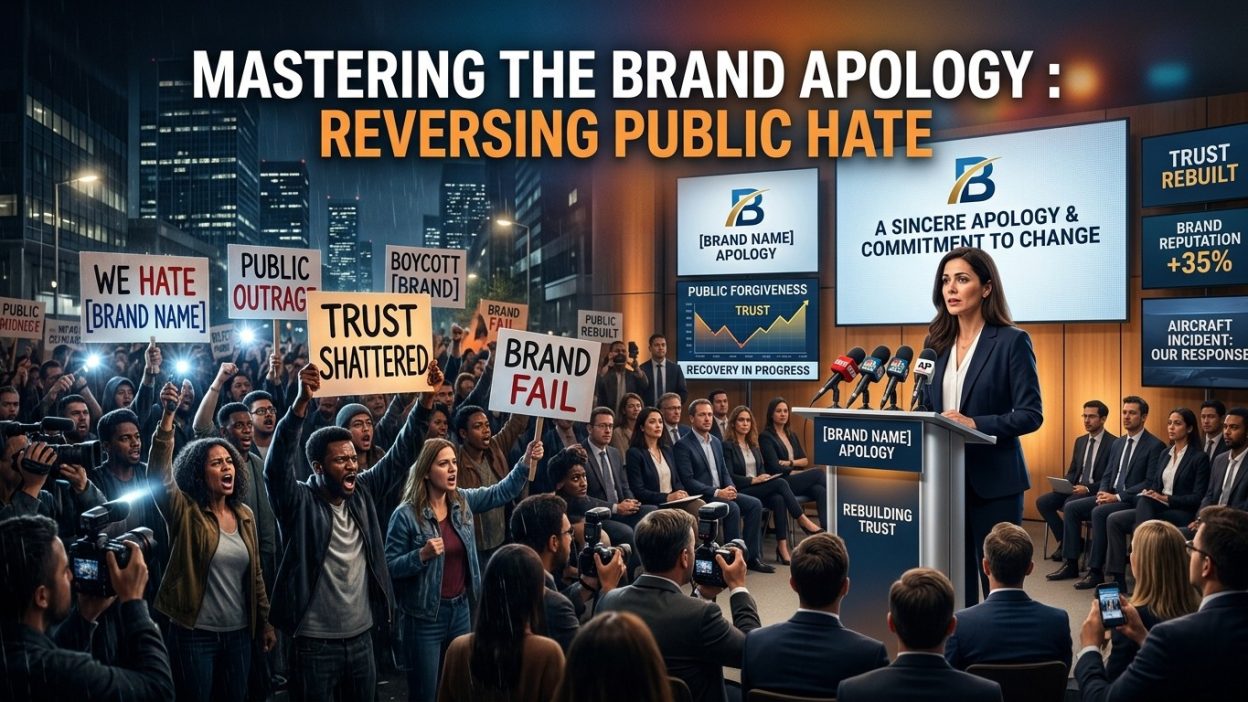
A strong apology can reduce anger, rebuild trust, and restart belief. Mastering the Brand Apology means acting fast, owning the problem, and showing change that people can actually see.
Mastering the Brand Apology is one of the most difficult skills in modern brand management because public trust can collapse faster than it was built. A brand can spend years building familiarity, but one insensitive message, one product failure, one leaked internal comment, or one poorly handled complaint can turn attention into hostility almost overnight. Mastering the Brand Apology matters because people do not only want a correction; they want to feel that the company understands why the situation hurt them in the first place. That emotional reality is what makes apology strategy different from ordinary marketing. A good apology is not just a statement. It is a trust repair mechanism.
Mastering the Brand Apology also matters because online audiences judge brands quickly and publicly. A slow response can look arrogant. A defensive response can look dishonest. A vague response can look manipulative. The challenge is not simply saying sorry. The challenge is showing that the company knows what it did, why people are upset, and what will change next. Mastering the Brand Apology requires this kind of clarity because public anger often grows when people feel ignored or talked down to. In that sense, apology is both a communication act and a relationship reset.
Mastering the Brand Apology is especially important because public hate is often more than criticism. Hate includes disappointment, betrayal, sarcasm, resentment, and sometimes a deep sense that the brand violated a social expectation. When that happens, a standard press note is usually not enough. The audience wants accountability. They want sincerity. They want signs that leadership is paying attention. Mastering the Brand Apology is therefore a strategic discipline that helps companies move from damage to recovery without pretending the damage never happened.
Why public anger spreads so quickly
Mastering the Brand Apology begins with understanding why public anger travels so fast. Social platforms reward emotional content, and anger is highly shareable because it signals identity and belonging. When people feel wronged, they often want others to validate that feeling. A brand that ignores this reality usually makes the backlash worse. Mastering the Brand Apology means recognizing that the first wave of outrage is only the beginning. The real issue is whether the company gives the audience a credible reason to calm down.
Mastering the Brand Apology also requires understanding that people do not respond only to facts. They respond to tone, timing, and perceived intention. If the brand seems to be hiding, the audience assumes guilt or indifference. If the brand seems to be correcting itself only because it was caught, the apology loses power. Mastering the Brand Apology is about reducing that suspicion by being direct enough to look accountable and humble enough to look human.
Mastering the Brand Apology becomes even more important when criticism becomes group-based rather than individual. People often rally around a public issue because it touches their values or their social identity. In those moments, the brand is no longer just defending a product. It is responding to a collective emotional event. That is why the apology has to be broader than a transaction fix. Mastering the Brand Apology means speaking to the emotional meaning of the event, not just the operational mistake.
The psychology of trust repair

Mastering the Brand Apology is really a trust repair process. Trust breaks when expectations are violated. Recovery begins when the audience sees three things: acknowledgment, responsibility, and action. If any one of those pieces is missing, the apology feels incomplete. Mastering the Brand Apology works because it gives the audience a sequence they can understand. First the brand admits the problem. Then it accepts responsibility. Then it shows the next step. That sequence matters because people relax when uncertainty becomes structured.
Mastering the Brand Apology also depends on empathy. A company can admit fault without sounding emotionally aware, and that often fails. People do not want robotic regret. They want recognition that the harm mattered. A useful apology speaks to the effect on the audience, not just the inconvenience to the company. Mastering the Brand Apology means putting the audience’s experience at the center of the response, because that is where trust was damaged in the first place.
Mastering the Brand Apology must also account for the fact that audiences look for consistency. If the public message says one thing while internal behavior says another, people notice. That is why recovery only works when communication and action match. A polished sentence cannot repair a pattern of behavior. Mastering the Brand Apology requires alignment between what the company says and what it does afterward. That consistency is what turns an apology into proof of change.
The role of timing
Mastering the Brand Apology depends heavily on timing. A fast response can stop speculation, but a rushed response can sound shallow. A slow response can allow facts to settle, but it can also appear careless. The best timing usually comes from acting quickly enough to show attention while still gathering enough truth to avoid misleading the public. Mastering the Brand Apology means finding that balance under pressure.
Mastering the Brand Apology also means knowing that silence can be interpreted as strategy. If the brand stays quiet too long, the audience may assume the company is waiting for the anger to pass. That assumption often increases resentment. A timely acknowledgment, even if short, can create space for a more complete response later. Mastering the Brand Apology uses timing to reduce uncertainty instead of feeding it.
Mastering the Brand Apology works best when the company has already thought through its response structure before a crisis happens. That preparation shortens decision time and reduces panic. Once the issue is public, every hour matters. Mastering the Brand Apology therefore starts before the apology itself, with internal readiness and decision clarity.
Building a response architecture
Mastering the Brand Apology is easier when the brand has a response architecture rather than improvising every time. This structure should define who speaks, who approves, who monitors the situation, and what kinds of incidents trigger a formal response. A clear architecture reduces confusion and prevents contradictory messaging. Mastering the Brand Apology is not just writing well; it is organizing response power so the right people move at the right time.
Mastering the Brand Apology also benefits from having different response levels for different situations. Not every issue needs a major public apology, but every issue does need a thoughtful evaluation. A small customer-service mistake may require a direct correction, while a larger reputational issue may require a broader public statement and follow-up plan. Mastering the Brand Apology means matching the response to the seriousness of the event.
Mastering the Brand Apology becomes much stronger when the response architecture includes listening systems. Social monitoring, customer support escalation, community feedback, and executive alerts all help the company see how the situation is unfolding. Without listening, the brand may respond to the wrong problem. Mastering the Brand Apology depends on real-time awareness because public perception changes quickly and often unpredictably.
What audiences want from a brand apology
Mastering the Brand Apology requires a clear understanding of audience expectations. People usually want the brand to admit the issue, explain what happened in plain language, and show how the mistake will be prevented in the future. They may also want a consequence, a repair, or a commitment. Mastering the Brand Apology does not mean promising everything. It means offering what is credible and useful.
Mastering the Brand Apology also means avoiding language that sounds overly polished or legalistic. If the apology reads like it was designed to protect the company rather than help the audience, trust drops. People are highly sensitive to that tone. Mastering the Brand Apology works better when the language feels direct, respectful, and plain. Clarity usually sounds more sincere than cleverness in moments of tension.
Mastering the Brand Apology should also reflect whether the audience feels personally harmed, socially offended, or generally disappointed. Different kinds of anger need slightly different responses. The company should not use one generic template for every crisis. Mastering the Brand Apology becomes more effective when it reflects the shape of the harm rather than simply stating that harm occurred.
Crisis teams and decision speed
Mastering the Brand Apology often depends on the quality of the internal response team. Crisis Management Teams need clear authority, calm judgment, and the ability to separate emotion from decision-making. If the team is disorganized, the apology can become inconsistent or delayed. Mastering the Brand Apology therefore requires internal leadership before external messaging.
Mastering the Brand Apology should also be supported by a Break Glass Crisis Management Plan. This is the emergency process that activates when the issue is serious enough to require immediate escalation. A good plan outlines thresholds, contacts, approval routes, and communication steps. Mastering the Brand Apology becomes easier when the organization already knows what to do under pressure instead of trying to design the process during the crisis itself.
Mastering the Brand Apology is stronger when the crisis team knows how to balance speed and accuracy. A response that is too slow can create a vacuum filled with rumor. A response that is too fast can miss important facts. Crisis teams need the discipline to act quickly while still respecting the complexity of the situation. Mastering the Brand Apology turns that discipline into a repeatable organizational habit.
Tone, language, and emotional framing
Mastering the Brand Apology is not only about what is said but how it is said. Tone affects whether people read the statement as sincere, defensive, patronizing, or detached. Words like “if anyone was offended” or “we regret any confusion” often weaken the message because they sound evasive. Mastering the Brand Apology means speaking in direct language that acknowledges reality without hiding behind vague phrasing.
Mastering the Brand Apology also means avoiding over-explaining. Too much explanation can feel like excuse-making, especially in the early stages of backlash. People usually want recognition first and details second. A useful apology starts with the impact, then explains the cause, then explains the fix. Mastering the Brand Apology relies on this order because emotional validation must come before technical detail.
Mastering the Brand Apology should also be emotionally proportionate. If the company sounds exaggeratedly dramatic about a small issue, the audience may roll its eyes. If the company sounds too small about a serious issue, the audience may feel insulted. Mastering the Brand Apology means calibrating the emotional register so it fits the gravity of the event. That calibration takes judgment and practice.
Public hate versus constructive criticism

Mastering the Brand Apology becomes much more difficult when criticism turns into public hate. Constructive criticism usually points to a problem and expects a fix. Public hate often includes anger, mockery, and moral judgment. That distinction matters because the response should not treat both situations the same way. Mastering the Brand Apology means understanding whether the audience wants correction, reassurance, justice, or all three.
Mastering the Brand Apology is harder when the brand itself becomes a symbol of a broader issue. In those cases, the apology is not only about the brand’s specific action. It is also about the social meaning the audience assigns to it. That is why the response should not be defensive or dismissive. Mastering the Brand Apology calls for humility because symbolic criticism tends to be emotionally charged and highly visible.
Mastering the Brand Apology also means knowing when not to argue. Sometimes the brand’s instinct is to prove that the criticism is unfair. But argument can sound like denial. If the audience is already upset, the company often needs to show listening before it shows logic. Mastering the Brand Apology works best when the brand earns the right to explain after first acknowledging the harm.
Rebuilding credibility after the first statement
Mastering the Brand Apology does not end with one post, one press note, or one video. In many cases, the first statement only opens the door to recovery. The brand then needs to demonstrate improvement through visible follow-up. That could include policy changes, customer support measures, product corrections, leadership accountability, or public updates. Brand Apology works when the apology becomes the start of change rather than the substitute for it.
Mastering the Brand Apology also means resisting the urge to move on too quickly. If the brand acts as though the issue is over the moment it has released a statement, the audience may feel abandoned. Recovery takes time. Brand Apology is about staying present long enough for trust to begin returning. That persistence can be uncomfortable, but it is often necessary.
Mastering the Brand Apology becomes more credible when the company follows through on the specific promises made in the apology. If the statement says processes will change, then the process change must be visible. If the statement says customers will be heard, then support must improve. Brand Apology depends on keeping promises that are concrete enough to observe.
Internal culture and apology quality
Mastering the Brand Apology is much easier when the internal culture already values accountability. A company that hides mistakes internally will struggle to be honest externally. If employees fear blame, they may delay bad news or soften the facts. That creates larger crises later. Brand Apology begins with a culture where truth can surface early enough to be useful.
Mastering the Brand Apology also requires a learning mindset. The organization must be able to ask what happened, why it happened, and how the same issue can be prevented. That question is not about punishment alone. It is about system improvement. Brand Apology becomes easier when the company treats mistakes as signals that its systems need attention.
Mastering the Brand Apology benefits from leaders who can model calm accountability. If leadership becomes defensive or hostile, the rest of the team often copies that posture. If leadership stays clear, honest, and focused on repair, the response is usually stronger. Brand Apology therefore depends on internal emotional discipline as much as external communication skill.
When public apology becomes a brand lesson
Mastering the Brand Apology can actually strengthen a brand if done well. A thoughtful response can show maturity, seriousness, and respect. Sometimes audiences become more loyal after a crisis because they see how the brand behaves under pressure. Brand Apology turns a painful moment into evidence that the company can handle hard situations responsibly.
Mastering the Brand Apology also provides a chance to clarify values. When a brand explains what it stands for and what it will not accept, the apology can become more than damage control. It can become a public statement of identity. That is powerful because people often remember how a brand responded long after they forget the original mistake. Brand Apology can therefore shape the brand’s long-term reputation.
Mastering the Brand Apology should still be humble. A crisis is not a marketing opportunity. If the company sounds like it is trying to spin the event into a campaign, the audience may reject the effort. The lesson is to focus on repair first. Brand Apology works when sincerity comes before strategy, even if strategy still matters.
Referral lessons and unintended contrast
Mastering the Brand Apology can also be understood by contrast with growth tactics. Gamified Referral Marketing is built to reward sharing and enthusiasm, while apology strategy is built to reduce anger and rebuild trust. That difference is important because brands often excel at encouraging positive behavior but struggle when they need to repair negative perception. Mastering the Brand Apology asks the company to use the same discipline it uses in growth, but in a much more emotionally sensitive setting.
Brand Apology also contrasts with examples like the Dropbox Referral Case Study, where the goal is to make participation easy and the reward obvious. In crisis communication, the goal is different. The brand is not trying to make people spread the message faster for growth. It is trying to slow down negative assumptions and create space for trust to return. Mastering the Brand Apology requires the same clarity of design, but with a completely different emotional objective.
Brand Apology therefore benefits from knowing how public systems work. Referral campaigns use social incentives to multiply goodwill. Apology campaigns must reduce friction, not multiply excitement. That means the communication mechanics are different even if the operational rigor is similar. Mastering the Brand Apology is a reminder that brand systems must be matched to the emotion they are trying to influence.
Practical framework for apology design
Mastering the Brand Apology becomes easier when the company uses a simple framework. First, identify the harm plainly. Second, accept responsibility without hiding behind technical language. Third, explain the fix in concrete terms. Fourth, show what changes next. Fifth, keep monitoring the public response so the company can respond to follow-up concerns. Brand Apology works best when it is treated like a process with stages rather than a one-time speech.
Brand Apology also improves when the brand chooses the right spokesperson. Sometimes the CEO should speak. Sometimes a division leader or product owner is more credible. The right choice depends on the nature of the incident and the audience’s expectations. Brand Apology is stronger when the face of the message matches the level of responsibility the audience wants to see.
Mastering the Brand Apology should also include support for frontline teams. Customer support, social media managers, and sales staff often receive the first wave of questions. If they are not briefed well, they may create confusion. Mastering the Brand Apology therefore includes internal alignment, because the public statement only works if the rest of the team can reinforce it consistently.
Reputation repair after anger settles

Mastering the Brand Apology does not end when the backlash quiets down. The long game is reputation repair. That means the company must keep behaving in ways that support the message it gave during the crisis. If the brand promised to do better, people will look for proof later. Mastering the Brand Apology works over time when the company’s future behavior confirms its words.
Brand Apology also means accepting that some people will never fully return. That is part of reputation management. The goal is not to force universal forgiveness. The goal is to reduce harm, regain trust where possible, and show that the company is capable of responsible change. Brand Apology is therefore a recovery path, not a magic reset.
Brand Apology can even influence future crisis resilience. A company that responds well once often becomes more prepared next time because it has already built the structure, vocabulary, and habits needed for hard moments. That preparedness matters. Mastering the Brand Apology is not just a response skill; it is a resilience skill.
What not to do
Mastering the Brand Apology becomes much weaker when the company centers itself too much. The apology should not be about how hard the moment is for executives or how much the brand has suffered. That can sound tone-deaf. Brand Apology keeps the focus on the people affected, because they are the ones whose trust needs repairing.
Brand Apology also fails when the brand uses humor too early. Humor can be useful later in the right context, but in the middle of real anger it can look dismissive. A serious issue deserves seriousness first. Mastering the Brand Apology should only use lighter tones when the audience has clearly moved past the initial harm.
Brand Apology should never rely on generic statements copied from a template. People can tell when a statement feels mass-produced. A generic apology may avoid legal risk, but it often increases public frustration. Brand Apology requires enough specificity to show that the brand actually understands the mistake.
Conclusion
Mastering the Brand Apology is not about performing regret. It is about restoring trust through clarity, empathy, accountability, and visible change. Public hate spreads quickly because people want evidence that the brand understands their frustration and will act differently next time. A strong apology acknowledges the harm, explains the fix, and follows through with actions that people can see. Crisis teams, response plans, and internal alignment all help, but the heart of the process is human. When a brand respects the audience enough to be honest, specific, and steady, the apology can become the first step in rebuilding reputation rather than the last word on failure.
Frequently Asked Questions (FAQ)
1. What does Mastering the Brand Apology mean?
Mastering the Brand Apology means handling public criticism in a way that rebuilds trust through honesty, empathy, and visible corrective action.
2. Why do apologies often fail?
They fail when they sound defensive, vague, too legalistic, or disconnected from the audience’s actual pain. Mastering the Brand Apology avoids those mistakes.
3. How fast should a brand respond?
A brand should respond quickly enough to show attention, but not so fast that it spreads misinformation. Mastering the Brand Apology balances speed and accuracy.
4. What should the first apology include?
It should clearly acknowledge the issue, accept responsibility where appropriate, and outline the next step. Mastering the Brand Apology prioritizes clarity first.
5. Do Crisis Management Teams matter?
Yes. Crisis Management Teams help coordinate information, approvals, and follow-up, which makes the apology more consistent and credible.
6. What is a Break Glass Crisis Management Plan?
It is an emergency response plan that activates when a serious issue needs immediate escalation and coordinated action.
7. Should brands explain every detail?
Not always. Mastering the Brand Apology works best when the company gives enough context to be honest without turning the statement into a defensive argument.
8. How does trust come back?
Trust returns when the apology is followed by real change, consistent behavior, and continued attention to the issue.
9. Can a bad apology damage the brand more?
Yes. A weak apology can intensify anger because it signals denial, insincerity, or indifference.
10. What is the most important principle?
The most important principle in Mastering the Brand Apology is to put the affected audience first and show that the brand understands both the mistake and its impact.