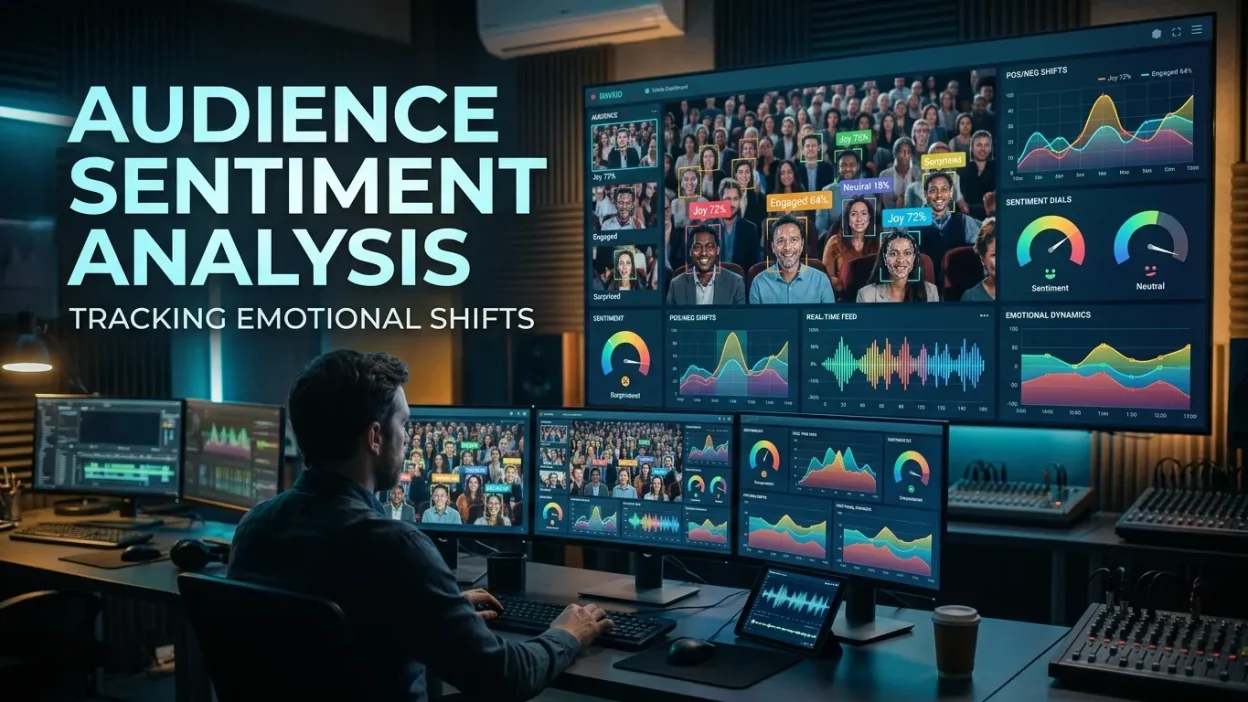
Audience Sentiment Analysis helps organizations understand how people feel, why opinions change, and what those emotional shifts reveal about brand trust, customer experience, and future decisions.
Every audience has opinions, expectations, frustrations, and changing priorities. These feelings influence what people discuss, which brands they trust, what they recommend to others, and whether they decide to remain customers. Businesses that pay attention only to likes, impressions, clicks, and follower growth can miss the human reasons behind those numbers. A campaign may receive thousands of interactions while creating disappointment, confusion, or distrust. Another post may attract modest engagement but generate thoughtful approval among the customers who matter most. Audience Sentiment Analysis reveals emotional direction.
This is why Audience Sentiment Analysis has become an important part of modern marketing, communications, customer experience, and reputation management. It helps organizations examine the emotional tone expressed in conversations across social networks, review platforms, surveys, support interactions, forums, and other relevant channels. The objective is not simply to label every comment as positive, negative, or neutral. It is to understand what people feel, what triggered that response, how strongly the feeling is expressed, and whether the pattern is changing over time.
Imagine an online retailer launching a new delivery option. The announcement receives strong engagement, but customer comments begin mentioning confusing delivery windows, missed notifications, and unclear fees. A traditional engagement report may interpret the launch as successful because people are interacting with the post. A deeper emotional review identifies a service issue that may damage customer confidence if it remains unresolved. Audience Sentiment Analysis highlights recurring customer concerns.
Used properly, Audience Sentiment Analysis helps a business move from counting reactions to understanding their meaning. It gives teams a way to identify emerging concerns, recognise positive experiences, compare audience groups, evaluate campaigns, and make decisions based on evidence instead of assumptions.
What Is Audience Sentiment Analysis?
Audience Sentiment Analysis is the process of examining audience conversations and feedback to identify the attitudes, opinions, and emotional tone expressed about a brand, product, service, topic, campaign, or experience. It commonly uses natural language processing, machine learning, qualitative research, and human review to interpret large or small collections of feedback.
The simplest systems classify a statement as positive, negative, or neutral. More advanced approaches can identify sentiment towards specific subjects, discover recurring themes, recognise emotional intensity, and track how opinions evolve across time or audience segments.
For example, consider these three comments about a subscription service: Audience Sentiment Analysis tracks changing brand perceptions.
- “The setup was simple and I was using it within minutes.”
- “The platform works, but the monthly price is difficult to justify.”
- “I cannot tell whether my cancellation request has been processed.”
The first statement expresses a positive onboarding experience. The second is mixed: the product works, but value perception is weak. The third may indicate anxiety and frustration linked to a lack of confirmation. A useful analysis does not flatten these different experiences into one overall score. Audience Sentiment Analysis connects feelings with experiences.
Audience Sentiment Analysis therefore connects the words people use with the context in which they use them. It can help reveal what is going well, where expectations are not being met, and which issues deserve attention before they become larger reputation or retention problems.
Sentiment Is Not the Same as Emotion
Sentiment commonly refers to the positive, negative, or neutral orientation of an opinion. Emotion is more specific and can include happiness, anger, disappointment, fear, relief, excitement, confusion, trust, or frustration. Audience Sentiment Analysis supports evidence-based decisions.
A review that says “The replacement arrived, so the issue is finally resolved” may have a positive outcome but still describe a frustrating experience. A customer can appreciate an employee while criticising the organisation’s process. A person can be excited about a product launch and worried about its price at the same time. Audience Sentiment Analysis identifies emerging dissatisfaction.
For this reason, Audience Sentiment Analysis should distinguish overall polarity from the particular emotion and topic being discussed. The additional detail makes insights more useful to marketing, product, customer support, and leadership teams.
What Does an Emotional Shift Mean?
An emotional shift occurs when the tone, intensity, or subject of audience opinion changes. It may happen gradually, such as customers becoming less confident in a service over several months, or suddenly, after a product failure, public announcement, price increase, viral post, or unexpected event.
A shift does not always mean that the overall audience has become more negative. Positive conversation may increase around a new feature while concerns about customer support remain unchanged. A company should therefore investigate which part of the experience is changing rather than relying on one blended score. Audience Sentiment Analysis uncovers overlooked customer expectations.
Why Tracking Emotional Shifts Is Important
Opinions can change before traditional business metrics show a clear problem. Customers may begin questioning value, expressing disappointment, or warning others before cancellation rates rise. Prospective buyers may discuss a competitor more favourably even while a brand’s website traffic remains stable. Audience Sentiment Analysis clarifies why reactions differ.
Audience Sentiment Analysis can provide an early view of these changing perceptions. It helps teams ask what is happening beneath visible engagement and whether audience expectations are moving in a direction that requires a response.
Detect Problems Before They Become Reputation Crises
Negative feedback often begins with a specific experience. A product update creates a technical issue, a support process becomes slower, or a company communicates a policy change poorly. When several people describe similar frustrations, the pattern may indicate a wider problem. Audience Sentiment Analysis makes feedback more actionable.
A single complaint should not automatically be treated as proof of a systemic failure. However, a rising cluster of similar complaints deserves investigation. Monitoring themes alongside emotional tone helps a business distinguish an isolated incident from a recurring weakness.
Understand What Customers Appreciate
Sentiment tracking should not focus exclusively on criticism. Positive feedback can show which features, employees, service qualities, messages, or experiences are genuinely valued. Audience Sentiment Analysis can expose hidden friction.
If customers repeatedly praise fast onboarding, clear explanations, or helpful support, those themes can inform product development and marketing communication. A company can reinforce the experiences that create trust instead of guessing which benefits matter most. Audience Sentiment Analysis reveals where trust weakens.
Evaluate Campaign Reception More Honestly
An advertising campaign may generate reach and conversation without producing the intended response. People might discuss the creative idea but misunderstand the offer. They may enjoy the humour while questioning the brand’s relevance. Audience Sentiment Analysis adds context to engagement metrics and helps marketers understand whether a campaign is being received in the intended way.
Improve Customer Retention
Customers rarely leave for only one reason. Their decision may follow repeated moments of friction, unresolved questions, poor perceived value, or a growing sense that a competitor understands their needs better. Tracking emotional signals can help identify these patterns while there is still an opportunity to improve the relationship. Audience Sentiment Analysis helps explain changing expectations.
Tracking Emotional Shifts Over Time

A single snapshot can show how people feel at one moment, but it cannot explain whether attitudes are improving, declining, or changing around a particular issue. Trend analysis provides that wider perspective.
Establish a Baseline
Before looking for change, establish what normal conversation looks like for the brand or topic. Measure the typical volume of mentions, sentiment distribution, recurring themes, and differences between channels over a suitable period. Audience Sentiment Analysis adds context to engagement.
A baseline should account for predictable patterns such as seasonal demand, campaign periods, product launches, and major industry events. Comparing a quiet week with a major announcement week without context can create misleading conclusions. Audience Sentiment Analysis shows what customers value.
Monitor Direction, Speed, and Persistence
Three dimensions are especially useful: Audience Sentiment Analysis can guide service improvements.
- Direction: Is the emotional tone becoming more positive, more negative, or remaining stable?
- Speed: How quickly is the change happening?
- Persistence: Does the change disappear after a short event, or continue over several reporting periods?
A short-lived spike may require a different response from a sustained decline. A sudden increase in negative sentiment following a service outage may need an immediate operational response. A gradual drop in confidence over several months may require broader research into value, customer experience, or positioning. Audience Sentiment Analysis gives leaders clearer evidence.
Compare Themes, Not Only Scores
An overall sentiment score may remain stable while the reasons for discussion change significantly. Positive comments about a new product feature could offset increasing complaints about customer service.
Teams should therefore track sentiment by topic, product, customer journey stage, campaign, and audience segment where data is sufficient. Audience Sentiment Analysis is more informative when it explains which part of the experience is driving a shift.
Use Event-Based Annotations
Add notes to trend reports when relevant events occur, such as a product release, price change, campaign launch, policy announcement, public incident, or service disruption. These annotations make it easier to investigate possible relationships between events and changes in audience opinion. Audience Sentiment Analysis links opinions with specific topics.
An event occurring before a sentiment shift does not prove that it caused the shift. It provides a hypothesis to investigate using more detailed feedback and operational data. Audience Sentiment Analysis helps interpret mixed reactions.
Important Metrics for Measuring Audience Sentiment
A useful measurement framework combines emotional classification with volume, context, and business outcomes. Audience Sentiment Analysis identifies patterns across channels.
| Metric | What it measures | Why it matters |
|---|---|---|
| Sentiment distribution | Share of positive, negative, and neutral mentions | Shows the broad opinion mix |
| Sentiment score | A numerical summary of classified sentiment | Helps compare trends when definitions remain consistent |
| Mention volume | Number of relevant references | Provides conversation context |
| Sentiment velocity | Rate at which sentiment changes | Helps identify emerging shifts |
| Topic frequency | How often a subject appears | Reveals recurring priorities |
| Share of voice | Brand conversation relative to selected competitors | Adds market context |
| Emotion intensity | Strength of expressed emotional language | Helps identify high-impact reactions |
| Response time | Time taken to address relevant feedback | Connects insight with service action |
Sentiment Distribution
Sentiment distribution shows how many analysed mentions fall into each category. For instance, a report might show 52% positive, 28% neutral, and 20% negative mentions during a chosen period.
The percentages should always be read alongside sample size, source mix, and classification confidence. A percentage based on 30 comments is not necessarily as reliable as a similar percentage based on several thousand relevant records. Audience Sentiment Analysis can distinguish noise from signals.
Sentiment Score
Some platforms convert sentiment labels into a score. A simple model might assign positive mentions a value of +1, neutral mentions 0, and negative mentions -1, then calculate an average. Audience Sentiment Analysis reveals shifts before metrics change.
This can make trend comparisons easier, but the score depends on the classification rules and weighting. It should not be treated as a universal measure of customer happiness or brand health. Audience Sentiment Analysis supports more thoughtful communication.
Sentiment Velocity
Sentiment velocity measures how quickly the emotional pattern changes. It can be useful for identifying a fast-moving issue that might be hidden by a longer-term average. Audience Sentiment Analysis helps prioritise recurring problems.
A sudden change deserves investigation, but it should be checked against volume and source quality. A single viral post may create a temporary spike without representing the opinion of the broader customer base.
The Human Psychology Behind Audience Sentiment
People express opinions through more than product features. Their reactions are influenced by expectations, previous experiences, social identity, personal priorities, perceived fairness, and the feeling of being heard. Audience Sentiment Analysis can validate campaign assumptions.
Understanding these motivations makes sentiment reports more useful. Audience Sentiment Analysis shows where promises fall short.
Expectations Shape Satisfaction
A customer evaluates an experience partly against what they expected. A service that performs exactly as promised may create satisfaction, while the same service may disappoint someone who expected additional features. Audience Sentiment Analysis highlights positive customer experiences.
Marketing messages, sales conversations, pricing pages, and onboarding materials all contribute to expectations. If communication creates promises that the actual experience cannot meet, negative emotion may follow even when the product functions correctly.
Perceived Fairness Influences Trust
People pay attention to whether they believe they have been treated fairly. Unexpected fees, inconsistent policies, unclear refund decisions, and unequal treatment can create disproportionate frustration. Audience Sentiment Analysis gives product teams useful direction.
A business should investigate not only what happened but also why the experience appeared unfair from the customer’s perspective. Audience Sentiment Analysis supports more relevant research.
Emotional Recognition Matters
Customers often become more frustrated when they feel ignored or misunderstood. A prompt, specific, respectful response can help reduce tension, although it cannot substitute for fixing the underlying problem. Audience Sentiment Analysis helps uncover unmet needs.
Audience Sentiment Analysis can highlight recurring moments when people feel dismissed, confused, or unsupported. Those findings should inform service design and employee training.
Social Influence Changes Opinions
People may adjust their perceptions after reading reviews, seeing public reactions, or hearing recommendations from trusted communities. A highly visible negative discussion can influence prospective customers even when they have not personally experienced the problem. Audience Sentiment Analysis can expose communication gaps.
Businesses should not assume that every public discussion reflects the majority view. They should examine the credibility, reach, context, and representativeness of the conversation.
Using Audience Sentiment Analysis for Brand Positioning
Brand positioning is not only what an organisation says about itself. It is also the perception people form through product experiences, communication, service quality, and comparisons with alternatives. Audience Sentiment Analysis gives context to customer feedback.
A business may position itself as simple and affordable, while customers repeatedly describe the service as complicated and expensive. That gap is strategically important. Audience Sentiment Analysis can improve reputation awareness.
A clear Brand Positioning approach should consider the associations customers already have, the needs the brand wants to serve, and the evidence supporting its intended market position. Audience Sentiment Analysis makes emotional patterns easier to compare.
Audience Sentiment Analysis can help reveal whether the intended brand promise is reflected in real audience conversations.
Compare Intended and Actual Brand Associations
Start by listing the qualities the company wants customers to associate with the brand. These might include reliability, simplicity, expertise, value, convenience, safety, or innovation.
Then review relevant audience comments and research to see which associations appear consistently. Look for both alignment and gaps. Audience Sentiment Analysis helps track lasting changes.
If a company wants to be known for responsive support but customers regularly complain about long response times, the problem is not a messaging issue alone. Operational performance must improve before the positioning claim becomes credible. Audience Sentiment Analysis can separate spikes from trends.
Monitor Competitor Perceptions
Comparing competitor conversations can show which needs are being served well and where customers remain dissatisfied. A competitor may receive praise for ease of use while facing criticism about support. Those themes can inform product and service strategy. Audience Sentiment Analysis adds depth to performance reports.
The goal is not to copy another brand’s language or exploit every complaint. It is to understand the market’s expectations and identify a genuine opportunity to serve customers better.
A sound Keyword Research Strategy for UK Businesses can connect these customer questions with relevant search topics and content opportunities. The purpose is to answer real questions, not to reproduce private comments as marketing copy.
Linking Sentiment to Business Outcomes

Emotional data becomes more valuable when it can be connected to customer behaviour and business performance. Audience Sentiment Analysis makes audience research more specific.
A positive comment does not automatically mean someone will purchase. A negative post does not always mean the person will leave. The relationship must be tested rather than assumed. Audience Sentiment Analysis supports consistent review processes.
Connect Feedback with Customer Experience Data
Where appropriate and lawful, compare sentiment patterns with customer satisfaction surveys, support resolution times, repeat purchase behaviour, churn, refund requests, and conversion rates. Audience Sentiment Analysis helps explain negative feedback.
For example, a decline in positive onboarding sentiment may appear before an increase in early cancellations. This could suggest that onboarding deserves attention, but the team should investigate other possible explanations before concluding that one factor caused the other. Audience Sentiment Analysis reveals sources of customer confidence.
Use Attribution Carefully
Several interactions may influence a customer’s final decision. A social review, sales conversation, product demonstration, and support experience can all contribute to how a person feels about a business.
Brand Sentiment Attribution can help frame the investigation into which touchpoints and experiences are associated with changing brand perceptions. The analysis should recognise that correlation does not establish causation and that customer journeys are rarely linear. Audience Sentiment Analysis can uncover recurring confusion.
Build an Actionable Insight Loop
A useful process looks like this: Audience Sentiment Analysis improves understanding of audience priorities.
- Detect a meaningful change in audience opinion.
- Identify the themes, channels, and customer groups involved.
- Review original examples to validate the pattern.
- Investigate possible operational or communication causes.
- Assign an owner to the issue or opportunity.
- Implement an appropriate response.
- Measure whether the experience and sentiment improve. Audience Sentiment Analysis helps monitor campaign response.
Audience Sentiment Analysis should lead to decisions, not simply reports that circulate without clear ownership.
Tools and Technologies for Tracking Audience Sentiment
The right tool depends on the size of the organisation, data sources, languages, reporting needs, and budget. A small business may begin with review monitoring and a spreadsheet. A larger organisation may require integrated social listening, customer experience platforms, data pipelines, and custom analysis.
When comparing tools, assess source coverage, language support, sentiment accuracy, topic detection, historical data, alerting, export options, privacy controls, and integration with existing systems. Audience Sentiment Analysis can guide product decisions.
Social Listening Platforms
Social listening tools can collect public conversations from supported networks and other online sources. They often provide dashboards for mention volume, topics, sentiment, share of voice, and competitor comparisons. Audience Sentiment Analysis provides context for brand perception.
Platform coverage varies. Not every tool can access every network, private conversation, or historical record. Confirm data access and usage rights before selecting a solution. Audience Sentiment Analysis helps teams respond more effectively.
Review and Customer Feedback Platforms
Review management tools help businesses collect and analyse customer feedback from supported review websites. They may include alerts, response management, rating trends, and common-topic reporting. Audience Sentiment Analysis can identify service weaknesses.
These tools are particularly useful for businesses where public reviews strongly influence consideration, such as hospitality, retail, home services, and professional services.
AI-Powered Monitoring Systems
AI-powered platforms can help classify large volumes of text, identify emerging themes, and flag unusual changes. However, automated results should be evaluated against real examples. Audience Sentiment Analysis strengthens evidence-led planning.
Businesses comparing AI Brand Monitoring Tools should assess whether the platform supports the languages, sources, and reporting needs relevant to their audience. A long feature list does not guarantee accurate interpretation. Audience Sentiment Analysis helps compare audience segments.
Surveys and Direct Research
Automated social data should not replace direct feedback. Surveys, interviews, customer panels, and structured feedback forms can explain why people hold particular opinions. Audience Sentiment Analysis can uncover hidden satisfaction drivers.
A short, well-designed survey may reveal a reason behind a trend that is difficult to infer from public posts. It can also include people who rarely express opinions publicly.
Building an Effective Audience Sentiment Analysis Framework
A repeatable framework helps ensure that sentiment reporting remains consistent and relevant as the organisation grows. Audience Sentiment Analysis supports better customer conversations.
Define the Business Question
Start with a question that can guide the work. Examples include: Audience Sentiment Analysis turns feedback into useful insight.
- Why has customer confidence declined after a product update?
- Which service attributes generate the strongest positive feedback?
- How is a new campaign being received by different audience groups?
- What concerns appear most frequently in competitor comparisons?
- Which customer journey stages generate the most frustration?
A clear question prevents teams from collecting large amounts of data without knowing what they need to learn. Audience Sentiment Analysis helps detect changing emotional intensity.
Set Scope and Measurement Rules
Document the brands, products, topics, platforms, languages, audience segments, and time periods included in the analysis. Define what positive, negative, neutral, and mixed sentiment mean for the project.
A consistent methodology makes comparisons more reliable. If classification rules change, the team should record the change and avoid comparing results as though nothing has changed. Audience Sentiment Analysis can reveal competitor perception gaps.
Create a Human Review Process
Select a representative sample of mentions and compare automated labels with human interpretation. Review errors by category, language, source, and topic. Audience Sentiment Analysis improves visibility into customer concerns.
Pay particular attention to high-impact classifications, emerging issues, and statements where the model has low confidence. Human reviewers should be able to correct labels and explain why an interpretation is wrong. Audience Sentiment Analysis helps assess perceived value.
Assign Responsibility for Action
Marketing may own campaign insights, product teams may handle feature issues, and customer experience teams may address service concerns. Reputation or communications teams may coordinate responses to public issues. Audience Sentiment Analysis can identify trust-related themes.
Each significant finding should have an owner, a priority, and a follow-up date. This prevents sentiment reports from becoming passive dashboards.
Review and Improve the Framework
Periodically examine whether the data sources remain representative, whether terminology has changed, and whether new customer concerns are emerging. Audience Sentiment Analysis encourages better listening practices.
A Content Refresh Strategy can also be informed by recurring audience questions and changing perceptions. When feedback reveals that existing explanations are confusing or incomplete, updating the relevant content may improve both customer understanding and organic usefulness. Audience Sentiment Analysis helps interpret public reactions.
Common Challenges and Limitations
No sentiment method can interpret every human expression perfectly. Language changes, people use humour and sarcasm, and the same phrase can communicate different feelings in different situations. Audience Sentiment Analysis makes trend interpretation more grounded.
Research reviews identify context, irony, spelling variation, multilingual data, domain differences, and inconsistent evaluation practices as recurring challenges in sentiment analysis. These limitations matter because a misleading dashboard can create false confidence.
Sarcasm and Irony
A statement such as “Brilliant service, only had to contact support six times” contains positive wording but likely communicates frustration. A simple keyword system may classify it incorrectly. Audience Sentiment Analysis can highlight unresolved frustrations.
Context-aware models can improve interpretation, but sarcasm remains difficult, particularly when a short post lacks the surrounding conversation. Human review is important when the issue has a high business impact. Audience Sentiment Analysis supports more balanced reporting.
Negation and Ambiguous Language
Words such as “not”, “hardly”, and “barely” can change the meaning of a sentence. “Not impressed” should not be classified in the same way as “impressed”. Audience Sentiment Analysis helps teams investigate anomalies.
Ambiguous comments also require caution. “That is different” may be positive, negative, or neutral depending on the writer’s intention and the surrounding discussion. Audience Sentiment Analysis can reveal changing brand associations.
Cultural and Language Differences
People express emotion differently across regions, communities, and languages. Slang, humour, idioms, and local references may not translate directly.
An organisation serving multilingual audiences should evaluate each important language separately where possible. A model that performs well on English product reviews may not perform equally well on informal comments in another language. Audience Sentiment Analysis makes customer priorities easier to understand.
Sampling Bias and Unrepresentative Voices
People who post public reviews or comments may not represent the entire customer base. Some highly satisfied customers remain silent; others may be more motivated to share a negative experience. Audience Sentiment Analysis connects discussion with business context.
A platform’s audience may also differ from the organisation’s actual customers. Reports should describe their sample and avoid presenting online discussion as a definitive survey of public opinion. Audience Sentiment Analysis can guide experience improvements.
Bots, Spam, and Coordinated Activity
Automated accounts, promotional posts, duplicate messages, and coordinated campaigns can distort mention volume and apparent sentiment. Sudden spikes should be investigated before being treated as genuine shifts in audience opinion.
Model Bias and Classification Drift
A model may interpret language differently across demographics, industries, or topics. It may also become less accurate as vocabulary and audience behaviour change. Audience Sentiment Analysis helps identify repeated praise.
Teams should test performance over time, review misclassifications, and document the limits of the model. A single accuracy figure should not hide weak performance on important categories. Audience Sentiment Analysis encourages careful interpretation.
Privacy, Ethics, and Responsible Data Handling

Audience research should respect the rights and expectations of the people whose feedback is being analysed. Public availability does not mean every use of personal information is automatically appropriate. Audience Sentiment Analysis provides a clearer emotional baseline.
Businesses should determine what information they need, why they need it, and whether they have an appropriate lawful basis for processing personal data under applicable requirements. They should also consider platform terms, retention periods, access permissions, and security controls. Audience Sentiment Analysis can reveal audience uncertainty.
Avoid collecting sensitive personal information unnecessarily. Do not use sentiment labels to make unfair assumptions about an individual’s personality, health, political beliefs, or other sensitive characteristics. Audience-level patterns should not be turned into intrusive individual profiling without careful legal and ethical review.
Where feedback comes from private support conversations, surveys, or customer records, limit access to authorised staff and use appropriate safeguards. Reporting should generally focus on aggregated patterns and remove identifying information unless identification is genuinely necessary and justified. Audience Sentiment Analysis supports consistent decision-making.
Audience Sentiment Analysis should support better experiences, not surveillance or manipulation. Transparency, proportionality, data minimisation, and responsible human oversight help protect both participants and the organisation’s reputation.
Turning Sentiment Insights into Better Content and Communication
Audience feedback often reveals the language people naturally use to describe their needs, concerns, and expectations. This information can improve marketing communication when it is interpreted responsibly. Audience Sentiment Analysis helps evaluate service changes.
If customers repeatedly ask whether a service includes implementation, explain that clearly on the service page. If reviews show that delivery uncertainty is a major concern, improve delivery information before spending more on promotional messaging. If people misunderstand a product feature, create a guide or demonstration that resolves the confusion. Audience Sentiment Analysis can clarify campaign reception.
For businesses working on AI search visibility, a broader Generative Engine Optimization strategy can help organise useful, trustworthy information so that customers and search systems can understand the organisation’s expertise. Audience Sentiment Analysis brings context to reputation monitoring.
Audience Sentiment Analysis should inform communication without encouraging a brand to imitate every phrase or emotional reaction it encounters. The company still needs a consistent voice, accurate claims, and a clear value proposition.
Conclusion
Audience opinion is never static. Expectations, experiences, public conversations, and market conditions continually shape how people feel about a brand. Organisations that track these changes with context can identify concerns earlier, reinforce valued experiences, and make better customer-focused decisions. The strongest approach combines reliable data, appropriate technology, human interpretation, privacy safeguards, and clear accountability. Rather than treating sentiment as a score to improve, businesses should use it as evidence for understanding people. Listen consistently, investigate meaningful shifts, respond to genuine needs, and measure whether those actions create lasting improvements in trust and experience. Audience Sentiment Analysis supports stronger customer understanding.
Frequently Asked Questions (FAQ)
What is Audience Sentiment Analysis used for?
Audience Sentiment Analysis is used to understand the emotional tone and opinions expressed by customers, followers, communities, and other relevant groups. Businesses use it to monitor brand perception, identify recurring problems, evaluate campaigns, understand customer expectations, compare competitors, and discover changes that may affect reputation or retention.
How does sentiment analysis identify emotional shifts?
It compares sentiment classifications, emotional themes, mention volume, and topic patterns across different time periods. Analysts look for changes in direction, speed, and persistence, then investigate the original feedback and relevant events to understand what may explain the shift. Audience Sentiment Analysis helps distinguish opinion from fact.
What is the difference between sentiment analysis and social listening?
Social listening examines broader conversations, topics, and patterns to understand what audiences are discussing and why. Sentiment analysis focuses on the emotional or opinion orientation expressed within that information. They work well together but answer different questions.
Can AI accurately understand sarcasm and humour?
AI models can recognise some forms of sarcasm and humour, but accuracy is not guaranteed. Meaning often depends on cultural knowledge, conversation history, tone, and context. Human review is recommended for ambiguous or high-impact feedback. Audience Sentiment Analysis can explain shifts in confidence.
Which data sources are best for sentiment tracking?
Useful sources include public social media conversations, review websites, customer surveys, support feedback, community discussions, and relevant industry publications. The best sources depend on where the target audience communicates and whether the collected data represents the business question. Audience Sentiment Analysis helps focus improvement efforts.
What metrics should businesses monitor?
Useful metrics include positive, negative, and neutral sentiment distribution, mention volume, sentiment score, topic frequency, sentiment velocity, share of voice, response time, and customer experience outcomes. These measures should be interpreted together rather than as isolated indicators. Audience Sentiment Analysis supports practical business learning.
How often should a business analyse audience sentiment?
The reporting frequency depends on the organisation’s size, activity, and risk exposure. A business with frequent public interactions may monitor important mentions daily and review trends weekly. Smaller organisations may begin with monthly reviews, increasing frequency during launches, service disruptions, or major campaigns. Audience Sentiment Analysis can show where expectations diverge.
Can sentiment analysis help improve brand positioning?
Yes. It can show whether audience perceptions match the qualities a company wants its brand to represent. Recurring feedback may reveal positioning gaps, valued strengths, competitor advantages, and customer expectations that should influence communication or operational improvements.
Is Audience Sentiment Analysis useful for small businesses?
Yes. Small businesses can begin by reviewing customer feedback, public reviews, and survey responses manually. A simple spreadsheet that records sentiment, topic, source, date, and required action can provide useful insight without requiring an expensive analytics platform. Audience Sentiment Analysis makes customer insight more useful.
What are the main limitations of sentiment analysis?
Key limitations include sarcasm, ambiguous wording, cultural differences, multilingual interpretation, sampling bias, automated spam, model bias, and incomplete context. Automated results should be validated through human review, and conclusions should acknowledge the limits of the available data. Audience Sentiment Analysis helps turn listening into action.