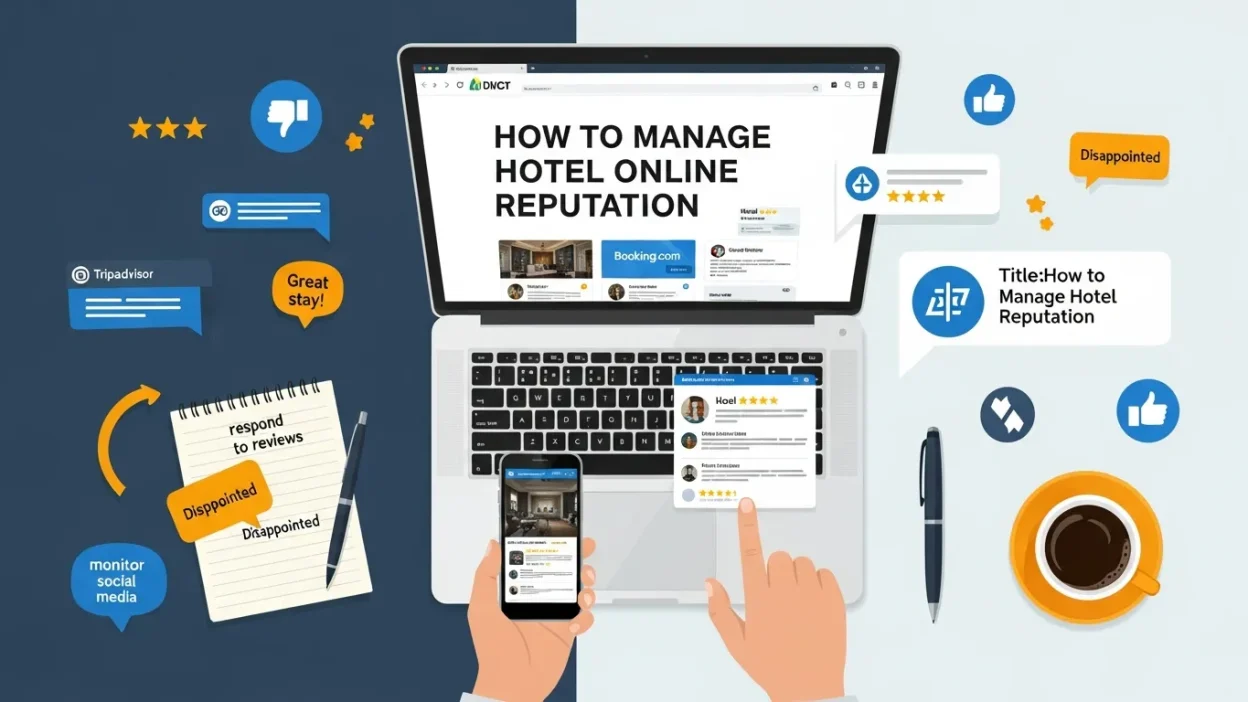
In today’s review-driven hospitality market, understanding how to manage hotel online reputation determines visibility, trust, and long-term revenue success.
This guide explains how to manage hotel online reputation using review management, AI-powered sentiment analysis, social media monitoring, crisis planning, and proactive guest engagement. You’ll learn actionable strategies, real hotel examples, and sustainable online reputation management techniques to convert feedback into growth and protect brand equity.
Why Hotel Online Reputation Management Matters More Than Ever
Before platforms like TripAdvisor, Booking.com, and Google Reviews reshaped the hospitality industry, a hotel’s reputation was built slowly through word-of-mouth referrals, travel agents, and printed guidebooks. Guest opinions traveled at a human pace. Today, they travel at internet speed—and they live forever.
In the modern hospitality landscape, online reputation management has become a defining factor in whether a hotel gains consistent bookings or loses market share to competitors. Every guest review, rating, photo, and comment contributes to a public narrative that potential travelers rely on heavily when making decisions.
Multiple industry studies confirm the impact:
- Over 93% of travelers read online reviews before booking a hotel
- More than 53% of travelers avoid hotels with no reviews at all
- A one-star improvement in ratings can increase revenue by 5–9%, especially in competitive destinations
These numbers highlight a critical reality: learning how to manage hotel online reputation is no longer about image alone—it’s a direct revenue protection and growth strategy.
Why You Need Online Reputation Management in Hospitality

Hotel reputation today influences the guest journey long before check-in and long after checkout. Travelers form opinions at the search stage, often within seconds of seeing ratings, reviews, and brand responses.
Key reasons online reputation management is essential for hotels include:
- Booking decisions happen before arrival
Guests compare multiple hotels simultaneously. A stronger review profile often wins—even at a higher price point. - Search engines rank hotels using trust signals
Review volume, freshness, ratings, and response activity influence local SEO and visibility in Google Maps and hotel packs. - Negative reviews shape brand perception instantly
One unresolved complaint can outweigh dozens of positive experiences if left unaddressed. - Reviews influence Google Business Profile optimization
Active review management improves engagement, click-through rates, and local ranking performance. - Reputation directly affects brand equity and loyalty
Hotels with transparent, professional responses are perceived as more trustworthy, guest-focused, and reliable.
Ultimately, hotels that master how to manage hotel online reputation gain control over perception instead of reacting to it. They turn feedback into insight, criticism into improvement, and trust into long-term brand loyalty—creating a competitive advantage that advertising alone cannot replicate.
What Is Online Reputation Management for Hotels?
Online reputation management (ORM) for hotels is the structured process of monitoring, influencing, and improving how a hotel is perceived across digital platforms where travelers research, compare, and make booking decisions.
For hotels, ORM goes beyond simply replying to reviews. It includes managing guest sentiment across:
- Google Reviews and Google Business Profile
- TripAdvisor, Booking.com, Agoda, and OTA platforms
- Social media channels
- Travel blogs, forums, and media mentions
Understanding how to manage hotel online reputation allows hotels to control their public narrative, build traveler trust, and maintain competitiveness in crowded hospitality markets.
Effective hotel online reputation management focuses on:
- Consistent review monitoring
- Timely, professional responses
- Data-driven improvements based on guest feedback
- Proactive reputation protection strategies
What Is Customer Review Management in Hospitality?
Customer review management is a core component of online reputation management and plays a critical role in guest trust and booking confidence.
It includes:
- Monitoring guest feedback across review platforms in real time
- Responding professionally to both positive and negative reviews
- Analyzing sentiment trends to identify service gaps or strengths
- Turning negative reviews into growth opportunities through corrective action
When executed correctly, customer review management helps hotels improve service quality, reduce repeat complaints, and demonstrate accountability—key factors in long-term brand loyalty.
Hotels that master customer review management don’t just react to feedback; they use it as a strategic asset to improve operations and guest experience.
Digital Reputation Management vs Online Reputation Management
While often used interchangeably, digital reputation management and online reputation management serve different but complementary roles in hospitality.
| Digital Reputation Management | Online Reputation Management |
|---|---|
| Manages the broader digital footprint | Focuses primarily on reviews and guest feedback |
| Includes SEO, PR, media coverage, and content | Centers on review platforms and social mentions |
| Supports long-term brand building | Influences immediate booking decisions |
| Shapes the overall brand narrative | Shapes guest perception and trust |
Digital reputation management strengthens visibility and brand positioning over time, while online reputation management directly impacts booking behavior and revenue.
Why Hotels Must Combine ORM With Digital Marketing
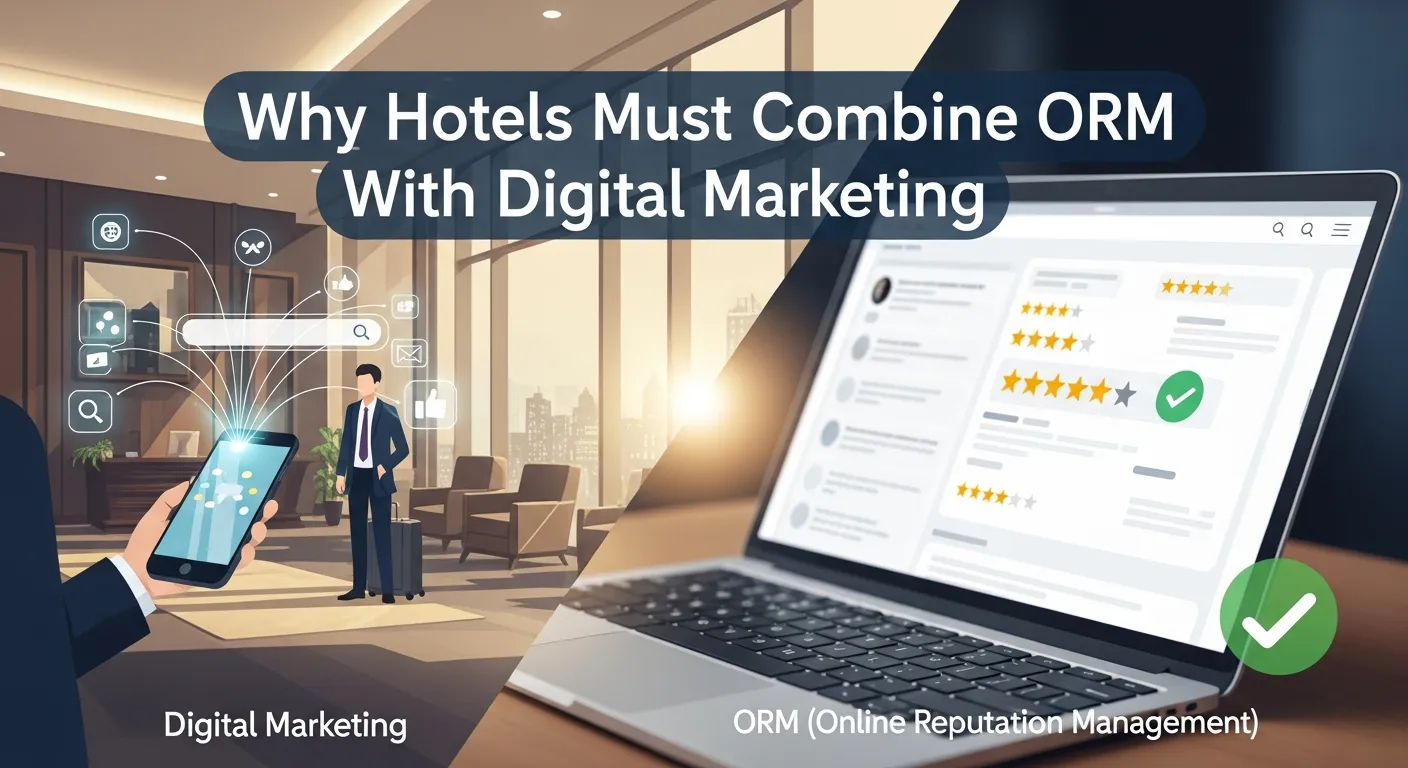
To maximize impact, hotels must integrate online reputation management with digital marketing strategies such as SEO, content marketing, social media, and paid campaigns.
This combined approach:
- Reinforces trust signals across search and social platforms
- Improves Google Business Profile optimization
- Aligns brand messaging with real guest experiences
- Creates a consistent and credible digital presence
Hotels that understand how to manage hotel online reputation within a broader digital strategy gain stronger visibility, higher conversions, and long-term brand resilience in an increasingly review-driven hospitality industry.
How to Monitor Business Reputation Online for Hotels
Monitoring is the foundation of how to manage hotel online reputation.
Review & Mentions Monitoring Tools
- Google Alerts – Track brand mentions
- TrustYou / Revinate / ReviewPro – Centralized dashboards
- TripAdvisor Management Center
- Google Business Profile
These tools support sustainable online reputation management by ensuring nothing is missed.
What Is Social Media Monitoring?
Social media monitoring is the process of tracking, analyzing, and responding to conversations about a hotel across social platforms. In hospitality, guests frequently share real-time experiences on social media—often before leaving a review on traditional platforms.
Social media monitoring tracks:
- Mentions of your hotel name, brand, or location
- Tags in posts, stories, and photos
- Hashtags related to your hotel, campaigns, or destination
- Comments on your posts and third-party content
- The story mentions that it may disappear if not captured quickly
Understanding how to manage hotel online reputation requires visibility into these conversations, as social media often reveals guest sentiment earlier than review platforms.
Why Social Media Monitoring Matters for Hotels
Social platforms influence traveler perception at every stage of the booking journey. A single viral post—positive or negative—can shape brand perception instantly.
Effective social media monitoring helps hotels:
- Detect guest issues in real time
- Prevent minor complaints from escalating into public crises
- Engage with guests while they are still on the property
- Strengthen brand personality and responsiveness
- Support reputation management in social media channels
When hotels respond quickly and empathetically, they demonstrate care, accountability, and service excellence—key trust drivers in hospitality.
Social Media Monitoring Tools for Hotels

Professional tools make monitoring scalable and actionable.
Platforms like Hootsuite and Sprout Social help hotels:
- Track brand mentions across multiple social networks
- Monitor hashtags and location-based tags
- Centralize comments, messages, and reviews
- Analyze engagement and sentiment trends
- Support proactive online reputation management
These tools integrate social listening into broader online reputation management, ensuring hotels never miss critical feedback or reputation signals.
Social Media Monitoring as Part of Reputation Strategy
Social media monitoring is not just about observation—it’s about timely action. Hotels that integrate monitoring into daily operations gain stronger control over perception, faster issue resolution, and improved guest satisfaction.
When combined with review management and Google Business Profile optimization, social monitoring becomes a vital pillar of how to manage hotel online reputation effectively in today’s digital-first hospitality landscape.
AI-Powered Online Reputation Management
AI has fundamentally transformed how to manage hotel online reputation at scale. Manual monitoring and reactive responses are no longer sufficient in a 24/7, review-driven hospitality environment. AI-powered systems allow hotels to monitor sentiment in real time, detect risks early, and respond faster—without sacrificing consistency or brand voice.
Modern online reputation management with AI and social listening enables hotels to shift from damage control to proactive reputation protection.
AI-Powered Sentiment Analysis
AI-powered sentiment analysis goes beyond star ratings by evaluating the emotional tone and context of guest feedback across reviews, social media, and online mentions.
AI tools analyze:
- Emotional tone (frustration, satisfaction, urgency, delight)
- Repeated complaints across departments, such as housekeeping, front desk, or food service
- Praise patterns that highlight competitive strengths
- Risk signals that indicate potential viral complaints or crises
By identifying trends early, hotels can resolve operational issues before they escalate into public reputation threats. This is the foundation of AI-driven online reputation management, allowing leadership teams to act strategically instead of reacting under pressure.
AI Chatbots and Machine Learning in Hospitality ORM
Hotels increasingly use AI chatbots and machine learning to manage guest feedback efficiently while maintaining a high-touch service experience.
AI chatbots help hotels:
- Respond to complaints instantly across chat, social media, and messaging apps
- Route issues to the correct department in real time
- Maintain tone consistency aligned with brand personality
Machine learning systems enable hotels to:
- Predict negative reviews based on guest behavior and sentiment
- Identify high-risk feedback before it becomes public
- Prioritize responses that impact bookings and brand trust
Automation further supports reputation teams by flagging urgent reviews, negative trends, and crisis signals, ensuring no critical feedback goes unnoticed.
The Future of Online Reputation Management With AI
As review volumes grow and guest expectations rise, AI will continue to define how to manage hotel online reputation effectively. Hotels that adopt AI-powered tools gain speed, insight, and consistency—without losing the human empathy that hospitality demands.
Online reputation management with AI and social listening is no longer optional; it is the future standard for hotels seeking sustainable trust, operational improvement, and long-term brand resilience.
How to Respond to Hotel Reviews the Right Way
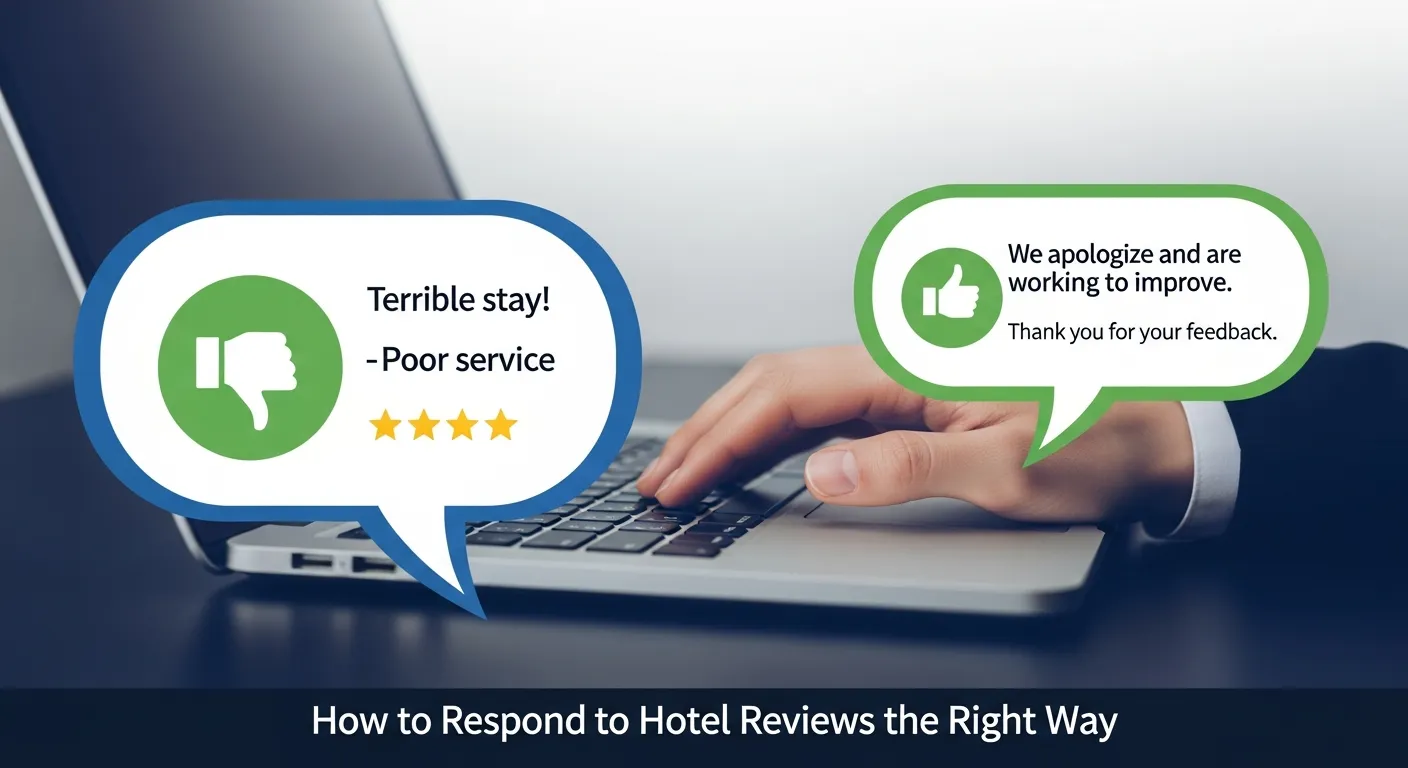
Knowing how to manage hotel online reputation depends heavily on how reviews are handled. Reviews are not just feedback—they are public conversations that shape trust, booking decisions, and brand perception.
How to Manage a Negative Review Professionally
Negative reviews are inevitable in hospitality. What matters most is not the complaint itself, but how the hotel responds. A poor response can damage credibility more than the original review.
Best Practices for Handling Negative Reviews
- Acknowledge the issue publicly to show accountability
- Apologize sincerely, even if the issue was unintentional
- Offer a clear resolution or next step
- Move detailed discussions to private channels (email or phone)
- Follow up when resolved to demonstrate commitment
Handled correctly, negative feedback becomes a chance to showcase professionalism and turn criticism into loyalty. This approach transforms negative reviews into growth opportunities for both e-commerce and hospitality businesses.
Handling Positive Reviews Strategically
Positive reviews are powerful trust signals and should never be ignored. They reinforce brand credibility and influence future guests.
Best Practices for Responding to Positive Reviews
- Thank guests by name to personalize the response
- Reference specific services, rooms, or staff mentioned
- Reinforce brand personality and service values
- Invite guests to return or explore new offerings
- Encourage brand advocacy through subtle engagement
Consistent engagement with positive feedback strengthens long-term hotel reputation management and boosts conversion confidence.
How to Remove Fake Reviews and Negative Content
Not all reviews are legitimate. Fake or malicious reviews can harm trust and distort public perception.
How to Remove Fake Reviews
Fake reviews can be reported when they violate platform policies, including:
- Spam or promotional content
- Hate speech or abusive language
- Conflict of interest (competitors or ex-employees)
- Reviews from non-guests
Document evidence and report through the platform’s review moderation system. This process is a core part of negative content management and recovering online reputation.
Preventive Strategies: Proactive Online Reputation Management
The most effective reputation strategy is prevention, not reaction.
Encourage Authentic Guest Reviews
- Ask for reviews at checkout
- Send post-stay follow-up emails or messages
- Use QR codes at reception or in-room materials
- Share direct Google Business Profile review links
A steady flow of authentic reviews protects against reputation volatility.
Set Clear Expectations to Reduce Complaints
Many negative reviews stem from mismatched expectations rather than poor service.
Transparency should clearly communicate:
- Fees and taxes
- Cancellation and refund policies
- Check-in and check-out times
- Amenities and service limitations
Expectation management is fundamental to improving reputation management in hospitality.
Integrating Customer Experience and Reputation
Reputation is a direct reflection of guest experience. Hotels that align operations with feedback consistently outperform competitors.
Integrating Customer Experience Into ORM
- Staff training based on recurring feedback
- Closed-loop feedback systems
- Structured service recovery workflows
- Guest journey mapping across touchpoints
Hotels that connect customer feedback strategy with daily operations achieve sustainable online reputation management and long-term guest loyalty.
Crisis Management and Reputation Protection
In hospitality, reputation risks can escalate fast. A single viral complaint, safety incident, or service failure can damage trust within hours. That’s why hotels must treat crisis management as a core reputation function, not a reactive afterthought.
How to Create a Crisis Management Plan
Every hotel should maintain a documented crisis response framework designed to protect credibility and minimize long-term damage.
A strong crisis management plan includes:
- Early monitoring triggers
Social mentions, review spikes, media inquiries, and sentiment drops - Defined response roles
Who approves messaging, who responds publicly, and who handles guest recovery - Pre-approved messaging templates
Statements for service disruptions, safety issues, or misinformation - Response timelines
Clear deadlines for acknowledgment, follow-up, and resolution - Recovery strategy
Review rebuilding, guest outreach, and reputation repair campaigns
This structure supports brand crisis management, strengthens brand resilience strategies, and accelerates recovering online reputation after high-impact events.
Video Testimonials and Visual Trust Signals
Text reviews build credibility—but video builds belief. In the hospitality industry, visual proof significantly influences booking decisions.
Building Trust with Video Testimonials
Video testimonials humanize guest experiences and create emotional trust that static reviews cannot match.
Why Video Reviews Work
- Increase perceived authenticity and transparency
- Improve conversion rates on booking pages
- Strengthen brand personality and storytelling
- Reinforce emotional connection with future guests
Video testimonials are especially effective when used across:
- Hotel websites and landing pages
- Google Business Profile and YouTube
- Social media and retargeting campaigns
- Luxury brand marketing and premium positioning
As part of video testimonials online reputation strategies, they serve as powerful visual trust signals that protect brand perception and enhance long-term reputation strength.
Luxury vs Budget Hotels: ORM Differences
| Luxury Hotels | Budget Hotels |
|---|---|
| Personal recovery | Speed & efficiency |
| Brand storytelling | Clear communication |
| High emotional impact | Price-value clarity |
ORM strategies must align with the brand positioning strategy.
ROI of Online Reputation Management
Roi of Online Reputation Management
Benefits include:
- Higher occupancy
- Better pricing power
- Improved SEO rankings
- Stronger brand equity
- Crisis resilience
Hotels investing in ORM outperform competitors consistently.
Learning how to manage hotel’s online reputation is not a one-time task—it’s a continuous system built on listening, responding, improving, and innovating. Hotels that treat feedback as intelligence—not criticism—build trust, protect brand equity, and unlock sustainable growth. Every response, review, and recovery moment shapes perception. Manage it intentionally, and your reputation becomes your strongest revenue asset.
FAQs: How to Manage Hotel Online Reputation
1. What is hotel online reputation management?
Hotel online reputation management is the strategic process of monitoring, responding to, and influencing how guests perceive a hotel across review platforms, search engines, and social media. It combines customer review management, social listening, and proactive communication to protect trust and strengthen brand perception.
2. Why is online reputation important for hotels?
Online reputation directly affects booking decisions, pricing flexibility, search visibility, and long-term brand credibility. Strong reputation management increases occupancy rates, improves guest confidence, and supports sustainable brand equity in competitive hospitality markets.
3. How often should hotels respond to reviews?
Hotels should respond to guest reviews within 24 to 48 hours. Timely responses signal professionalism, attentiveness, and care—key trust indicators for both potential guests and search engines.
4. Can negative reviews help hotels grow?
Yes. When handled with empathy and transparency, negative reviews demonstrate accountability and service recovery. They also provide actionable insights that help hotels improve operations and guest experience.
5. How does AI improve hotel reputation management?
AI-powered sentiment analysis identifies emotional tone, recurring complaints, and emerging risks. AI-driven online reputation management enables early alerts, automated monitoring, and proactive responses that prevent reputation damage.
6. What tools help manage hotel reputation effectively?
Hotels commonly use platforms such as Google Business Profile, TrustYou, Revinate, SEMrush, Ahrefs, and social listening tools to centralize monitoring, analyze sentiment, and manage responses efficiently.
7. How do hotels remove fake reviews?
Fake reviews can be removed by reporting policy violations such as spam, non-guest content, or conflicts of interest. Proper documentation and timely reporting are essential for negative content management and recovering online reputation.
8. What is social media monitoring in hospitality?
Social media monitoring involves tracking mentions, tags, comments, and conversations across platforms. It allows hotels to protect brand perception in real time and manage reputation management in social media environments.
9. How does reputation affect hotel SEO?
Guest reviews influence local search rankings, click-through rates, and trust signals. Active reputation management supports Google Business Profile optimization and improves visibility in search engine reputation management.
10. What is the ROI of hotel online reputation management?
The return on investment includes higher booking conversions, improved guest trust, crisis protection, stronger brand equity, and long-term revenue growth—making reputation management a critical business strategy for hotels.
Learn how to strengthen your brand perception by exploring our guide on managing hotel online reputation.