
In today’s competitive digital landscape, investing in Online Reputation Management (ORM) is no longer optional—it’s essential. But for many marketing and PR teams, proving the tangible return on investment (ROI) of ORM can be challenging. Stakeholders want hard numbers: how many leads did improved sentiment generate? What revenue uplift can be attributed to higher star ratings and brand trust? This guide will walk you through defining the right metrics, gathering data, calculating ROI, and presenting your results to demonstrate the true value of your online reputation efforts.
Why ROI Matters in Online Reputation Management
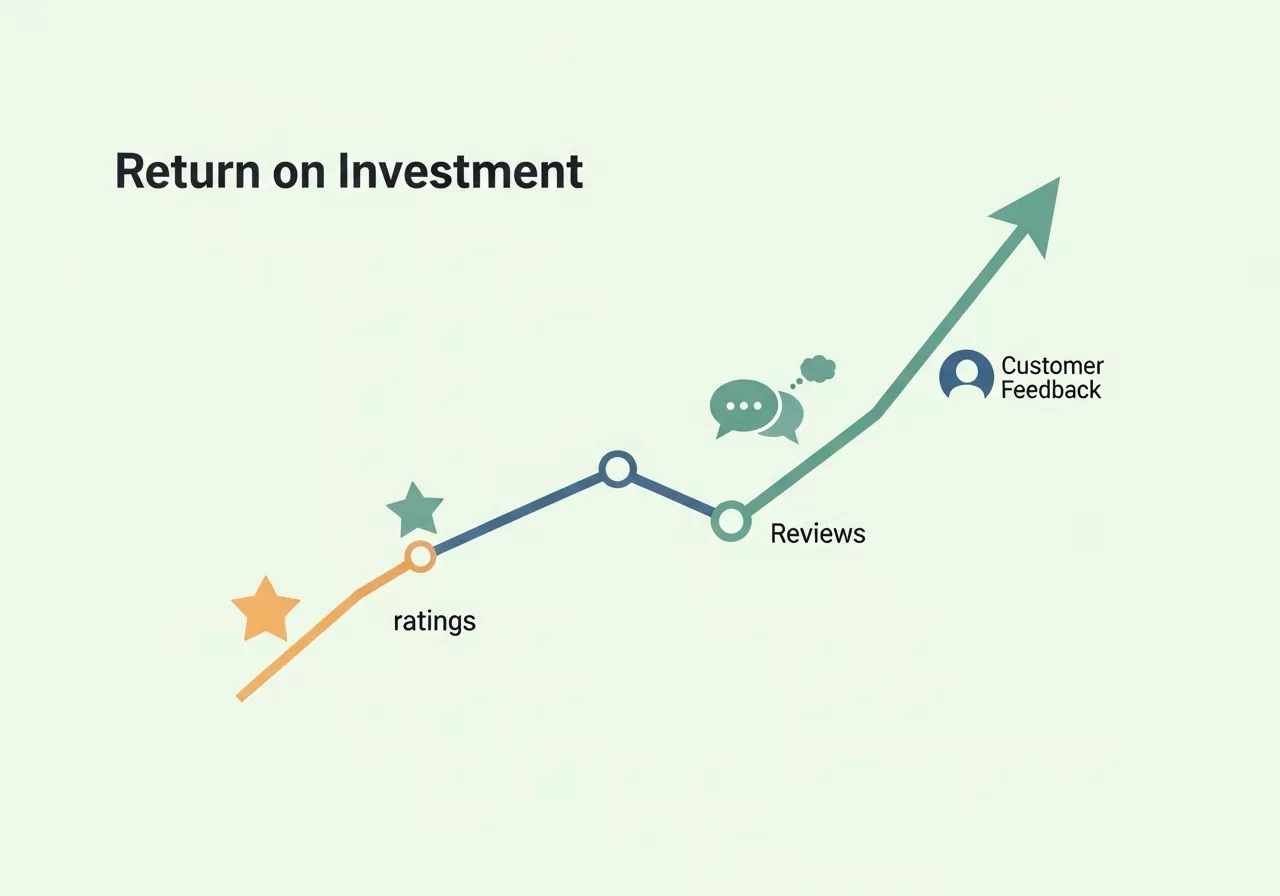
Demonstrating ROI from ORM helps secure ongoing budget, guides resource allocation, and builds credibility with leadership. When you can link reputation improvements—such as more positive reviews, faster response times, or higher brand sentiment—to concrete business outcomes like increased sales or reduced churn, you turn reputation management from a cost center into a growth driver. Moreover, a data-backed ROI framework allows you to optimize campaigns, double down on what works, and pivot away from tactics with limited impact.
Key Metrics to Track
- Sentiment Score: Aggregate positive vs. negative mentions over time. Track changes after ORM campaigns.
- Average Star Rating: Monitor review platforms (Google, Yelp, Trustpilot). A 0.5-star lift can boost click-through rates by up to 25%.
- Review Volume: Number of new reviews per week or month. More reviews signal higher engagement and trust.
- Share of Voice: Your brand’s mention volume relative to competitors in relevant search results or social feeds.
- Traffic & Conversions: Organic search and referral traffic from review sites, social profiles, and news mentions. Measure form fills or sales from those visitors.
- Customer Acquisition Cost (CAC): Compare CAC before and after ORM improvements. A better reputation often lowers CAC by increasing trust.
- Customer Lifetime Value (CLTV): Track CLTV trends. Higher satisfaction and loyalty from an improved reputation can extend customer lifespans.
Gathering Data: Tools and Techniques
To calculate ROI, you need reliable data sources. Consider these tools and methods:
- Reputation Management Platforms: Tools like ReviewTrackers, BirdEye, or Podium aggregate reviews, sentiment, and response times across sites.
- Social Listening Tools: Platforms like Brandwatch, Talkwalker, or Sprout Social provide sentiment analysis and share-of-voice metrics.
- Web Analytics: Google Analytics or Adobe Analytics can track referral traffic from review sites and social profiles, plus conversion data.
- CRM & Sales Data: Match new leads or closed deals to referral sources. Most CRMs let you tag and segment customers by acquisition channel.
- Surveys & Feedback: Use NPS or CSAT surveys to gauge perception shifts over time. Link sentiment improvements to purchase intent.
Calculating ROI: Formula and Examples
A standard ROI formula is:
ROI (%) = (Total Gain from Investment – Cost of Investment) / Cost of Investment x 100
Step 1: Estimate Gains
– Incremental Revenue: Measure revenue lift from visitors referred by review platforms or social mentions.
– Cost Savings: Reduced CAC or retention costs thanks to higher trust and fewer support escalations.
Step 2: Tally Costs
– Software & Tools: Monthly or annual fees for reputation platforms and social listening tools.
– Labor: Staff hours spent monitoring, responding, and executing ORM campaigns.
Example:
– Incremental Revenue: $120,000 per year from new customers influenced by stellar reviews.
– Cost Savings: $15,000 per year saved on paid ads due to improved organic visibility.
– Total Gain: $120,000 + $15,000 = $135,000
– Total Cost: $30,000 (software + labor)
ROI = ($135,000 – $30,000) / $30,000 x 100 = 350%
Presenting ROI to Stakeholders
When communicating ROI, focus on clarity and storytelling. Follow these best practices:
- Use Visuals: Charts showing revenue growth, review score improvement, and traffic lift make data digestible at a glance.
- Tie to Business Goals: Align ORM outcomes with company objectives—lead growth, customer retention, or brand awareness.
- Highlight Quick Wins: Showcase early improvements (e.g., a 20% drop in negative mentions) to build momentum.
- Be Transparent: Acknowledge limitations and next steps. Stakeholders appreciate honesty and a clear path forward.
Case Study Example
Company X, a mid-sized SaaS provider, faced a plateau in trial sign-ups. After implementing a structured ORM program—automated review requests, rapid response workflows, and sentiment tracking—they saw:
- Average star rating increased from 3.8 to 4.5 in six months
- 50% more organic sign-ups attributed to referral traffic from positive reviews
- 25% decrease in CAC as paid ads budget was reallocated to review cultivation
- Calculated ROI of 420% over a 12-month period
By presenting these figures along with customer testimonials, Company X secured executive buy-in for expanding the ORM budget by 30% in year two.
Best Practices for Sustained ROI

- Integrate ORM with Marketing’s Funnel: Automate review requests after key touchpoints like purchase or support resolution.
- Leverage Employee Advocacy: Encourage team members to share positive news and customer success stories on LinkedIn and Twitter.
- Run A/B Tests: Test different outreach messages or review-page designs to maximize response rates and sentiment lift.
- Continuously Monitor Competitors: Benchmark share of voice and star ratings to identify gaps and opportunities in your market segment.
- Align Sales & Support Teams: Ensure front-line teams know how to escalate and resolve issues quickly, turning detractors into promoters.
Attribution Models for ORM Success
Connecting ORM efforts to business outcomes requires understanding how different touchpoints influence the customer journey. Attribution models help you map when and where reputation signals—reviews, social mentions, sentiment shifts—impact conversions. Using structured attribution allows you to demonstrate that ORM isn’t just a supporting activity but a measurable growth driver.
Key Points
- First-touch attribution highlights how reviews drive initial awareness.
- Multi-touch models show ORM’s influence across multiple buying stages.
- Time-decay models give more weight to recent reputation interactions before purchase.
- Choosing the right model depends on your sales cycle and analytics maturity.
The Link Between ORM and SEO
Strong online reputation directly contributes to improved search visibility, especially for local and brand-related queries. Search engines increasingly rely on signals such as review quality, sentiment, and trust indicators to determine ranking and click-through likelihood. By correlating ORM improvements with SEO performance, marketing teams can showcase additional sources of ROI.
Key Points
- Higher star ratings increase click-through rates from SERPs.
- High-volume reviews help Google validate business legitimacy.
- Positive sentiment improves branded search visibility.
- Review freshness boosts local SEO ranking signals.
Hidden Costs of Poor Reputation
Many organizations underestimate the financial risks associated with a weak or unmanaged reputation. Negative sentiment can snowball into lost revenue, increased churn, and higher acquisition costs. Quantifying these risks demonstrates why proactive ORM is not optional—it’s essential protection for long-term profitability.
Key Points
- Poor reviews can reduce conversions even with strong marketing.
- Negative sentiment increases CAC due to reduced trust.
- Unresolved customer complaints shorten customer lifetime value.
- Viral crises can require costly mitigation and PR.
Building an Internal ORM Dashboard
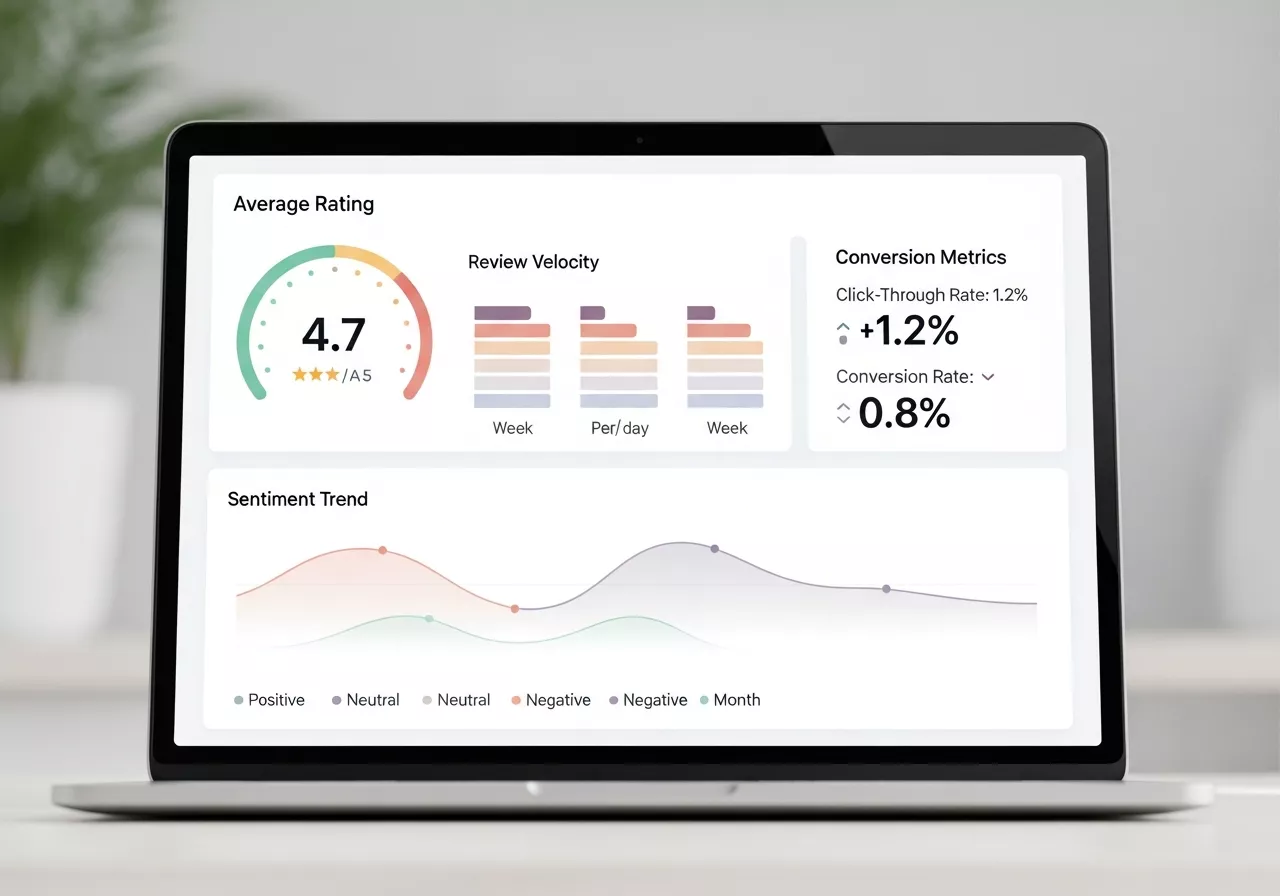
Centralizing your reputation data in a single dashboard helps teams monitor performance and react quickly. A well-designed dashboard turns raw data into actionable insights, making it easier to spot trends, identify problem areas, and highlight wins. This transparency also helps secure ongoing support from leadership.
Key Points
- Include review metrics like average rating and review velocity.
- Track sentiment trends across social and review platforms.
- Visualize ORM impact on conversions, CAC, and CLTV.
- Use alerts to catch rating drops or negative spikes early.
Summary Table (Applies to All Four Sections)
| Topic Area | Primary Benefit | Example Impact |
|---|---|---|
| Attribution Models | Shows ORM’s true influence on conversions | Multi-touch shows ORM involved in 40% of closed deals |
| ORM + SEO | Improves search visibility & CTR | 0.5-star lift increases organic clicks by up to 25% |
| Cost of Poor Reputation | Prevents revenue loss & higher CAC | Negative reviews reduce leads by 10–20% |
| ORM Dashboard | Centralizes insights for faster action | Real-time alerts prevent rating drops |
Leveraging Customer Feedback Loops for Stronger ORM Impact
An effective ORM program doesn’t just monitor reputation—it actively incorporates customer feedback into operational improvements. By closing the feedback loop, businesses can turn reviews and sentiment signals into actionable insights that reduce friction, strengthen customer satisfaction, and boost long-term retention. This makes ORM not just a marketing initiative, but a driver of operational excellence.
Key Points
- Use automated follow-up emails to convert private feedback into public reviews.
- Categorize reviews to identify recurring issues or emerging product trends.
- Share insights with product, support, and sales teams for cross-functional improvement.
- Reward customers who provide valuable, constructive feedback.
How Social Media Engagement Strengthens ORM ROI
Engaging with audiences on social platforms directly supports reputation goals by amplifying positive sentiment and reducing the spread of negative experiences. Timely responses and proactive community management can significantly influence customer perceptions—ultimately boosting brand trust and conversions.
Key Points
- Respond to comments and messages quickly to show attentiveness and care.
- Share user-generated content to amplify authentic positive experiences.
- Use social monitoring to catch early signs of emerging issues.
- Engage influencers or brand advocates to reinforce credibility.
Using Predictive Analytics to Forecast Reputation Outcomes
Predictive analytics enables companies to anticipate how sentiment trends, review velocity, and customer feedback changes will impact future revenue, conversions, and brand visibility. By forecasting potential outcomes, marketing and PR teams can justify ORM investments more confidently and act before small issues become costly challenges.
Key Points
- Predict review trends based on product launches, campaigns, or seasonality.
- Identify which negative issues are most likely to escalate into reputation crises.
- Forecast revenue lift tied to projected improvements in star ratings.
- Use AI tools to simulate the impact of different ORM strategies.
Summary Table
| Topic Area | Primary Benefit | Example Impact |
|---|---|---|
| Feedback Loops | Converts insights into operational improvements | Faster issue resolution improves reviews by 15–20% |
| Social Engagement | Strengthens brand trust & reduces negativity | Responding within 1 hour cuts negative escalation by 30% |
| Predictive Analytics | Forecasts future reputation risks & opportunities | Predictive modeling anticipates 70% of sentiment shifts |
Integrating ORM With Customer Journey Mapping
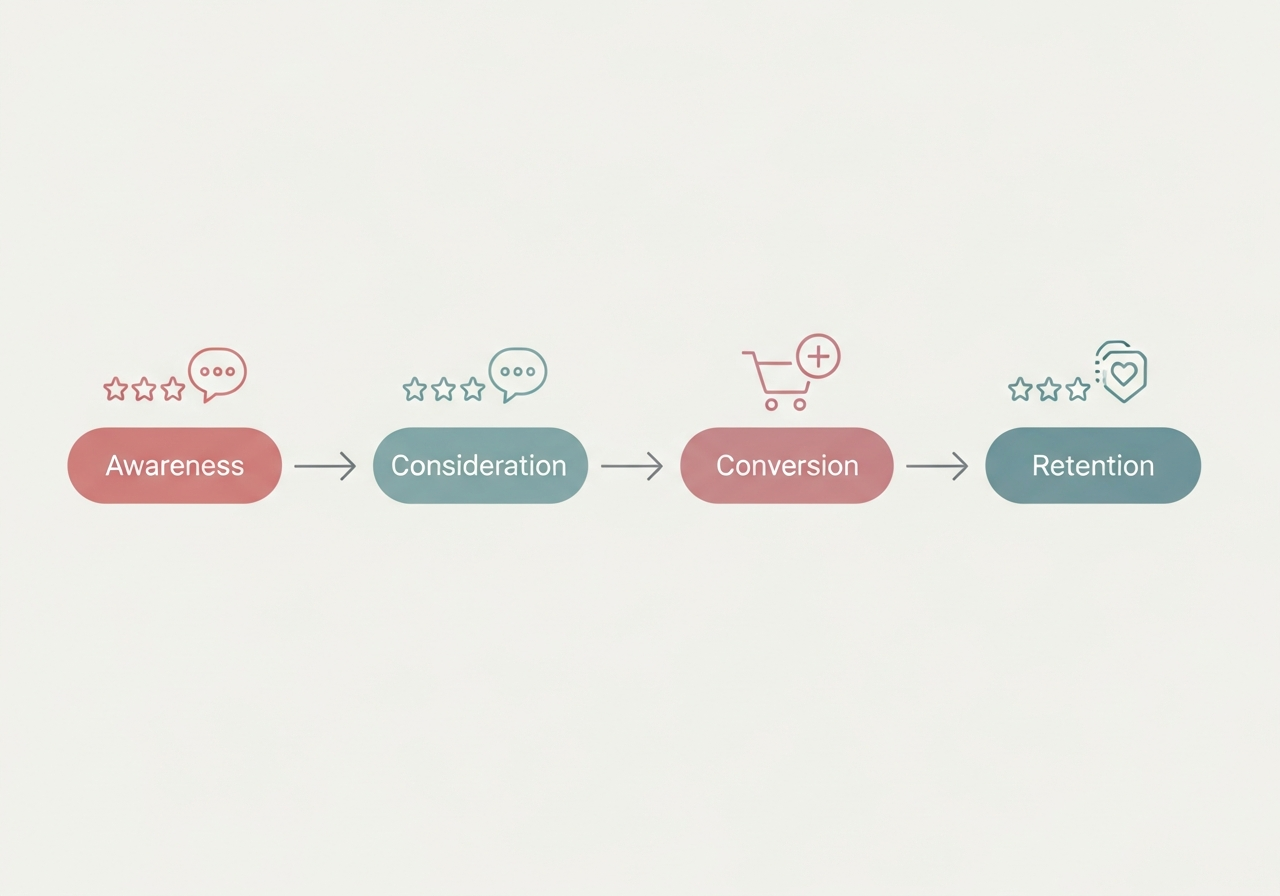
Understanding how customers experience your brand at each stage of the journey helps you pinpoint where reputation cues have the greatest impact. By mapping ORM touchpoints—reviews, ratings, testimonials, and social sentiment—you can align reputation-building efforts with customer expectations. This alignment improves trust, reduces friction, and increases the likelihood of progression from awareness to purchase and eventually advocacy.
Key Points
- Identify critical reputation moments across awareness, consideration, conversion, and retention.
- Place reviews and testimonials strategically on high-intent pages and nurture sequences.
- Share sentiment insights with sales and support teams to address objections proactively.
- Track how reputation improvements influence customer movement between stages.
Scaling ORM With Automation and AI
As your organization grows, manually managing online reputation becomes harder to maintain. Automation and AI streamline key ORM workflows—monitoring, sentiment analysis, review generation, and response management—so you can maintain consistency and respond faster. This not only saves time but ensures no feedback slips through the cracks.
Key Points
- Automate review requests after actions like purchases or resolved support tickets.
- Use AI-powered sentiment analysis to categorize feedback and detect issues early.
- Implement automated response templates for recurring review types.
- Set AI alerts for sudden increases in negative reviews or brand mentions.
Conclusion
Proving the ROI of Online Reputation Management transforms it from a background activity into a strategic growth lever. By selecting the right metrics, leveraging data tools, applying a clear ROI formula, and showcasing results with compelling visuals and narratives, you can secure buy-in and scale your ORM initiatives. Start with a pilot, track early wins, and continuously optimize to maximize impact. The stronger your reputation, the more doors open—and the higher your ROI will climb.
Investing in ORM is not just about reviews or ratings; it’s a deliberate effort to build brand reputation, driving trust, loyalty, and measurable growth.
Frequently Asked Questions (FAQ)
1. How long does it take to see ROI from Online Reputation Management?
Most companies begin seeing measurable improvements—such as higher star ratings, increased review volume, or improved sentiment—within 60–90 days. Significant ROI (revenue lift, reduced CAC, improved retention) often becomes clearer within 3–6 months, depending on review velocity and brand visibility.
2. Can small businesses benefit from ORM as much as larger companies?
Absolutely. In fact, small businesses often see faster results because each review or sentiment shift has a higher impact on visibility and trust. Improved ratings can directly increase local search rankings, foot traffic, and conversions.
3. What’s the most important metric to track for ORM ROI?
There isn’t one universal metric, but many teams start with:
- Star rating improvements
- Review volume and velocity
- Sentiment score changes
- Referral traffic and conversions from review sites
Your “north star” metric should align with your business goals—such as leads, sales, or retention.
4. How do negative reviews affect ROI?
Negative reviews can:
- Reduce conversions by 10–20%
- Increase CAC due to decreased trust
- Lower local search rankings
- Hurt long-term retention
Effective ORM helps mitigate these risks through fast responses, issue resolution, and positive review generation.
5. Is automation safe to use for ORM management?
Yes—as long as it’s used responsibly. Automation helps with monitoring, review requests, and scoring sentiment. However, responses to reviews should remain human-driven or carefully supervised to maintain authenticity and avoid errors.
6. Can ORM improve SEO?
Definitely. Google uses review signals—including freshness, volume, and rating—as part of its ranking algorithm. Strong ORM leads to:
- Higher local rankings
- Better click-through rates
- Increased branded search volume
- Enhanced trust signals for E-E-A-T
7. How do I present ORM success to leadership teams?
Use a combination of:
- Before-and-after charts
- Review and sentiment trends
- Traffic and conversion metrics
- Specific revenue impact or cost savings
- Customer quotes and examples
Leaders appreciate clarity, visuals, and business outcomes, not just review data.
8. Is ORM only about managing reviews?
Not at all. ORM includes:
- Reviews
- Social media sentiment
- Press mentions
- Influencer narratives
- Brand search results
- Crisis management
- Customer feedback loops
It’s the entire ecosystem of how people perceive your brand online.
9. What’s the biggest mistake companies make with ORM?
The biggest mistake is treating ORM as a reaction instead of a strategy. Waiting for bad reviews or crises makes recovery harder and more expensive. Proactive ORM—requesting reviews, monitoring sentiment, and fixing root issues—delivers much higher ROI.
10. Do I need dedicated software for ORM?
You can manage ORM manually, but dedicated tools dramatically improve efficiency through:
- Centralized review monitoring
- Automated alerts
- Sentiment insights
- Competitive benchmarking
- Analytics and reporting
Learn more about: How to Build Your Reputation in Marketing: A Guide for Emerging Professionals