Your personal reputation defines how others see, trust, and respond to you—shaping opportunities, relationships, and long-term success in both personal and professional life.
What is a personal reputation? It is the collective perception others form based on your behavior, values, skills, and digital presence. This guide explains why personal reputation matters, how it differs from personal branding, and how to build, manage, protect, and recover it using proven strategies and modern reputation management principles.
What is a personal reputation?
A personal reputation is the long-term, cumulative perception others form about you based on your actions, communication style, values, skills, and consistency over time. It represents how people expect you to behave, perform, and respond in different situations—often before you even say a word.
Your personal reputation is not built through isolated moments. Instead, it develops gradually through repeated patterns of behavior and decision-making. Every interaction contributes to this perception, whether it happens in a professional setting, a social environment, or online.
A strong personal reputation reflects:
- How you behave under pressure: Do you stay calm, ethical, and solution-focused during difficult situations, or do you react emotionally and unpredictably?
- How you treat others: Respect, empathy, fairness, and professionalism strongly influence how people remember and describe you.
- How reliable and ethical you are: Consistently keeping promises, meeting expectations, and acting with integrity builds trust over time.
- How visible and credible you appear online and offline: Your digital footprint—social media posts, comments, professional profiles, and search results—now plays a major role in shaping personal reputation alongside real-world behavior.
Importantly, your personal reputation exists whether you actively manage it or not. Even silence, inaction, or neglect contributes to perception. Every conversation, decision, post, and response either strengthens or weakens how others view you.
Personal Reputation vs. First Impression
A first impression and a personal reputation are closely connected—but they are not the same.
- First impressions are immediate and often based on limited information such as appearance, tone of voice, or initial behavior. They form quickly and can be inaccurate or incomplete.
- Personal reputation, on the other hand, is built over time. It is reinforced through repeated experiences and is therefore more stable, influential, and harder to change.
First impressions initiate perception, creating an early expectation. Personal reputation confirms, reshapes, or corrects that expectation through consistent behavior. While a positive first impression can open doors, only a strong personal reputation keeps them open.
In essence, first impressions may get attention—but personal reputation earns trust, credibility, and long-term respect.
Why Understanding What a Personal Reputation Is Matters Today
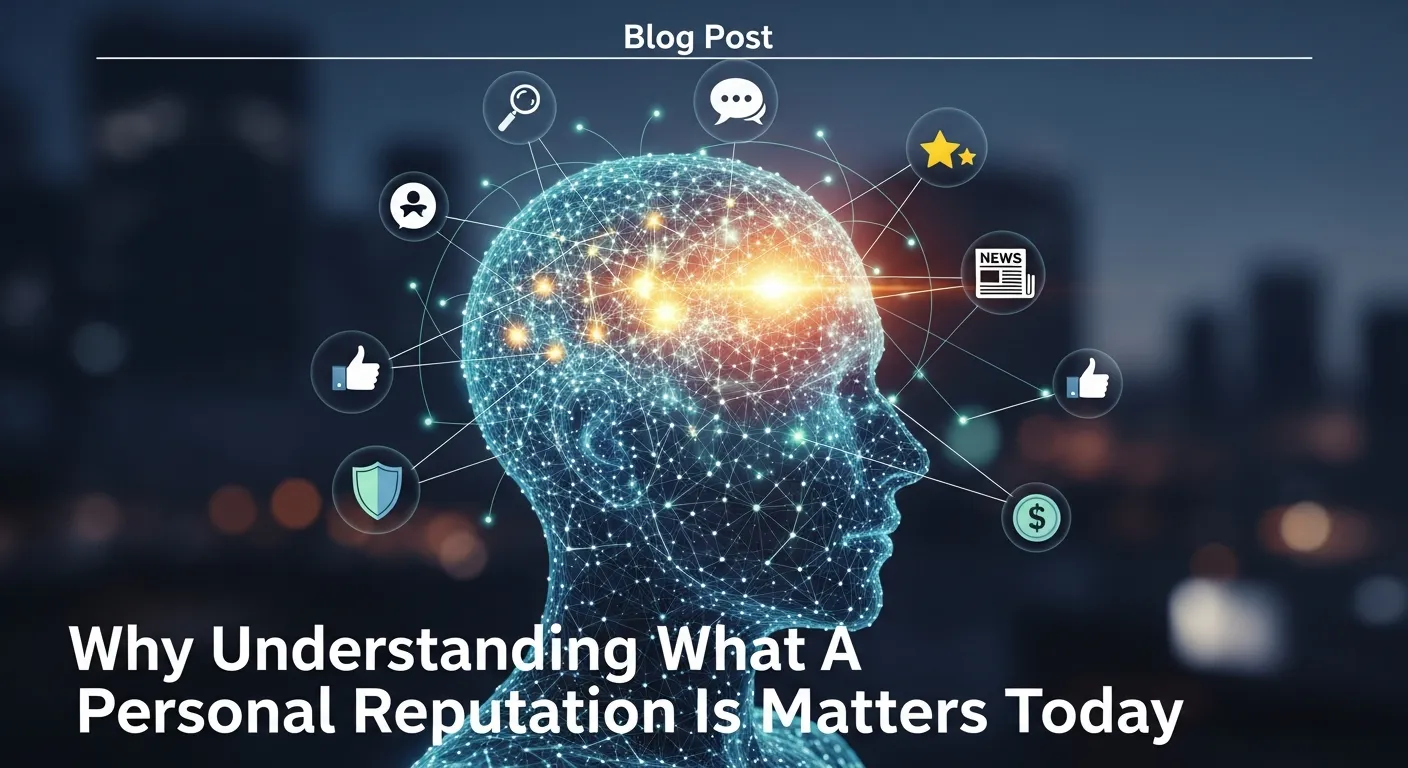
In today’s digitally connected world, understanding what a personal reputation is has never been more important. Reputation is no longer shaped only by face-to-face interactions; it is continuously formed, documented, and evaluated across digital platforms. Your name, opinions, behavior, and even silence can be searched, shared, and judged globally within seconds.
Unlike the past—when reputation spread slowly through word of mouth—modern personal reputation is visible, searchable, and persistent. This shift has dramatically increased both its power and its risk.
Key reasons personal reputation matters today
- Hiring decisions are influenced by online searches
Recruiters and employers routinely search candidates online before interviews. Social media activity, professional profiles, and search results often influence decisions as much as resumes. - Business partnerships rely on perceived trust
Freelancers, consultants, founders, and executives are evaluated based on credibility, ethics, and consistency. A strong personal reputation reduces perceived risk and increases opportunity. - Social credibility impacts influence and authority
People follow, listen to, and collaborate with individuals they trust. A positive reputation amplifies influence, while a damaged one limits reach and respect. - Negative content spreads faster than positive actions
Mistakes, controversies, or misleading content can go viral instantly, while years of good behavior may go unnoticed. This imbalance makes reputation awareness essential.
In this environment, your reputation often speaks before you do. Long before a conversation begins, people may already have assumptions about your professionalism, values, and reliability.
Core Elements That Shape a Personal Reputation
To truly understand what is a personal reputation, you must understand the elements that build it. Reputation is not accidental—it is shaped by identifiable, repeatable components.
1. Character and Integrity
Character is the foundation of personal reputation. Honesty, ethics, accountability, and moral consistency determine whether others trust you.
- Do you keep your word?
- Do your actions align with your values?
- Are you consistent even when it’s inconvenient?
Without integrity, reputation becomes fragile and temporary. Trust, once broken, is extremely difficult to restore.
2. Competence and Expertise
Skill and knowledge are critical pillars of reputation—especially in professional contexts.
Competence is demonstrated through:
- Consistent performance
- Problem-solving ability
- Willingness to learn and adapt
- Delivering results over time
People respect individuals who reliably add value. Even a strong character cannot compensate for repeated incompetence.
3. Behavior and Conduct
Your behavior—especially in difficult or unobserved moments—shapes perception more than words ever will.
Reputation is influenced by:
- How you treat people with less authority
- How you respond to conflict or criticism
- How you manage stress and emotions
Courtesy, professionalism, and emotional intelligence are powerful reputation multipliers.
4. Communication Style
How you communicate determines how you are remembered.
Clear, respectful, and empathetic communication:
- Builds trust
- Reduces misunderstanding
- Enhances leadership perception
Poor communication—defensiveness, arrogance, or inconsistency—can damage reputation quickly, even when intentions are good.
5. Online Presence and Digital Footprint
Your digital behavior is now inseparable from your personal reputation.
This includes:
- Social media posts and comments
- Online discussions and opinions
- Photos, videos, and shared content
- Mentions, tags, and search results
Digital content is searchable, shareable, and permanent, making online presence one of the most influential reputation factors today.
What Is a Personal Reputation in the Digital Age?

The digital age has permanently transformed how personal reputation is created, measured, and judged. Reputation is no longer limited to what people personally experience—it now includes what algorithms, platforms, and audiences observe and interpret.
Digital factors influencing personal reputation include:
- Search engine results: What appears when someone searches your name
- Social media profiles: Tone, consistency, and behavior across platforms
- Online reviews and mentions: Comments, feedback, and third-party opinions
- Professional platforms: Profiles on networks like LinkedIn that signal credibility
- AI-indexed content and sentiment analysis: Automated systems that evaluate tone, patterns, and public perception at scale
Because of this shift, personal reputation management has become a necessary life skill—not an optional one. Managing how you appear online, how you engage publicly, and how you respond to feedback is now essential for protecting credibility and long-term opportunity.
In the digital era, reputation is not just what people remember—it is what the internet records.
Personal Branding vs Reputation: What’s the Difference?
| Aspect | Personal Branding | Personal Reputation |
|---|---|---|
| Definition | What you project | What others believe |
| Control | High | Partial |
| Timeframe | Intentional | Accumulative |
| Nature | Strategic | Perceptual |
| Risk | Can be curated | Must be earned |
Personal branding is what you say about yourself.
Personal reputation is what others say when you’re not present.
You can control branding—but reputation must be consistently demonstrated.
How Personal Reputation Is Built Over Time
Personal reputation is not created by a single achievement, mistake, or moment—it is built through repeated patterns of behavior observed over time. People form opinions based on what they consistently see, experience, and hear about you. These patterns eventually become expectations, and expectations define reputation.
Every choice you make contributes to this long-term perception. Small actions, when repeated, often have a greater impact on reputation than rare, dramatic events.
Reputation-building behaviors
Consistently positive actions strengthen trust and credibility:
- Keeping promises: Following through on commitments—big or small—signals reliability. People quickly notice who delivers and who doesn’t.
- Delivering quality work: Consistent standards matter more than occasional excellence. A reputation for dependable quality builds confidence in your abilities.
- Handling criticism maturely: Accepting feedback without defensiveness demonstrates emotional intelligence and professionalism.
- Treating people respectfully: Courtesy, fairness, and empathy—especially toward those who cannot benefit you directly—strongly influence how others perceive your character.
- Staying consistent across environments: Acting the same way in public, private, online, and offline settings reinforces authenticity and trust.
Over time, these behaviors create a reputation for dependability, integrity, and competence.
Reputation-damaging behaviors
Negative patterns can undermine reputation just as steadily:
- Inconsistency: Saying one thing and doing another creates confusion and erodes trust.
- Dishonesty: Even small lies or exaggerations can permanently damage credibility once discovered.
- Emotional outbursts: Poor emotional control, especially in professional settings or online, can overshadow years of good behavior.
- Poor online conduct: Inappropriate posts, arguments, or impulsive comments can spread quickly and leave a lasting digital record.
- Ignoring feedback: Dismissing concerns or refusing to improve signals arrogance and stagnation.
Reputation damage often occurs gradually—until a single incident exposes a long-standing pattern.
Why Personal Reputation Impacts Career Growth

Understanding what is a personal reputation is critical for long-term professional success. Skills may open doors, but reputation determines how far you go once inside.
In competitive environments, decision-makers look beyond technical ability. They assess trustworthiness, reliability, and professional conduct—all elements of reputation.
Career benefits of a strong personal reputation
- Faster promotions: Leaders are promoted not only for performance but for dependability, judgment, and consistency.
- Leadership trust: Managers trust individuals with strong reputations to handle responsibility, pressure, and sensitive situations.
- Referral opportunities: Colleagues and clients recommend people they respect and trust, not just those who are talented.
- Client confidence: Clients prefer working with professionals known for integrity, communication, and reliability.
- Crisis resilience: A strong reputation acts as a buffer during mistakes or challenges, giving you the benefit of the doubt.
Many professionals miss opportunities not because they lack skill, but because their reputation is unclear, inconsistent, or damaged. In modern careers, reputation is often the invisible factor that separates those who advance from those who stagnate.
In the long run, skills can be learned—but reputation must be earned and protected consistently.
How Personal Reputation Affects Personal Relationships
Personal reputation doesn’t stop at work—it extends deeply into your personal life. How people perceive your character, reliability, and emotional maturity directly affects the quality and longevity of your relationships.
A strong, positive personal reputation creates a foundation of trust and emotional safety, which are essential for healthy human connections.
A positive personal reputation builds:
- Emotional trust: When people know you are honest, consistent, and accountable, they feel secure sharing thoughts, concerns, and vulnerabilities with you.
- Social credibility: Friends and peers value your opinions more when you are known for fairness, discretion, and sound judgment.
- Long-term friendships: Reputation for loyalty, respect, and reliability encourages relationships that endure life changes, distance, and challenges.
- Strong family bonds: Within families, reputation influences how much responsibility, influence, and respect you are given over time.
People naturally gravitate toward individuals who are authentic and dependable. Conversely, a reputation for inconsistency, emotional volatility, or unreliability can strain even long-standing relationships. Over time, personal reputation becomes the lens through which your intentions are interpreted—positively or negatively.
What Is Personal Reputation Management?
Personal reputation management is the intentional, ongoing process of monitoring, shaping, and protecting how others perceive you—both offline and online. It is not about manipulation or image control; it is about alignment between who you are, how you act, and how you are perceived.
Effective personal reputation management includes:
- Self-awareness: Understanding your values, strengths, weaknesses, and behavioral patterns.
- Online reputation management: Actively managing your digital presence across social platforms, search results, and professional networks.
- Feedback monitoring: Paying attention to how others respond to your actions, communication, and decisions.
- Crisis handling: Responding calmly, transparently, and responsibly during conflicts, mistakes, or misunderstandings.
- Digital footprint control: Reviewing, updating, and optimizing what information about you exists online.
Modern personal reputation management increasingly relies on AI-powered sentiment analysis, social listening tools, and search engine monitoring to track perception at scale. These tools help identify potential risks early—before they escalate into lasting damage.
Online Reputation Management and Personal Reputation
Online reputation management (ORM) plays a central role in shaping personal reputation in today’s digital-first world. For many people, your online presence is their first interaction with you.
ORM focuses on how your name, content, and behavior appear across digital platforms and search engines.
Key components of online reputation management include:
- Social media monitoring: Tracking posts, comments, mentions, and engagement to ensure alignment with your values and goals.
- Search engine reputation management: Influencing what content appears when your name is searched.
- Content creation and suppression: Publishing positive, value-driven content while minimizing the visibility of outdated or negative material.
- Review and feedback handling: Responding professionally to public feedback, comments, or criticism.
- Proactive digital storytelling: Intentionally shaping narratives through thought leadership, expertise sharing, and constructive engagement.
Modern AI-driven online reputation management enhances this process by identifying sentiment trends, detecting anomalies, and highlighting emerging risks in real time. This allows individuals to correct perception faster, respond more strategically, and maintain consistency across platforms.
In a world where digital impressions are permanent and public, managing your personal reputation online is no longer optional—it is essential for protecting trust, credibility, and long-term relationships.
Steps to Build a Strong Personal Reputation
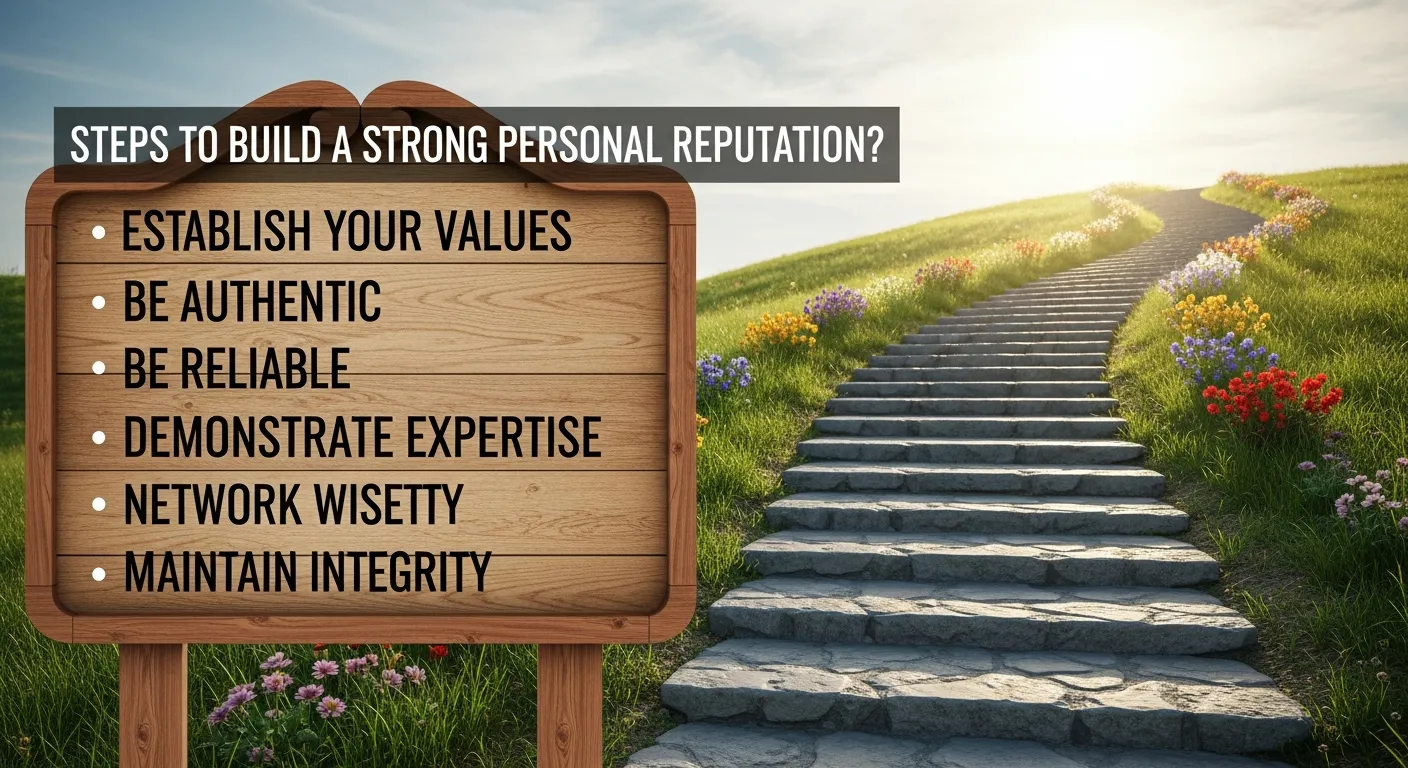
Building a strong personal reputation is an intentional, long-term process. It requires self-awareness, consistency, and discipline across every interaction—both online and offline. Below are the essential steps that help shape a reputation built on trust, credibility, and respect.
1. Define Your Values and Identity
Your values are the compass that guides your behavior—and behavior ultimately defines reputation. Without clearly defined values, actions become inconsistent, and perception becomes unclear.
To begin:
- Identify the principles that matter most to you (such as integrity, accountability, empathy, or excellence).
- Decide how you want to be known by others in both personal and professional settings.
- Align your daily decisions with these values, especially in difficult situations.
When people consistently see your actions reflect your stated values, trust naturally follows.
2. Be Consistent Across All Channels
Consistency is one of the strongest signals of authenticity. A reputation becomes powerful when people know what to expect from you—regardless of context.
This means:
- Acting the same way in meetings, social settings, and online platforms.
- Maintaining consistent tone, professionalism, and respect in communication.
- Ensuring your online presence reflects your real-world behavior and values.
Misalignment between online and offline behavior creates doubt and weakens credibility.
3. Invest in Skill Development
Competence strengthens credibility. No matter how strong your character is, your reputation will suffer if you cannot deliver results.
To build competence:
- Commit to continuous learning and improvement.
- Stay current with trends and best practices in your field.
- Seek challenging opportunities that allow you to demonstrate and refine your skills.
- A reputation for expertise develops when others see consistent performance, not just potential.
4. Practice Ethical Decision-Making
Ethical choices protect reputation over the long term. While unethical shortcuts may offer short-term benefits, they almost always result in long-term damage once exposed.
Ethical reputation-building involves:
- Choosing honesty over convenience.
- Taking responsibility for mistakes.
- Treating others fairly, even when there is no immediate reward.
People may forgive errors, but they rarely forget compromised integrity.
5. Manage Your Online Presence
Your digital footprint is now inseparable from your personal reputation. Managing it proactively is essential.
Key actions include:
- Auditing social media profiles and removing or limiting risky or outdated content.
- Ensuring professional platforms reflect your current goals, skills, and values.
- Publishing thoughtful, value-driven content that reinforces your expertise and character.
- Engaging respectfully in online discussions and avoiding impulsive responses.
Every online interaction contributes to the long-term narrative about who you are.
6. Monitor Feedback Regularly
Feedback is one of the most powerful tools for reputation improvement. How others experience you may differ from how you see yourself.
To use feedback effectively:
- Ask for honest input from trusted peers, mentors, or family members.
- Pay attention to patterns in comments, reactions, and responses.
- Reflect on criticism without defensiveness and apply it constructively.
Reputation improves fastest when feedback is acknowledged, learned from, and acted upon.
A strong personal reputation is not built overnight. It is the result of intentional values, consistent behavior, ongoing development, and self-correction. By following these steps, you actively shape how others perceive you—and ensure that perception reflects your best self.
Handling Negative Feedback and Reputation Damage
Negative feedback is inevitable—but reputation loss is not. In fact, how you respond to criticism often has a greater impact on your personal reputation than the criticism itself. Thoughtful, mature responses can strengthen trust, while defensive or emotional reactions can amplify damage.
Effective response strategies
- Respond calmly and professionally: Emotional reactions escalate situations. A composed response signals confidence, emotional intelligence, and self-control.
- Accept responsibility where appropriate: Acknowledging mistakes demonstrates accountability and integrity—two pillars of a strong reputation.
- Clarify misinformation: When feedback is inaccurate or misleading, correct it respectfully and factually without attacking the source.
- Demonstrate improvement: Words alone are not enough. Visible changes in behavior or performance rebuild credibility over time.
When handled well, criticism becomes proof of maturity and growth. Turning negative feedback into learning opportunities often strengthens reputation rather than weakening it, showing others that you are adaptable, accountable, and committed to improvement.
Recovering a Damaged Personal Reputation
Reputation recovery is possible—but it requires patience, consistency, and a structured approach. Attempting quick fixes or cosmetic changes rarely works.
A practical reputation recovery framework
- Assess the damage: Identify what went wrong, who was affected, and how perception has shifted.
- Stop harmful behavior: Reputation cannot recover while the root cause continues.
- Address issues publicly if needed: When damage is visible, silence can be interpreted as avoidance. Transparency builds trust.
- Build positive content: Consistently demonstrate responsible behavior, ethical actions, and value-driven contributions.
- Maintain consistency: Recovery depends on sustained behavior over time—not isolated apologies.
Reputation is rebuilt through patterns, not promises. Sustained effort is the only reliable path to recovery.
What Is a Personal Reputation in Leadership and Business?
In leadership and business, reputation often matters more than authority, titles, or formal power. People follow leaders they trust—not those they fear or merely report to.
A strong personal reputation enables:
- Team loyalty: Employees are more committed to leaders known for fairness, transparency, and consistency.
- Crisis leadership: During uncertainty, leaders with strong reputations maintain credibility and calm.
- Brand trust: A leader’s reputation directly influences how customers and partners perceive the organization.
- Organizational resilience: Trust-based cultures recover faster from mistakes and external challenges.
Personal reputation does not exist in isolation. It directly influences corporate reputation management, investor confidence, and long-term business credibility.
The Role of AI in Personal Reputation Management

Technology has transformed how reputation is monitored and managed. Modern tools provide visibility and early warning systems that were previously impossible.
AI-driven tools now include:
- AI-powered sentiment analysis: Evaluates tone, emotion, and perception across digital platforms in real time.
- Social listening systems: Track mentions, discussions, and emerging narratives about individuals.
- Predictive reputation monitoring: Identifies patterns that may indicate future risks before they escalate.
- Deepfake reputation protection: Detects manipulated content designed to misrepresent individuals.
AI does not replace integrity, judgment, or ethical behavior—but it enhances awareness, speed, and strategic response. When combined with authentic conduct, AI-powered tools become powerful allies in protecting and strengthening personal reputation in an increasingly complex digital world.
Ethics, Authenticity, and Long-Term Reputation
Shortcuts destroy trust. While unethical behavior or image manipulation may produce short-term visibility or gains, it almost always results in long-term reputation damage once exposed. A sustainable personal reputation is not built through tactics—it is built through character.
Long-term personal reputation depends on how consistently your actions align with your values, especially when no immediate reward is at stake.
Ethical consistency
Ethical consistency means doing the right thing repeatedly, not selectively. People observe patterns over time, and even a single ethical failure can outweigh years of positive behavior. Consistency in honesty, fairness, and responsibility creates a reputation that others feel safe relying on.
Authentic behavior
Authenticity strengthens a reputation because it eliminates contradiction. When your public image matches your private behavior, trust grows naturally. Authentic individuals do not perform roles for approval—they act in alignment with who they truly are, which makes their reputation stable and believable.
Transparent communication
Transparency builds credibility. Openly sharing intentions, acknowledging mistakes, and setting realistic expectations reduce suspicion and misunderstanding. Transparent communication does not mean oversharing—it means being clear, truthful, and respectful in how information is conveyed.
Accountability
Accountability turns mistakes into reputation assets. Taking ownership of outcomes—both good and bad—demonstrates maturity and leadership. People are more willing to forgive errors when they see genuine responsibility followed by corrective action.
A reputation built ethically may grow more slowly, but it lasts longer and withstands pressure. In contrast, a reputation built aggressively—through exaggeration, shortcuts, or manipulation—collapses quickly under scrutiny. True, enduring personal reputation is earned through integrity, authenticity, and consistent ethical behavior over time.
Conclusion
Understanding what a personal reputation is gives you control over one of your most valuable intangible assets. Your reputation shapes trust, opportunity, and influence. By acting with integrity, managing your digital presence, and responding constructively to feedback, you can build a personal reputation that supports long-term success and meaningful relationships. Reputation is built daily—protect it intentionally.
FAQs: What Is a Personal Reputation?
1. What is a personal reputation in simple terms?
A personal reputation is how others consistently see and judge you over time. It reflects your character, behavior, reliability, and credibility based on repeated experiences, not one-time actions.
2. How is personal reputation formed?
Personal reputation is formed through ongoing patterns in how you act, communicate, and make decisions. Your values, ethics, consistency, and online presence all combine to shape how people perceive you over the long term.
3. Can you control your personal reputation?
You cannot fully control how others think about you, but you can strongly influence your reputation through consistent behavior, ethical choices, clear communication, and responsible online conduct.
4. What damages personal reputation the most?
Personal reputation is most often damaged by dishonesty, inconsistency between words and actions, unethical behavior, emotional reactions, and negative or careless online activity.
5. How long does it take to build a strong personal reputation?
Building a strong personal reputation usually takes months or years of consistent behavior and visible reliability. Trust develops gradually, while reputation damage can happen quickly.
6. Can a damaged reputation be repaired?
Yes, a damaged personal reputation can be repaired through accountability, transparency, and sustained positive behavior. Recovery requires patience and consistent effort rather than quick fixes.
7. How does social media affect personal reputation?
Social media magnifies personal reputation by making behavior public, searchable, and permanent. Positive engagement can enhance credibility, while negative posts or arguments can cause long-lasting damage.
8. What is personal reputation management?
Personal reputation management is the ongoing process of monitoring, shaping, and protecting how others perceive you. It involves self-awareness, managing online presence, responding to feedback, and handling crises responsibly.
9. Is personal branding the same as personal reputation?
No. Personal branding is how you intentionally present yourself, while personal reputation is how others actually perceive you. Branding is created; reputation is earned over time.
10. Why is personal reputation important for professionals?
Personal reputation affects hiring decisions, promotions, leadership trust, client confidence, and long-term career growth. In many cases, reputation determines opportunities as much as skills or experience.