
In the hyper-competitive world of digital retail, E-commerce Reputation Management is the difference between a thriving storefront and a forgotten URL. Your reputation is your most valuable currency.
This guide provides a deep dive into E-commerce Reputation Management, exploring how to leverage AI-powered sentiment analysis, proactive review generation, and crisis PR. We outline actionable steps to build consumer confidence, optimize SEO visibility, and turn negative reviews into growth opportunities for e-commerce success.
Why Your E-commerce Business Needs Online Reputation Management
Websites like RipOffReport and Reddit have made it easier than ever for a single disgruntled voice to reach thousands. This is why businesses must prioritize E-commerce Reputation Management, which is the strategic act of controlling and overseeing what the public accesses about their brand online.
For e-commerce, ORM is much more than mere aesthetics—it is a direct driver of your bottom line. It affects your sales velocity, your customers’ trust, and your long-term scalability. Without proactive online reputation management, you are essentially leaving your brand’s narrative in the hands of strangers.
The Relationship of Reputation to Selling
The online reputation of your brand has a quantifiable impact on conversion rates. According to industry surveys, roughly 88% of consumers trust online reviews as much as personal recommendations. Furthermore, 31% of shoppers are willing to spend more with a business that boasts “excellent” ratings.
Conversely, negative sentiment causes immediate friction. If an online store features high-quality products but is haunted by untouched reviews regarding shipping delays, the brand perception in marketing suffers. The “social proof” that should be driving sales becomes a barrier to entry.
Consumer Confidence and Brand Trust
Trust is the bedrock of the digital economy. In e-commerce, customers are frequently giving you money upfront, trusting you to deliver a product that matches the description. A favorable online presence confirms that your business is customer-centric. This trust breeds Brand Loyalty, turning one-time buyers into lifelong advocates who provide Video Testimonials and Online Reputation assets for your brand.
SEO and Visibility: The Technical Side of Reputation
E-commerce Reputation Management influences not only how consumers behave but also how search engines rank your site. Positive feedback across platforms like Google Business Profiles and Trustpilot signals “authority” to Google’s algorithm.
- Search Engine Reputation Management (SERM): High star ratings and frequent mentions improve your “E-E-A-T” (Experience, Expertise, Authoritativeness, and Trustworthiness) scores.
- Google Business Profile Optimizing: For e-commerce brands with physical locations or local presence, an optimized profile is a magnet for organic traffic.
- Brand Awareness: The more positive your footprint, the more likely you are to appear in “Best of” lists and comparison articles, which are essential for Consumer Brand Marketing.
Watching What People Say About You Online
The first step in E-commerce Reputation Management is establishing a “listening post.” You must understand the existing sentiment before you can influence it.
Essential Tools for Online Reputation Management
- Google Alerts: A free tool to track your business name and core product keywords.
- AI-Powered Sentiment Analysis: Tools like Brand24 and Mention use AI chatbots and machine learning algorithms to categorize mentions as positive, negative, or neutral.
- Social Media Monitoring: Platforms like Hootsuite and Sprout Social allow for real-time trend marketing, letting you see what hashtags are being used in relation to your brand.
- What is Customer Review Management? It is the use of tools like Yext or Trustpilot to aggregate all feedback into a single dashboard, enabling online reputation management with AI and social listening.
Developing a Consistent Monitoring Schedule
While tools make the process easier, digital reputation management requires a human touch. Dedicate staff or hire online reputation management services to review mentions daily. This ensures that a “small fire” in a comment section doesn’t grow into a viral inferno.
Answering Reviews: Turning Critics into Advocates
How you respond to feedback says more about your brand than the feedback itself. This is a core component of handling negative feedback and integrating customer experience.
Handling Positive Reviews
Don’t ignore the fans. Acknowledge and thank customers who leave great reviews.
- Personalize: Use their name.
- Repurpose: Share these testimonials on your social media. This is a key part of a Personal Brand Strategy for founders as well.
Addressing Negative Feedback
Negative reviews are actually negative reviews into growth opportunities for e-commerce. If handled with grace, they show prospective buyers that you are accountable.
- Stay Professional: Never be defensive. Admit the problem politely.
- Respond Promptly: Speed indicates that you value the customer’s time.
- Provide a Solution: Move the conversation to a private channel, like email,l to resolve the issue.
| Feature | Defensive Response | Professional Resolution |
| Tone | Accusatory/Aggressive | Empathetic/Calm |
| Goal | To prove the customer wrong | To solve the problem |
| Public View | Looks petty and unreliable | Looks authoritative and helpful |
| Outcome | Loss of future customers | Potential “Customer Recovery” |
Creating a Good Online Image: Proactive Growth

While “cleaning up” bad reviews is necessary, sustainable online reputation management is about building a wall of positive content.
1. Encourage Customer Reviews
A happy customer is your best salesperson. Use automated branding tools to send follow-up emails after a successful delivery. Offer small incentives like loyalty points, ensuring you follow ethical guidelines for review management services.
2. Create Value-Driven Content
Establish Brand Authority through a robust content strategy.
- Educational Blogs: Write about industry trends or product guides.
- Video SEO: Create YouTube content showing your products in action.
- Brand Storytelling: Share the “why” behind your company to build a Brand Personality in Marketing.
3. Join Online Communities
Participate in Reddit, Facebook Groups, and niche forums. Don’t just sell—provide solutions. This lends a “human feeling” to your brand, which is essential for CPG Brand Marketing and Luxury Brand Marketing alike.
Managing Reputation Crises
A PR disaster can wreak havoc on your Brand Equity if not handled with a clear crisis management plan.
- Act Fast: Transparency is the foundation of trust. If a product batch is defective, admit it before the internet finds out.
- Lean on a Crisis Management Team: In severe cases, involve reputation management services or PR experts to guide your messaging.
- Maintain Consistency: Ensure all channels (Social, Email, Web) are sharing the same factual narrative. This prevents the spread of misinformation and deepfakes AI reputation management risks.
The Future of E-commerce Reputation Management
Looking ahead to 2026 and beyond, AI-driven online reputation management will become the standard. From AI-driven trend forecasting to decentralized “trust graphs” on the blockchain, the way we measure credibility is evolving.
Future Opportunities in ORM
- AI-Powered Online Management: Using AI to predict which customers are likely to leave a negative review based on their Customer Journey Mapping.
- Sonic Branding: As voice-shopping grows, the “sound” of your brand will contribute to Brand Recognition.
- Ethical Branding: Consumers will prioritize brands that show a commitment to Brand Purpose Development and sustainability.
Ethical Branding and Data Privacy as Reputational Pillars
In 2026, E-commerce Reputation Management has shifted from mere “comment moderation” to a deep focus on corporate ethics. Consumers now use ethical branding as a primary filter for where they spend their money. If your brand’s values do not align with your audience’s social or environmental concerns, no amount of positive reviews can save your digital image.
1. Data Privacy as a Trust Signal
With high-profile data breaches becoming a frequent headline, data privacy in e-commerce is no longer just a legal checkbox—it is a competitive advantage.
- The “Privacy First” Reputation: Brands that are transparent about their data collection (moving away from intrusive third-party cookies toward first-party data) earn higher trust scores.
- Visible Security Assurances: Displaying trust seals, GDPR compliance badges, and clear “Privacy Dashboards” can reduce cart abandonment by addressing security fears before they arise.
- Impact of Breaches: A single breach can lead to a 65% loss in customer loyalty. Sustainable online reputation management must include a “privacy-by-design” framework to prevent these disasters from occurring in the first place.
2. Circular Retail and Sustainability
Modern consumers are increasingly “socially aware.” They look for brands that support circular retail models, such as trade-in programs, lifetime warranties, or eco-friendly packaging.
- Authentic Commitment: Avoid “greenwashing,” which is a major reputational risk. If your sustainability claims are found to be fraudulent, the resulting PR crisis can be permanent.
- Reputation in Social Commerce Communities: In niche communities like Reddit or specialized Facebook Groups, your brand’s ethical stance is often the most discussed topic. Active, honest participation in these “circular” discussions builds long-term Brand Authority.
The Rise of Social Commerce and “Phygital” Reputation
The boundary between social media and shopping has officially dissolved. E-commerce Reputation Management now happens directly inside the platforms where users live, work, and play.
1. Livestream Shopping and Virtual Influencers
The explosion of livestream shopping on platforms like TikTok and Instagram has created a new theater for reputation.
- Real-Time Accountability: During a livestream, feedback is instantaneous. A host’s ability to handle tough questions live can either solidify trust or instantly damage it.
- Virtual Influencers: Brands are now using AI-powered influencers that work 24/7. While these offer control over Brand Voice, they also require rigorous Brand Safety in Digital Marketing protocols to ensure the AI does not hallucinate or offend.
2. Experiential Retail and “Phygital” Convergence
Even for e-commerce giants, the physical world is becoming a touchpoint. “Phygital” retail—where digital shoppers visit a physical pop-up or showroom—creates unique future opportunities.
- Unified Reputation: Your online reviews must match the in-store experience. If a customer finds a “disconnect” between your polished website and a messy physical showroom, your Brand Perception in Marketing will plummet.
- AR/VR Showrooms: Using Augmented Reality (AR) to let customers “try on” clothes or place furniture in their homes virtually reduces return rates and increases positive review velocity.
Future Opportunities: E-commerce Roadmap
| Opportunity | Description | Strategic Benefit |
| AI Personal Shoppers | AI agents that browse and buy for the user. | You must optimize content for “AI Search” (GEO). |
| Agentic Payment Protocols | Blockchain-based, secure, and frictionless payments. | Builds instant trust in transaction safety. |
| Sustainability Feeds | Real-time data on a product’s carbon footprint. | Appeals to the 71% of consumers prioritizing ethics. |
| Frictionless Returns | Using “Phygital” kiosks for instant online returns. | Converts a common pain point into a “trust moment.” |
Voice Search and “Zero-Click” Discovery
As of 2026, over 25% of the global online population utilizes voice search, fundamentally changing how E-commerce Reputation Management functions. In this “conversational” era, your brand isn’t just a list of search results—it is a single, spoken answer provided by an AI assistant like Alexa or Siri.
1. Optimizing for Conversational Authority
Voice queries are typically longer and question-based (e.g., “Siri, what are the best waterproof hiking boots for flat feet under $150?”). To maintain a positive online reputation, your content must be structured to be “the chosen answer.”
- FAQ-Style Content: Build high-quality FAQ sections that directly answer common customer pain points. These are frequently pulled as “Featured Snippets,” which voice assistants use as their primary source.
- Long-Tail Keyword Strategy: Move beyond short terms like “hiking boots.” Instead, focus on the natural language your customers use. This is a cornerstone of Search Engine Reputation Management.
- Schema Markup for Trust: Implement robust Schema Markup (Product, Review, and FAQ schemas). This “machine-readable” data helps AI verify your price, availability, and sentiment in real-time.
2. Sonic Branding and Voice Reviews
In the voice-first world, your Sonic Branding (the sound or “earcon” of your brand) becomes a key trust signal.
- Audio Identity: Just as a logo builds Brand Recognition, a consistent startup sound or notification tone builds subconscious trust.
- Voice-Enabled Reviews: Future-proof your customer feedback strategy by allowing customers to leave voice-recorded reviews. These feel more authentic and carry emotional nuances that text cannot capture.
Hyper-Personalization and The “Segment of One”
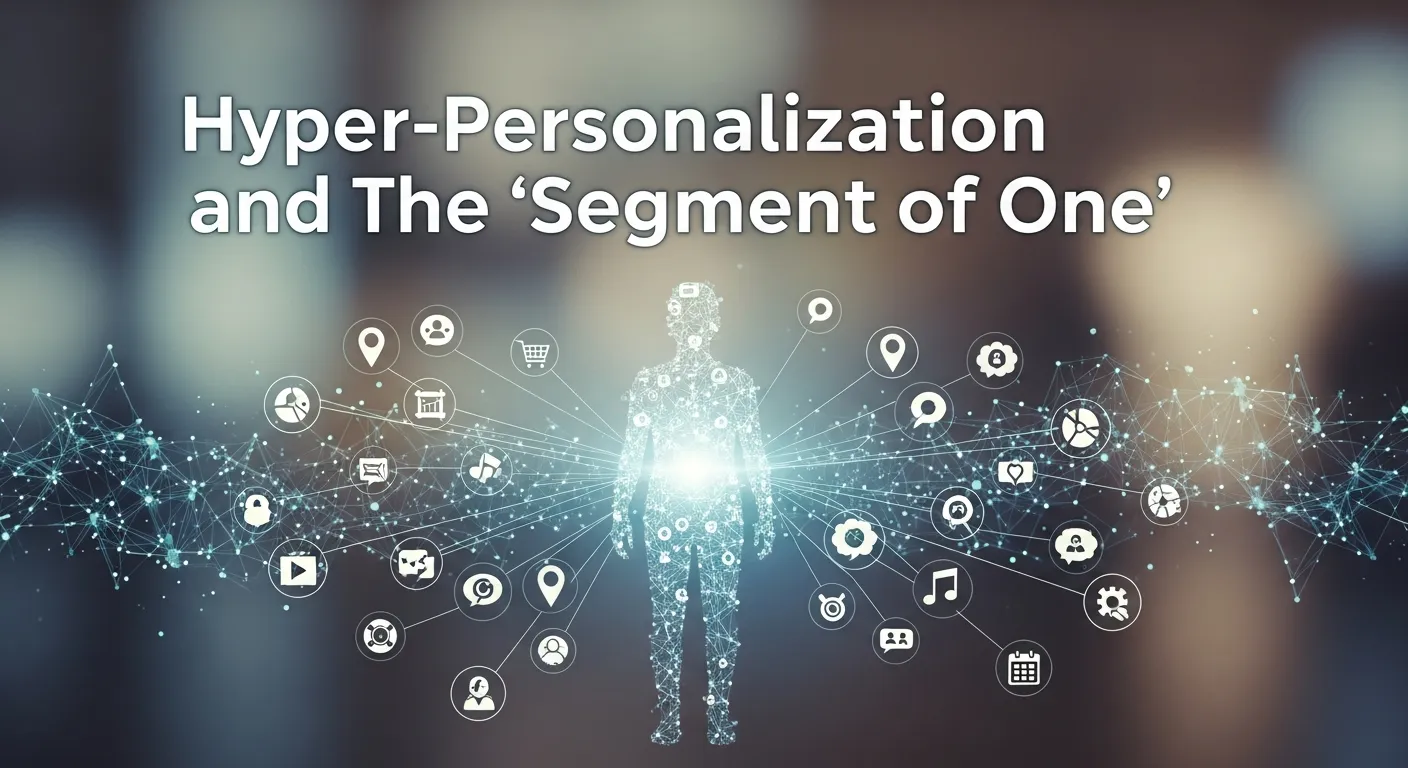
Traditional marketing segments (Age, Location) are being replaced by Hyper-personalization. This uses AI-powered sentiment analysis and real-time data to treat every customer as a unique individual.
1. Predicting Needs Before They Arise
Hyper-personalization in 2026 isn’t just about using a customer’s name; it’s about anticipating their intent through AI-driven trend forecasting.
- Dynamic Landing Pages: Your website should change its layout and content based on the visitor’s specific browsing history and even the local weather.
- Proactive Support: If an AI detects a user hesitating on a shipping policy page, it can trigger a proactive chat message to resolve the doubt. This is a vital part of the integrated customer experience.
- Reducing Decision Fatigue: By curating choices that perfectly match a user’s Brand Archetype preferences, you build a reputation for being “intuitive” rather than “intrusive.”
2. Ethical Data Use as a Reputational Asset
With great data comes great responsibility. Sustainable online reputation management now hinges on how you handle this personal info.
- Transparent Consent: Brands that clearly explain why they need data and how it benefits the customer will outperform those that hide behind complex legalese.
- Data Privacy as Branding: Positioning your brand as “Privacy-First” is a powerful Brand Positioning Strategy in a post-cookie world.
Gaification of the Feedback Loop
To combat “review fatigue,” e-commerce leaders are turning to gamification to drive engagement and organic Brand Awareness.
1. Turning Reviews into “Quests.”
Instead of a boring email request, make the review process a game.
- Badge Systems: Award “Top Reviewer” or “Eco-Warrior” badges for customers who provide detailed feedback or photos of sustainable packaging.
- Community Milestones: Use “Community Challenges” where, if the brand reaches 1,000 positive reviews, a donation is made to a charity. This aligns with Brand Purpose Development.
- Immersion and Social Proof: On platforms like Shopee, gamified elements like “planting virtual trees” for every purchase have significantly increased customer engagement and brand loyalty.
2. The Psychology of Progress
Gamification works because it taps into the human desire for achievement and competition.
-
Review Progress Bars: Showing a customer they are “80% of the way to a Gold Reviewer status” encourages them to add those extra photos or videos that serve as high-value video testimonials.
Agentic Commerce and The “Invisible” Reputation
We are entering the era of Agentic Commerce, where AI agents don’t just recommend products—they buy them on behalf of the user. In this world, your reputation must be readable by machines, not just humans.
1. Managing “AI-to-AI” Reputation
Your E-commerce Reputation Management must now satisfy the algorithms of personal AI assistants.
- Trust Protocols: If a user’s AI agent is tasked with finding “the most reliable coffee maker,” it will scan thousands of data points across the web. If your “reliability score” is low due to poor customer relationship management, you won’t even make the shortlist.
- Agentic Payment Confidence: Implementing Agentic Payment Protocols (secure, background payments) allows these AI agents to complete transactions seamlessly, but only with brands they “trust” based on verified on-chain data.
2. Invisible Shopping, Visible Trust
As shopping becomes “invisible” (background reordering, predictive deliveries), the moment of truth happens when the box arrives.
- Fulfillment as Reputation: In 2026, your supply chain is your marketing. Fast, accurate, and transparent fulfillment is the new 5-star review.
- The “Unboxing” Anchor: When the shopping act is invisible, the physical touchpoint is the only time the brand is “seen.” Premium, sustainable packaging becomes a crucial Brand Strategy Guide element.
Deepfake Defense and Brand Safety
In a world where seeing is no longer believing, Deepfakes AI reputation management is a mandatory skill for e-commerce executives.
1. Authenticity Verification
Brands must proactively protect their Brand Voice and visual identity from AI-generated clones.
- Digital Watermarking: Use blockchain-verified watermarks on all product videos and CEO statements to prove they are authentic.
- Rapid Debunking Protocols: Part of your crisis management plan should include “AI-Red-Teaming”—simulating deepfake attacks to see how quickly your team can respond and verify the truth to the public.
2. Brand Safety in the Age of Generative AI
Your ads might appear next to AI-generated “junk” content.
- Placement Audits: Use Brand Safety in Digital Marketing tools to ensure your e-commerce ads are only shown in high-quality, human-verified environments.
- Maintaining Brand Integrity: In a sea of generic AI content, the “humanity” of your brand—your unique Brand Storytelling—becomes your greatest shield against obsolescence.
The Reputation Multiplier
| Section | Focus Keyword | Future Opportunity |
| Voice Search | Voice Search Optimization | Becoming the “Single Spoken Answer” for AI assistants. |
| Hyper-Personalization | Predictive Sentiment | Anticipating customer needs before they are articulated. |
| Gamification | Customer Engagement | Turning reviews into a rewarding, community-driven game. |
| Agentic Commerce | AI-to-AI Trust | Optimizing brand data for AI buying agents. |
| Deepfake Defense | Brand Safety | Using blockchain to verify the “Humanity” of your brand. |
Conclusion
E-commerce Reputation Management is an ongoing process of monitoring, interaction, and adaptation. By seizing control of your reputation, one review at a time, you forge the groundwork for enduring success. Whether you are a startup or a market leader, your digital presence is an asset—protect it thoughtfully.
FAQs
1. What is the difference between personal branding and reputation?
Personal branding is the message and image you deliberately craft through content, visuals, and positioning.
Reputation is the collective judgment formed by customers, reviews, media, and online conversations over time.
2. How do I remove fake reviews?
Fake reviews can be flagged directly on platforms like Google or Yelp for violating content guidelines.
If removal fails, professional online reputation management services can pursue legal, technical, or suppression strategies.
3. Why is SEO important for reputation?
SEO ensures owned assets like websites, blogs, and profiles rank higher than negative third-party content.
This visibility control reduces reputational risk by shaping what customers see first in search results.
4. How does AI help in reputation management?
AI tools analyze sentiment across reviews, social media, and news in real time at a massive scale.
This allows brands to detect negative trends early and respond before issues escalate into crises.
5. What is “Social Listening”?
Social media monitoring tracks mentions and tags where your brand is directly referenced.
Social listening goes deeper by analyzing tone, context, and emotions—even when your brand isn’t tagged.
6. Can negative reviews actually help my business?
Yes, a few negative reviews increase credibility and make your brand appear more authentic.
They also provide valuable insights to improve products, service quality, and customer experience.
7. What is corporate reputation management?
Corporate reputation management focuses on how investors, partners, regulators, and the public perceive a company.
It integrates PR, crisis communication, leadership visibility, and digital reputation strategies.
8. How can I build trust with video testimonials?
Video testimonials show real customers sharing unscripted, emotional experiences.
They create stronger trust signals because visual proof is harder to manipulate than written reviews.
9. What is the ROI of online reputation management?
ROI appears through higher conversion rates, increased customer lifetime value, and reduced acquisition costs.
A strong reputation also builds brand resilience during PR issues, economic downturns, or competitive attacks.
10. How often should I audit my reputation?
Brand mentions and reviews should be monitored daily to catch issues early.
A comprehensive reputation or brand audit should be conducted quarterly for strategic improvements.
Learn more: Reputation Architecture: Building Crisis-Proof ORM Strategies