Navigate the digital landscape with confidence. In an era where a single click defines your brand’s future, mastering your virtual impression is no longer optional—it is the ultimate competitive advantage.
This comprehensive guide explores the mechanics of Online Reputation Management Services, detailing how proactive strategies, AI-driven tools, and expert SEO can shield your brand, amplify positive narratives, and ensure sustainable growth.
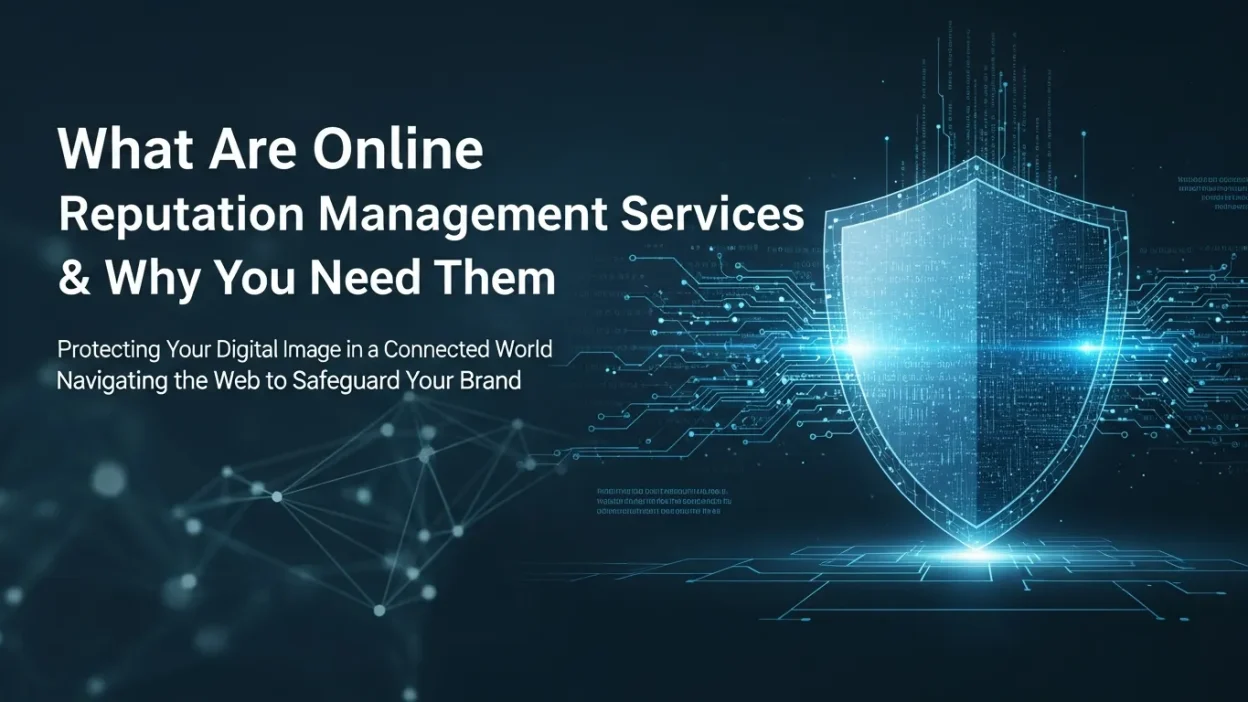
What Are Online Reputation Management Services & Why You Need Them
In the time it took you to open this article, hundreds of consumers likely Googled a brand to decide whether to trust it. We live in an age of “digital handshakes.” Whether you are a local startup, a scaling eCommerce giant, or a high-profile influencer, your online presence is your most valuable asset. But what happens when that asset is threatened by a negative review, a viral controversy, or simply a lack of visibility?
This is where Online Reputation Management Services (ORM) step in. Far from just “damage control,” modern ORM is a sophisticated blend of public relations, search engine optimization (SEO), and community engagement. It is both your shield against digital threats and your sword for market dominance.
What Do Online Reputation Management Services Actually Do?
At its core, Online Reputation Management Services are designed to oversee, protect, and improve the digital perception of an entity. These services utilize a multi-layered approach to ensure that when a potential client searches for your name, the results reflect your true value.
1. Comprehensive Brand Monitoring
Professional ORM begins with “listening.” Using AI-powered online management tools, services track every mention of your brand across social media, forums, news outlets, and review sites like Yelp or Trustpilot. Understanding how to monitor business reputation online is the first step in identifying sentiment trends before they escalate into crises.
2. Strategic Review Management
Customer feedback is the lifeblood of modern commerce. What is customer review management? It is the process of soliciting authentic, positive feedback while professionally addressing grievances. ORM experts help you handle negative feedback by turning disgruntled users into brand advocates, proving your commitment to the customer journey.
3. Search Engine Reputation Management (SERM)
If the first page of Google contains a negative news article from five years ago, your business is suffering. Search Engine Reputation Management involves:
- Removing negative content: When possible, through legal or platform-specific appeals.
- Burying negative results: Using proactive online reputation management to create high-authority content that pushes unfavorable links to the second or third page.
- Optimizing Google Business Profiles: Ensuring your local SEO reflects a 5-star standard.
The Evolution of ORM: AI and Modern Technology
The digital world moves too fast for manual tracking. Today’s advanced online reputation management relies heavily on AI-powered sentiment analysis. These algorithms can scan thousands of comments per second to determine if the public mood is shifting from “neutral” to “angry.”
| Feature | Traditional ORM | AI-Driven ORM |
| Speed | Reactive (Days/Weeks) | Real-time (Seconds) |
| Analysis | Manual Review | AI-powered sentiment analysis |
| Content | Static Press Releases | AI chatbots and machine learning |
| Scalability | Limited to key platforms | Global, multi-channel monitoring |
Deepfakes and AI reputation management have also become critical. As synthetic media becomes more common, ORM services now include protections against digital identity theft and the spread of misinformation.
Why You Need Online Reputation Management Services Today
Why should a business invest in digital reputation management? The ROI is found in trust. According to data highlighted by BrightLocal, nearly 98% of consumers read reviews before making a purchase.
Building Trust and Credibility
Trust is a currency. A robust brand positioning strategy fails if the public perception doesn’t align with your marketing. ORM bridges the gap between your brand promise and the customer’s reality. By integrating customer experience data into your reputation strategy, you build a foundation of transparency.
Influencing the Customer Journey
From luxury brand marketing to CPG brand marketing, the path to purchase is paved with social proof. Video testimonials and user-generated content are more persuasive than any paid advertisement. ORM services help you curate these assets to build brand authority.
Turning Crisis into Growth
Every brand faces a “bad day.” A brand crisis management plan is the difference between a temporary dip and a permanent collapse. ORM professionals help you create a crisis management plan that focuses on accountability and swift resolution.
Specialist ORM for Different Sectors: Tailoring the Shield
The strategy for a real estate agent differs wildly from that of a SaaS corporation. Online Reputation Management Services are not a “one-size-fits-all” solution; they must be calibrated to the specific anxieties and search behaviors of your target audience.
Real Estate: Building Local Authority and Neighborhood Trust
In the property market, trust is the primary currency. Online reputation tips for real estate agents often center on hyper-local visibility.
- Platform Optimization: Beyond just Google, agents must dominate Zillow, Realtor.com, and Yelp. A single unresolved complaint about a closing process can deter high-net-worth buyers.
- Video Testimonials: Nothing builds trust like seeing a happy family in their new home. Building trust with video testimonials on Instagram and YouTube creates a narrative of success that text cannot match.
- Community Integration: Reputation is built offline and mirrored online. Agents should use local SEO services to rank for “best agent in [Neighborhood],” ensuring their digital presence reflects their local expertise.
eCommerce and Online Brands: The Battle for the Buy Button
For e-commerce reputation management, the “Buy Now” button is directly linked to the aggregate star rating.
- Turning Negatives into Growth: Negative reviews into growth opportunities for e-commerce occurs when a brand responds publicly and generously. It signals to future buyers that the brand stands behind its product.
- Brand Safety in Digital Marketing: eCommerce brands must ensure their ads don’t appear next to polarizing or “unsafe” content, which could lead to brand cannibalization or a loss of brand equity.
- AI-Powered Sentiment Analysis: Large stores use AI-powered online management to track thousands of daily reviews, identifying product defects or shipping bottlenecks in real-time before they go viral.
SaaS and B2B: Thought Leadership and Long-Term Reliability
In the B2B world, the sales cycle is long. B2B digital marketing strategies rely on a “clean” search result that proves technical stability.
- Crisis Management: A software outage can lead to a PR disaster. Having a business recovery plan and a brand crisis management protocol ensures that the company remains transparent during downtime.
- Review Sites for Software: Managing profiles on G2 and Capterra is essential. These platforms often outrank the brand’s own website, making search engine reputation management a top priority.
Individuals and Executives: Personal Branding vs. Reputation
There is a nuanced difference between personal branding and reputation. Branding is the intentional image you project (your “highlight reel”), while reputation is the collective public consensus of your character.
- A Complete Guide to Personal Reputation: For CEOs and influencers, personal reputation management involves curating a personal brand strategy that feels authentic, not manufactured.
- LinkedIn and Thought Leadership: Ensuring your LinkedIn profile aligns with your career goals is step one. Step two is Wikipedia page management for high-profile individuals to ensure their biography remains factual and neutral.
How to Improve Reputation Management: A Proactive Checklist
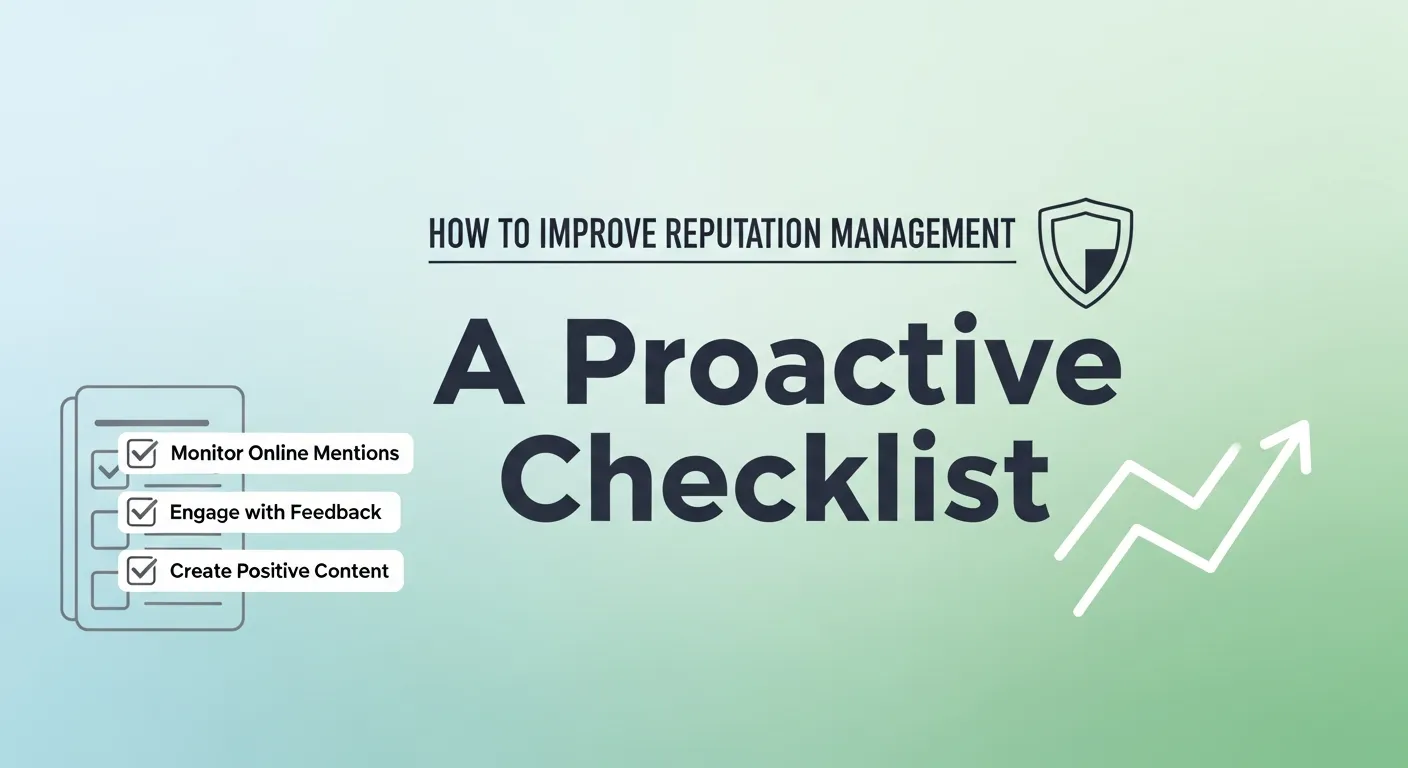
Don’t wait for a fire to start before you buy a fire extinguisher. Proactive online reputation management is about building a “reputational moat” that protects you from future negativity. Follow this comprehensive checklist to manage online reputation management effectively.
1. Audit Your Digital Footprint
Before you can improve, you must measure.
- Search Yourself: Use “Incognito” mode to see what a stranger sees.
- Data Tools: Use Google Search Console to identify which keywords are currently associated with your brand. Are people searching for “[Brand] complaints” or “[Brand] solutions”?
- Brand Audit: Perform a periodic brand audit to check for brand consistency across all touchpoints, from your website to your email marketing services.
2. Secure and Optimize Your Digital Real Estate
If you don’t own your name, someone else will.
- Claim All Profiles: Even if you don’t use TikTok or Glassdoor, claim your handle to prevent “brandjacking.”
- Google Business Profile (GBP): Google Business Profile is the most effective way to improve local brand awareness. Ensure your hours, address, and high-resolution photos are up to date.
- Wikipedia and High-Authority Sites: For established brands, Wikipedia page management is a key pillar of digital reputation management.
3. Implement a Scalable Customer Feedback Strategy
How customer feedback builds a brand is simple: it provides social proof.
- Automated Requests: Use SMS marketing or WhatsApp marketing services to send automated review requests 24 hours after a delivery.
- Incentivize (Ethically): Encourage honest feedback. Focus on what customer review management is—not just collecting 5 stars, but understanding the “why” behind every rating.
- Sentiment Tracking: Use AI-driven online reputation management to categorize feedback into “Product,” “Service,” or “Price” issues.
4. Create “Owned” Positive Content
The best way to “remove” negative content is to bury it with better content.
- SEO Services: Work with experts in ethical link building to ensure your positive news stories rank higher than old, irrelevant negative ones.
- Content Pillars: Regularly publish blog posts, whitepapers, and video testimonials that highlight your brand purpose development and ethical branding practices.
- Guest Posting: Use guest posting services to place positive, authoritative stories about your brand on high-traffic news sites.
5. Establish a “Shield and Sword” Monitoring System
You cannot manage what you do not see.
- Social Listening: Implement reputation management in social media by using tools that alert you to mentions in real-time.
- Crisis Planning: How to create a crisis management plan should be your first priority. Determine who speaks for the company and what the “tone” of your response will be during a brand refresh or a PR emergency.
- AI-Powered Sentiment Analysis: Leverage AI to detect shifts in public mood. This allows you to engage in real-time trend marketing while avoiding the dark side of viral marketing.
ORM vs. Traditional Marketing
| Feature | Online Reputation Management | Traditional Brand Marketing |
| Primary Goal | Trust & Credibility | Brand Awareness & Sales |
| Key Tool | AI-powered sentiment analysis | Creative Advertising |
| Reaction Time | Real-time / Reactive | Campaign-based / Scheduled |
| Success Metric | Brand Perception In Marketing | Brand Equity KPIs |
| Content Type | Reviews, PR, & User Content | Ads, Logos, & Brand Voice |
The Strategic Architecture of Online Reputation Management Services

To truly understand what is online reputation management, one must view it as a sophisticated ecosystem. It is not merely a single action but a convergence of digital marketing, legal strategy, and psychological positioning. Below, we break down the advanced layers that professional Online Reputation Management Services employ to dominate the digital space.
1. The Psychology of Perception: Brand Personality and Trust
In the realm of Consumer Brand Marketing, your reputation is essentially the “gut feeling” a customer has about your brand. Brand personality in marketing dictates how people interact with your content.
- Brand Perception in Marketing: This is the difference between what you say and what customers believe. ORM works to align these two.
- Emotional Marketing: By using sentiment analysis, ORM services identify the emotional triggers of your audience, allowing you to respond with empathy rather than corporate jargon.
2. Technical SEO: The Engine of Digital Reputation Management
You cannot have a clean reputation if the first page of Google is cluttered with outdated or negative information. Search engine reputation management (SERM) is the technical backbone of ORM.
- Link Building: Professional services use ethical link building and guest posting services to create a “moat” of positive content around your brand.
- Keyword Strategy: By targeting long-tail keywords related to your brand, such as “[Company Name] reviews” or “[Company Name] careers,” ORM experts ensure they control the narrative for high-intent searches.
- Video SEO: Since Google often prioritizes video carousels, building trust with video testimonials and optimizing them for search is a “cheat code” for visibility.
Advanced AI-Driven Online Reputation Management
The year 2026 has seen a massive shift toward AI-driven online reputation management. Manual monitoring is no longer sufficient for global brands.
Deepfakes and AI Reputation Management
One of the newest threats in the digital age is the rise of synthetic media. Deepfakes AI reputation management is now a standard offering. This involves:
- Digital Watermarking: Proving the authenticity of your official videos.
- Rapid Takedown Requests: Using AI to scan the web for unauthorized likenesses or “hallucinated” news stories about your executives.
AI-Powered Sentiment Analysis vs. Social Listening
While social media monitoring tells you what is being said, AI-powered sentiment analysis tells you how it is being said.
Example: A customer might tweet, “Great, my package arrived late again.” A basic monitor sees the word “Great” and marks it as positive. An AI-powered tool recognizes the sarcasm and flags it as a high-priority negative interaction.
Industry-Specific ORM Strategies
Not all Online Reputation Management Services are created equal. The strategy must adapt to the “Brand Archetype” and industry standards.
Real Estate: Local Trust and Geo-Targeting
Online reputation tips for real estate agents focus heavily on Local SEO services. A single bad review on a local forum can tank a commission.
- Google Business Profile Optimizing: Ensuring every photo, post, and reply on your GBP is polished.
- Hyper-Local Content: Creating blog posts about local neighborhood trends to establish thought leadership.
eCommerce: The War of the Reviews
For e-commerce reputation management, the “Buy Now” button is directly linked to the “Star Rating.”
- Negative Reviews into Growth Opportunities: By responding publicly and solving a problem, you show potential buyers that you are reliable even when things go wrong.
- Integrating Customer Experience: Mapping the customer journey to identify where people feel frustrated (e.g., shipping delays) and fixing the root cause before it becomes a review.
Luxury Brand Marketing: Exclusivity and Control
In luxury brand marketing, volume is less important than “vibe.”
- Brand Safety in Digital Marketing: Ensuring your ads don’t appear next to controversial content.
- Sonic Branding and Sensory Branding: Using high-end audio and visual consistency to build a “feeling” of quality that transcends text-based reviews.
Managing the “Dark Side” of Digital Trends
In the age of viral marketing on TikTok and meme marketing, a brand can become a joke overnight.
| Trend Type | Definition | ORM Risk Level |
| Micro Trend Marketing | Niche, short-lived spikes in interest. | Low – usually harmless. |
| Viral Content Marketing | Massive, explosive reach. | High – can lead to brand cannibalization. |
| Predictive Trend Marketing | Using AI to forecast what will be popular. | Opportunity – allows for proactive positioning. |
Viral marketing psychology is a double-edged sword. ORM services help you navigate marketing FOMO (Fear Of Missing Out) while ensuring you don’t fall victim to a “cancel culture” cycle.
The ROI of Online Reputation Management
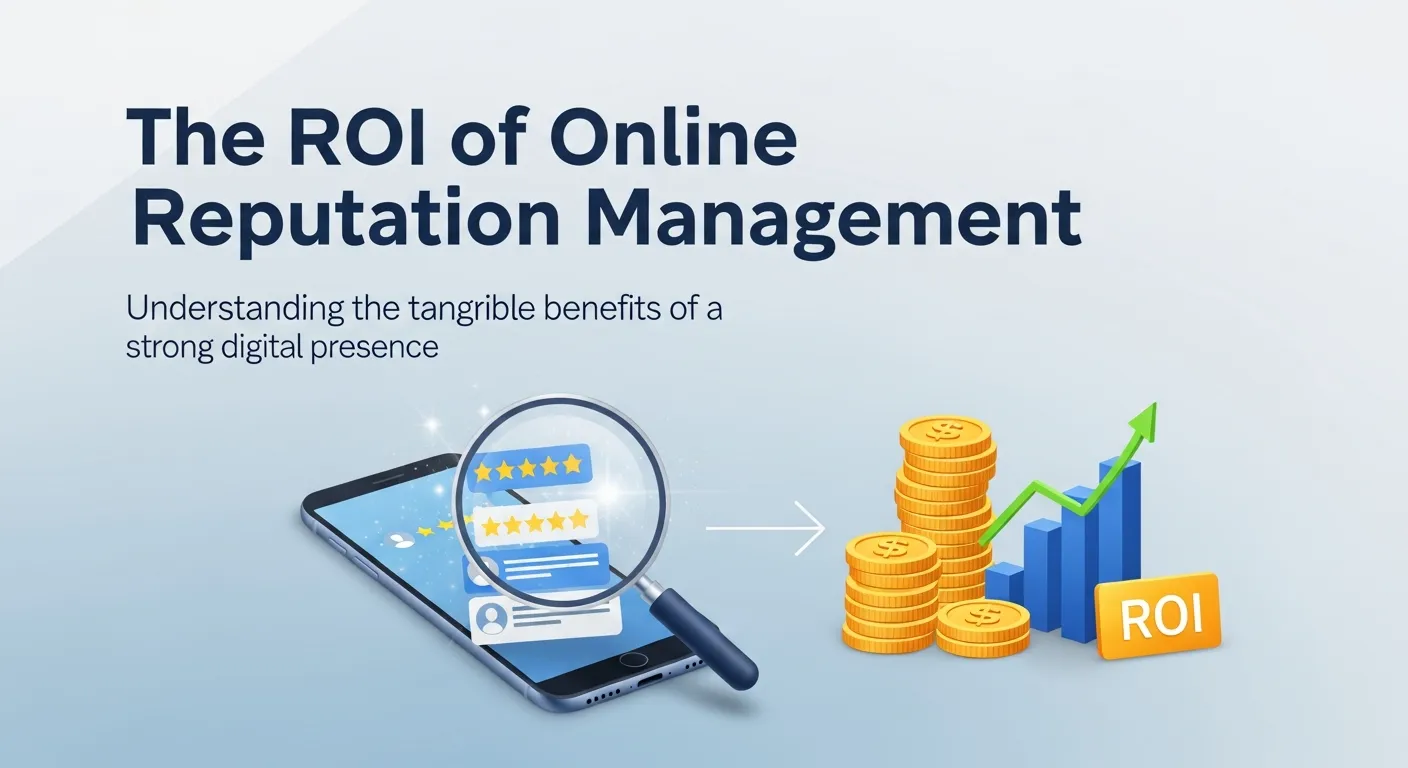
Many businesses ask: “Is it worth the investment?” The ROI of online reputation management can be calculated through:
- Lower Customer Acquisition Cost (CAC): Trusted customers convert faster.
- Higher Lifetime Value (LTV): Good reputations foster loyalty.
- Crisis Mitigation: Preventing a single PR disaster can save millions in lost stock value or revenue.
Personal Branding vs. Reputation
| Feature | Personal Branding | Personal Reputation |
| Direction | Inside-Out (What you say) | Outside-In (What they say) |
| Control | High | Medium to Low |
| Focus | Marketing & Skills | Integrity & History |
| Goal | Personal Brand Strategy | Personal Reputation Management |
Conclusion
Your digital reputation is a living entity that requires constant nurturing. By leveraging Online Reputation Management Services, you move beyond mere survival into a state of brand resilience. Whether you are building trust through video testimonials or navigating a complex brand refresh, remember: your reputation is what people say about you when you aren’t in the virtual room. Own it today
Frequently Asked Questions (FAQs)
1. What is the difference between branding and reputation management?
Branding is a proactive effort to define your image (voice, logo, values). Reputation management is the ongoing process of monitoring and influencing how the public actually perceives that brand.
2. Can Online Reputation Management Services remove fake reviews?
Yes. While you cannot simply “delete” a review because you dislike it, ORM experts know the specific terms of service for platforms like Google and Yelp to successfully flag and remove reviews that are fraudulent, defamatory, or violate community standards.
3. How long does it take to see results from ORM?
Repairing a damaged reputation is a marathon, not a sprint. While some technical fixes (like claiming profiles) are instant, “burying” negative search results typically takes 3 to 6 months of consistent content creation and SEO.
4. Is ORM only for large corporations?
Absolutely not. Small businesses often feel the sting of a negative review more acutely than large ones. Small and midsize business ORM focuses on local SEO and building community trust.
5. How does AI affect online reputation?
AI helps in two ways: it allows for real-time trend marketing and sentiment tracking, but it also creates risks like deepfakes. Modern ORM uses AI to fight AI-generated misinformation.
6. What is the ROI of Online Reputation Management?
The ROI of online reputation management is measured in customer acquisition costs and retention. A higher star rating directly correlates to higher conversion rates and the ability to command premium pricing.
7. How do you handle a viral PR crisis?
The key is transparency and speed. A brand crisis management team will issue a public statement, pause all automated marketing, and engage directly with critics to de-escalate the situation.
8. What is social listening?
Social listening is the process of monitoring digital conversations to understand what customers are saying about your brand and industry. It is a core component of reputation management in social media.
9. Can I manage my own online reputation?
You can certainly start the process by being active on social media and responding to reviews. However, for complex issues like removing negative search results or managing high-volume feedback, professional Online Reputation Management Services provide the technical SEO and legal expertise required for lasting results.
10. Why is SEO important for ORM?
SEO is the “engine” of ORM. Without search engine reputation management, you cannot control what people see when they search your name. High-ranking positive content is the best defense against negative press.