Unlock the power of your audience. A robust Customer Feedback Strategy is the essential blueprint for transforming raw consumer data into sustainable business growth and market leadership.
To build a high-impact Customer Feedback Strategy, businesses must integrate multi-channel collection, AI-powered sentiment analysis, and a culture of continuous improvement. By aligning customer insights with brand positioning, companies can reduce churn, enhance brand equity, and create a defensive moat against competitors.
How to Build a Customer Feedback Strategy That Drives Growth
In the hyper-competitive digital landscape of 2026, businesses are rapidly shifting toward a customer-first architecture. Growth is no longer driven only by innovation or pricing—it is driven by how effectively a brand listens to, learns from, and acts on customer input. At the center of this shift is a well-designed Customer Feedback Strategy.
A Customer Feedback Strategy functions as the nervous system of a modern business. It continuously collects signals from customers and feeds them into product development, customer experience, marketing, and online reputation management. When executed correctly, a Customer Feedback Strategy transforms raw opinions into insights that reduce churn, strengthen trust, and accelerate sustainable growth.
The Strategic Foundation: Why You Need a Customer Feedback Strategy
A Customer Feedback Strategy is not simply a collection of surveys or review requests. It is a structured framework that defines how feedback is gathered, analyzed, prioritized, and operationalized across the organization.
Without a clear Customer Feedback Strategy, businesses often drown in unstructured feedback. Reviews, support tickets, social media comments, and survey responses become disconnected data points, leading to analysis paralysis or reactionary decisions. In some cases, brands make costly changes based on isolated opinions rather than meaningful trends.
A strong Customer Feedback Strategy ensures that feedback:
- Is aligned with business and growth objectives
- Is centralized and interpreted consistently
- Drives informed, high-impact decisions
- Feeds directly into product, CX, and brand strategy
This turns customer feedback from background noise into a predictive growth signal.
Aligning Your Customer Feedback Strategy with Brand Positioning
For a Customer Feedback Strategy to be effective, it must reflect how your brand competes in the market. Feedback goals should never be generic—they must support your brand positioning strategy.
If your brand operates in the luxury or premium segment, your Customer Feedback Strategy should emphasize emotional perception, sensory branding, service quality, and the feeling of exclusivity. Feedback in this context measures experience depth rather than transactional efficiency.
For high-volume, mass-market, or CPG brands, a Customer Feedback Strategy should prioritize scale-driven insights such as price sensitivity, brand cannibalization, shelf visibility, packaging clarity, and purchase convenience. Here, feedback drives operational optimization and competitive defense.
When your Customer Feedback Strategy is aligned with brand positioning, customer insights reinforce differentiation rather than dilute it. This alignment ensures feedback strengthens brand identity, improves customer experience, and directly contributes to revenue growth.
Omnichannel Collection: Where to Listen
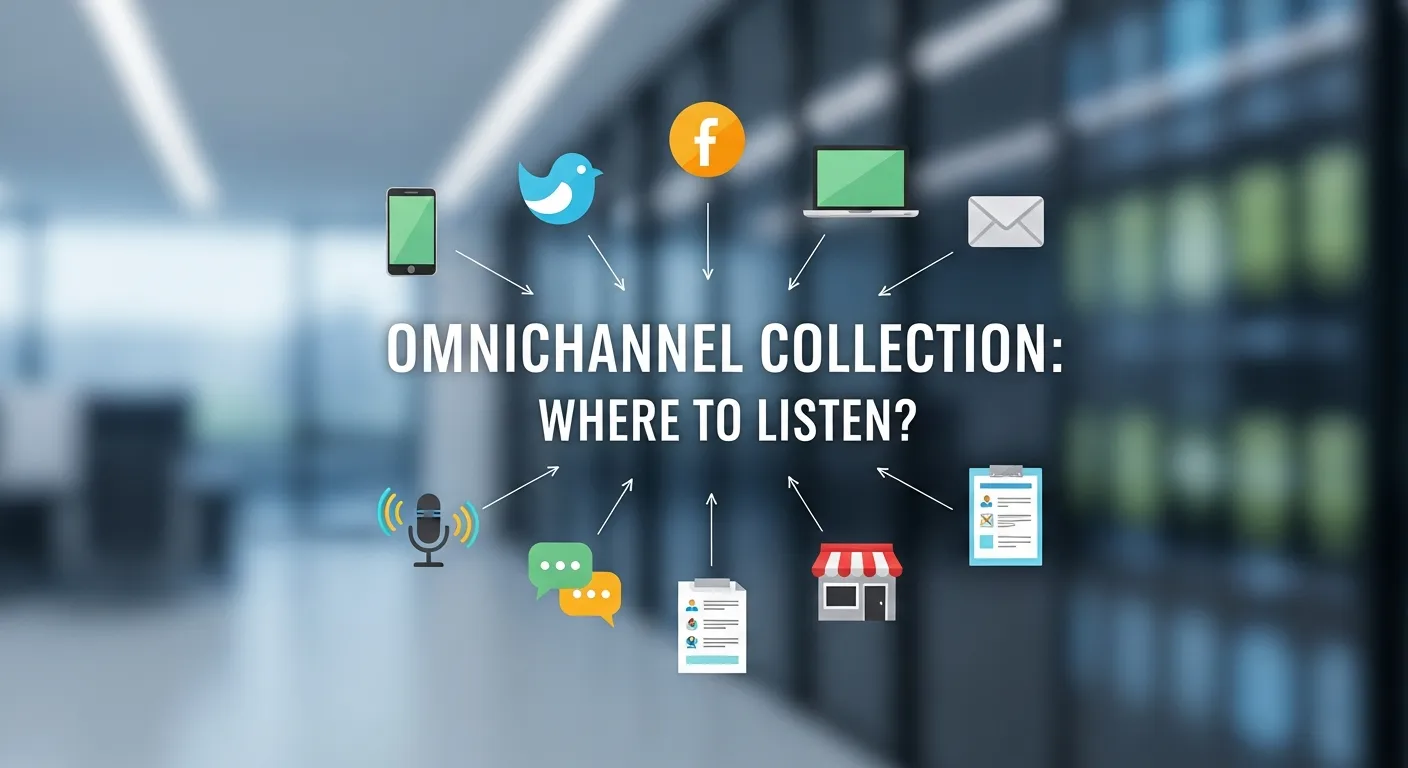
To build a sustainable online reputation management system, you must collect feedback where your customers naturally live.
- Social Media Monitoring: What is social media monitoring in 2026? It’s not just watching mentions; it’s using online reputation management with AI and social listening to catch trends before they peak.
- Direct Surveys: Use NPS (Net Promoter Score) and CSAT (Customer Satisfaction) to get quantitative benchmarks.
- Customer Support Logs: Analyze support tickets to identify recurring friction points.
- Video Testimonials: Encouraging customers to share their stories builds trust with video testimonials, which is a powerful asset for personal branding vs reputation.
- Integrating AI and Machine Learning in Feedback Analysis
Manual analysis is dead. To stay competitive, businesses must employ AI-powered sentiment analysis and AI-driven online reputation management.
How AI-Powered Sentiment Analysis Works
Modern ORM tools use machine learning to categorize feedback not just by “star rating,” but by emotional intent. They can distinguish between a customer who is “frustrated but loyal” and one who is “ready to churn.” This allows for proactive online reputation management, where you intervene with the dissatisfied customer before they post a damaging public review.
Turning Negative Reviews into Growth Opportunities
One of the most critical parts of a Customer Feedback Strategy is handling negative feedback. For e-commerce brands, negative reviews are often seen as a threat, but they are actually free consultancy.
- Identify Root Causes: Is the complaint about shipping? Product quality? Customer service?
- Close the Loop: Respond publicly to show that you are integrating customer experience into your operations.
- Recovering Online Reputation: Use the feedback to fix the internal process, then invite the customer back to witness the improvement. This is the heart of business reputation management.
Qualitative vs. Quantitative Feedback
Building Brand Authority Through Feedback
When you implement changes based on feedback, you build brand authority. For instance, in B2B digital marketing strategies, showing prospects that your product roadmap is driven by a “User Advisory Board” significantly boosts trust. This is a key part of corporate reputation management.
The Role of Personal Reputation
In the age of the “founder-led brand,” personal reputation management is inextricably linked to the company. A CEO who actively engages with customer feedback on LinkedIn enhances the personal brand strategy and makes the entire organization feel more accessible.
Reputation Management in Social Media and Search

Your Customer Feedback Strategy should feed directly into your search engine reputation management.
- Google Business Profile Optimizing: High-quality, recent feedback signals to Google that your business is active and reliable.
- Removing Negative Content: While you can’t delete honest feedback, ORM tools help in removing negative content that is fraudulent or violates platform terms, protecting your brand safety in digital marketing.
Future-Proofing: AI Chatbots and Machine Learning
The next stage of an effective customer feedback strategy involves using AI chatbots and machine learning to capture insights in real time, rather than relying only on delayed surveys. This approach allows brands to understand customer intent and emotion while interactions are still happening.
Key advantages of using AI chatbots for feedback include:
- Collecting feedback during active browsing or decision-making moments
- Capturing high-intent, real-time responses instead of recalled opinions
- Reducing survey fatigue by asking short, contextual questions
- Increasing response rates compared to post-purchase emails
Machine learning further strengthens this strategy by:
- Detecting recurring behavior and sentiment patterns across conversations
- Optimizing when and how questions are asked
- Identifying early indicators of dissatisfaction or churn
- Feeding insights directly into proactive online reputation management systems
Together, AI chatbots and machine learning create a continuous, intelligent feedback loop that improves customer experience and future-proofs brand decision-making.
Creating a Crisis Management Plan
A feedback-driven culture is one of the most effective defenses against reputation damage. By monitoring customer feedback consistently, brands can identify early warning signals before issues escalate into public crises.
Key elements of a feedback-informed crisis management plan include:
- Daily monitoring of reviews, support tickets, and social feedback
- Early detection of sentiment shifts and repeated complaints
- Clear internal escalation paths for high-risk feedback
- Predefined response frameworks for common reputation threats
Using historical feedback data helps brands:
- Identify recurring vulnerabilities and friction points
- Predict where future crises are most likely to originate
- Prepare messaging and action plans in advance
If a crisis does occur, feedback channels become essential communication tools. Transparent responses, timely updates, and clear explanations help stabilize trust. Leveraging video communication and video SEO ensures your official narrative gains visibility, allowing your brand to maintain credibility while controlling misinformation and public perception.
Future Opportunity: Blockchain-Verified Feedback Loops
In an era of AI-generated misinformation, the “authenticity gap” is a major hurdle. A future-focused customer feedback strategy will leverage blockchain to create immutable records of customer interactions.
- Proof of Purchase Reviews: By linking reviews to a blockchain-verified transaction, brands can eliminate “review bombing” and bot-driven negativity.
- Smart Contract Incentives: Use automated smart contracts to instantly reward customers with tokens or loyalty points the moment their feedback is verified as genuine. This builds sustainable online reputation management by ensuring only real voices shape your brand’s narrative.
- Neuromarketing and Emotional AI
Traditional surveys capture what people think they feel; emotional AI captures what they actually feel.
- Biometric Feedback: Using AI-powered sentiment analysis that includes facial coding and voice tonality during video calls can reveal subconscious frustrations.
- Neuromarketing Integration: By understanding neuro-physiological responses, you can refine your brand voice strategy to evoke specific positive emotions, turning raw data into a deep psychological connection with your audience.
Hyper-Personalization Through Predictive Intelligence
The future of feedback is moving from “What happened?” to “What will happen?” AI-driven trend forecasting allows businesses to anticipate customer needs before they are even articulated.
- Behavioral Triggering: If the AI detects a “hesitation pattern” in a user’s navigation, it can trigger a micro-survey: “Are you finding what you need?”
- Predictive Engagement: Using machine learning to forecast which customers are likely to provide high-value feedback, allowing you to prioritize outreach to your most influential brand advocates.
Feedback in the Metaverse and Spatial Computing

As brands enter immersive 3D environments, the primary function of an online reputation management tool expands into spatial and behavioral feedback.
Key developments include:
- Virtual focus groups in VR, where users interact with digital product prototypes
- Behavioral feedback captured through movement, gaze, and interaction patterns
- Passive insight collection that removes survey friction and bias
This allows brands to test perception and positioning before real-world launches.
Ethical Data Privacy: The “Consent-First” Strategy
By 2026, ethical data handling will become a reputation signal, not just a compliance requirement.
A consent-first strategy focuses on:
- Prioritizing zero-party data willingly shared by customers
- Clearly communicating how feedback improves individual experiences
- Using privacy-first infrastructure aligned with global regulations
Trust in how data is handled directly influences willingness to give feedback.
Agentic AI: The Rise of Autonomous Feedback Loops
Agentic AI shifts feedback systems from analysis to independent action.
This evolution enables:
- AI-to-AI negotiation between customer assistants and brand agents
- Automatic resolution of routine issues without human intervention
- Instant escalation of high-risk feedback to human leadership
Feedback becomes faster, smarter, and operationally embedded.
Sonic Branding and Audio Feedback Analysis
As voice interfaces grow, sound becomes a measurable reputation signal.
Emerging feedback capabilities include:
- Voice sentiment analysis detecting stress, frustration, or satisfaction
- Audio-based feedback replacing traditional text surveys
- Deeper emotional insight from tone, pace, and vocal intensity
Audio adds context that written feedback often lacks.
Integrating Feedback into “Bionic” Brand Architecture
The most successful brands will blend AI efficiency with human empathy.
A bionic feedback model supports:
- AI-led handling of high-volume, low-emotion interactions
- Human teams focused on complex and emotionally sensitive cases
- Feedback-driven routing that decides when humans should step in
This balance improves speed without sacrificing trust.
Zero-Click Reputation Management
As AI answers replace website visits, feedback must influence machine-generated narratives.
Zero-click strategies rely on:
- Structuring testimonials so AI systems can easily cite them
- Optimizing feedback for generative engine visibility
- Building authority through consistent, high-quality media signals
Reputation is shaped before the click ever happens.
Feedback as a “Brand Resilience” Strategy
In volatile digital markets, feedback acts as a protective moat.
A resilience-focused approach delivers:
- Accumulated trust credits from consistent customer responsiveness
- Greater forgiveness during crises or operational failures
- Faster recovery using pre-approved, feedback-driven messaging
Feedback becomes a long-term defense mechanism, not just a listening tool.
Future Opportunity: Regenerative Feedback and Circular Brand Ecosystems
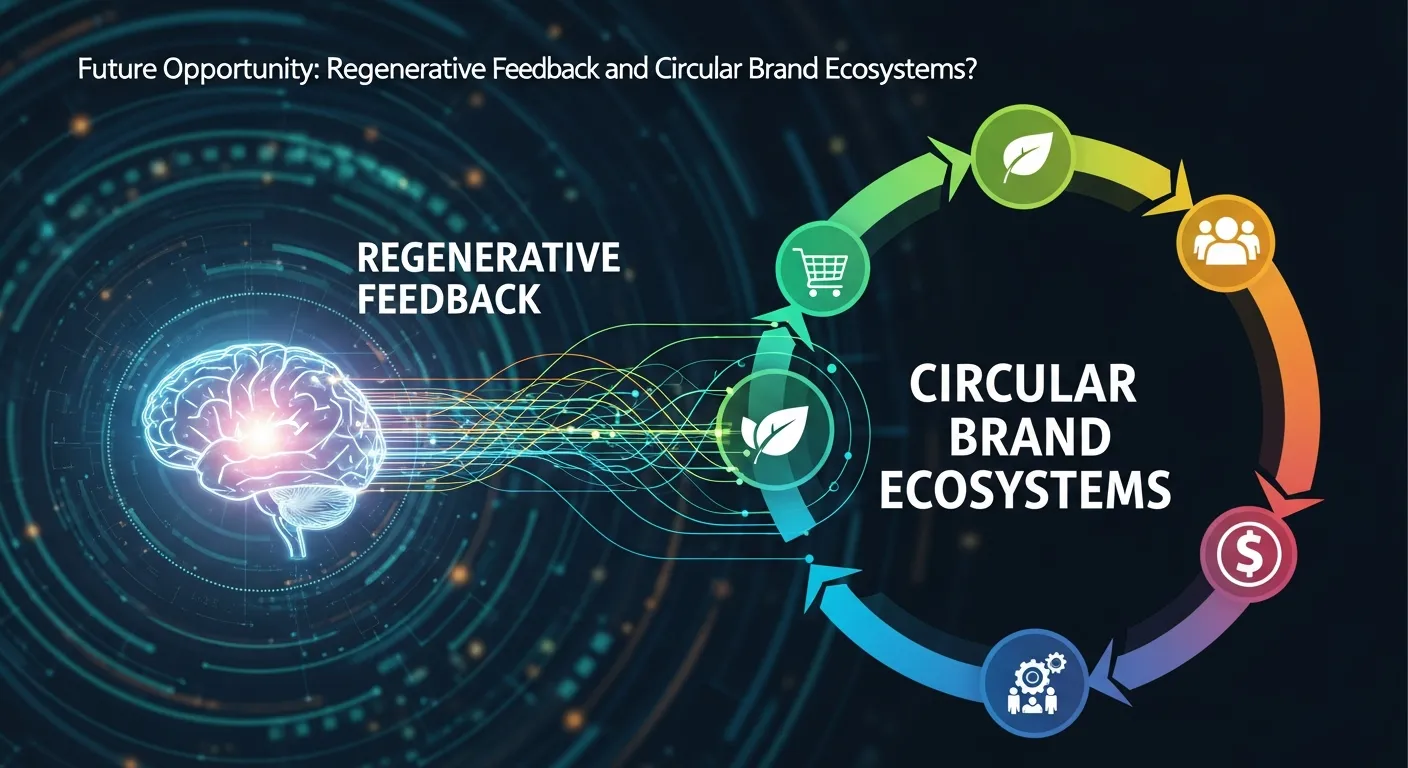
By 2027, the concept of sustainable online reputation management will expand into “Regenerative Branding.” In this model, a Customer Feedback Strategy doesn’t just fix problems—it fuels a circular economy within the brand’s ecosystem.
- Co-Innovation Portals: Instead of private surveys, brands are creating public “Idea Exchanges” where customers vote on the next product feature or sustainability initiative. This turns feedback into brand purpose development, where the audience feels a sense of ownership over the brand’s roadmap.
- Closed-Loop Sustainability: For CPG (Consumer Packaged Goods) brands, feedback tools will increasingly track the “afterlife” of a product. Customers can provide feedback on the recycling or upcycling process, allowing the brand to refine its CPG brand marketing based on real-world environmental impact data.
- Reputation as Currency: Imagine a system where “High-Quality Feedback Providers” earn a special brand personality status, giving them early access to products or a seat at the table during brand architecture discussions. This gamification ensures a continuous flow of high-intent data.
Deepfake Authentication and “Truth-Tech” in Feedback
As we navigate the complexities of 2026, the dark side of viral marketing includes the rise of synthetic negative feedback and deepfake video “complaints” designed to tank a competitor’s stock. A primary future function of a Customer Feedback Strategy will be the integration of “Truth-Tech.”
- Biometric Verification for Video Reviews: To maintain brand safety in digital marketing, platforms will implement tools that verify the “liveness” of a customer in a video testimonial, ensuring it isn’t an AI-generated deepfake.
- AI-Watermarking: Every piece of official brand response will be cryptographically watermarked. This prevents bad actors from screenshotting and “editing” a brand’s response to a customer to make it look offensive or dismissive.
- Truth-Scoring Algorithms: Future ORM tools will assign a “Confidence Score” to clusters of feedback. If a thousand negative reviews appear in an hour with no corresponding dip in sales data, the system flags it as a coordinated “reputation attack,” allowing for immediate brand crisis management and legal intervention.
Future Opportunities
| Strategic Area | 2026 Standard | 2030 Vision |
| Data Type | First-Party (Behavioral) | Zero-Party (Intentionally Shared) |
| Analysis | Sentiment (Positive/Negative) | Intent (Likelihood to Act/Buy) |
| Response | Automated Chatbots | Autonomous AI Agents (Decision Makers) |
| Verification | Verified Purchase Email | Blockchain “Proof of Experience” |
| Environment | Web & Mobile App | Metaverse & Spatial Computing |
Conclusion
A Customer Feedback Strategy is not a static document; it is an evolving dialogue with your market. By leveraging AI-driven trend forecasting and maintaining brand consistency, you can transform simple comments into a powerful engine for integrated marketing success. Your customers are speaking—are you truly listening?
FAQs
1. What is the focus of a Customer Feedback Strategy?
The focus of a customer feedback strategy is to establish a structured and continuous process for collecting, analyzing, and acting on customer insights. It helps businesses improve products, services, and experiences while optimizing customer journey mapping. A strong strategy ensures that decisions are guided by real customer data rather than assumptions, leading to more consistent improvements and better long-term outcomes.
2. How does AI-powered sentiment analysis help?
AI-powered sentiment analysis automates the interpretation of large volumes of feedback by detecting emotions, intent, and tone. This allows teams to quickly identify urgent issues, recurring pain points, and emerging trends without manually reviewing thousands of comments. As a result, businesses can respond faster and prioritize actions that have the greatest impact on customer satisfaction and reputation.
3. Why is “closing the loop” important?
Closing the loop means responding to customers to acknowledge their feedback and inform them that action has been taken. This practice strengthens trust, reinforces transparency, and builds brand loyalty. When customers see that their opinions lead to real change, they are more likely to engage again, which supports sustainable online reputation management and long-term customer relationships.
4. What is the difference between personal branding and reputation?
Personal branding is proactive and intentional—it reflects how you want to be perceived through messaging, tone, and positioning. Reputation, on the other hand, is reactive and perception-based—it represents how people actually see you based on experiences and feedback. Customer feedback plays a critical role in revealing the gap between the two and helping brands align intent with reality.
5. How can e-commerce brands use feedback for growth?
E-commerce brands can use customer feedback to uncover product quality issues, delivery delays, and experience gaps that directly affect conversion and retention. Negative reviews often highlight operational bottlenecks that, once addressed, lead to stronger customer trust. When handled strategically, feedback becomes a driver of improvement and a foundation for effective brand resilience strategies.
6. What role does social media monitoring play?
Social media monitoring captures unsolicited and often more honest feedback that customers may not share through surveys or forms. These unfiltered opinions provide early signals of dissatisfaction, emerging trends, or reputation risks. As a result, social listening is a core component of proactive online reputation management and real-time brand perception tracking.
7. How often should I analyze customer feedback?
Customer feedback should ideally be monitored continuously through AI-driven online reputation management tools. This allows businesses to respond to issues as they arise. In addition, deeper analysis should be conducted monthly or quarterly to identify long-term trends and inform broader brand and experience strategies.
8. Can feedback help with SEO?
Yes, customer feedback directly supports SEO efforts. Reviews and user-generated content provide fresh, relevant language that search engines value, while also serving as social proof for potential customers. Feedback plays a particularly important role in local SEO services and Google Business Profile optimization, where review activity influences visibility and trust.
9. What are Brand Equity KPIs?
Brand Equity KPIs are metrics used to measure the strength and value of a brand’s reputation. These indicators help businesses understand awareness levels, public sentiment, and positioning within the market. Tracking these metrics makes it possible to quantify how customer feedback contributes to brand value and long-term growth.
10. How do I start a feedback strategy for a small business?
A small business can begin by focusing on a single, high-impact customer touchpoint such as checkout or delivery. Asking one clear question and using a simple feedback tool is enough to start generating insights. As data volume and needs increase, the strategy can expand into more advanced online reputation management services without overwhelming resources.
Learn more about: How to Manage Online Reviews Effectively