Proactive ORM uses AI and social listening to detect sentiment shifts, predict risks, and address issues before they escalate. By monitoring trends, optimizing responses, and improving customer engagement, brands strengthen trust, prevent crises, and maintain long-term reputation health.
In today’s digital landscape, waiting until a negative review or viral complaint emerges is no longer an option. Proactive Online Reputation Management (ORM) leverages advanced AI and social listening tools to monitor brand sentiment in real time, identify emerging issues, and enable immediate action. In this guide, we’ll explore how businesses can build a forward-looking ORM strategy that harnesses machine learning, natural language processing, and comprehensive social data to protect and enhance brand trust.
Why Proactive ORM Matters More Than Ever
Traditional, reactive reputation management involves responding to complaints or removing malicious content after it appears. While still important, this approach cedes control of the narrative and allows negative impressions to gain traction. By contrast, proactive ORM anticipates potential threats, uncovers hidden feedback channels, and engages audiences before issues escalate.
- Faster response times: AI alerts you to concerning sentiment spikes within minutes rather than hours or days.
- Holistic coverage: Monitor blogs, forums, social platforms, review sites, podcasts, and even niche communities.
- Data-driven insights: Identify trending topics, brand advocates, and emerging crises before they go mainstream.
- Improved brand loyalty: Customers notice swift, personalized engagement and feel heard—not simply managed.
Understanding Social Listening
Social listening goes beyond simple keyword monitoring. It uses AI-powered text analysis and sentiment scoring to understand context, emotion, and intent in online conversations. Key capabilities include:
- Sentiment analysis: Classify mentions as positive, negative, or neutral, and track shifts over time.
- Topic clustering: Automatically group related discussions (e.g., product bugs, shipping delays, service praise).
- Influencer identification: Spot users with high reach and authority talking about your brand.
- Trend detection: Surface rising hashtags, memes, or conversations before competitors catch on.
The Role of AI in Modern ORM
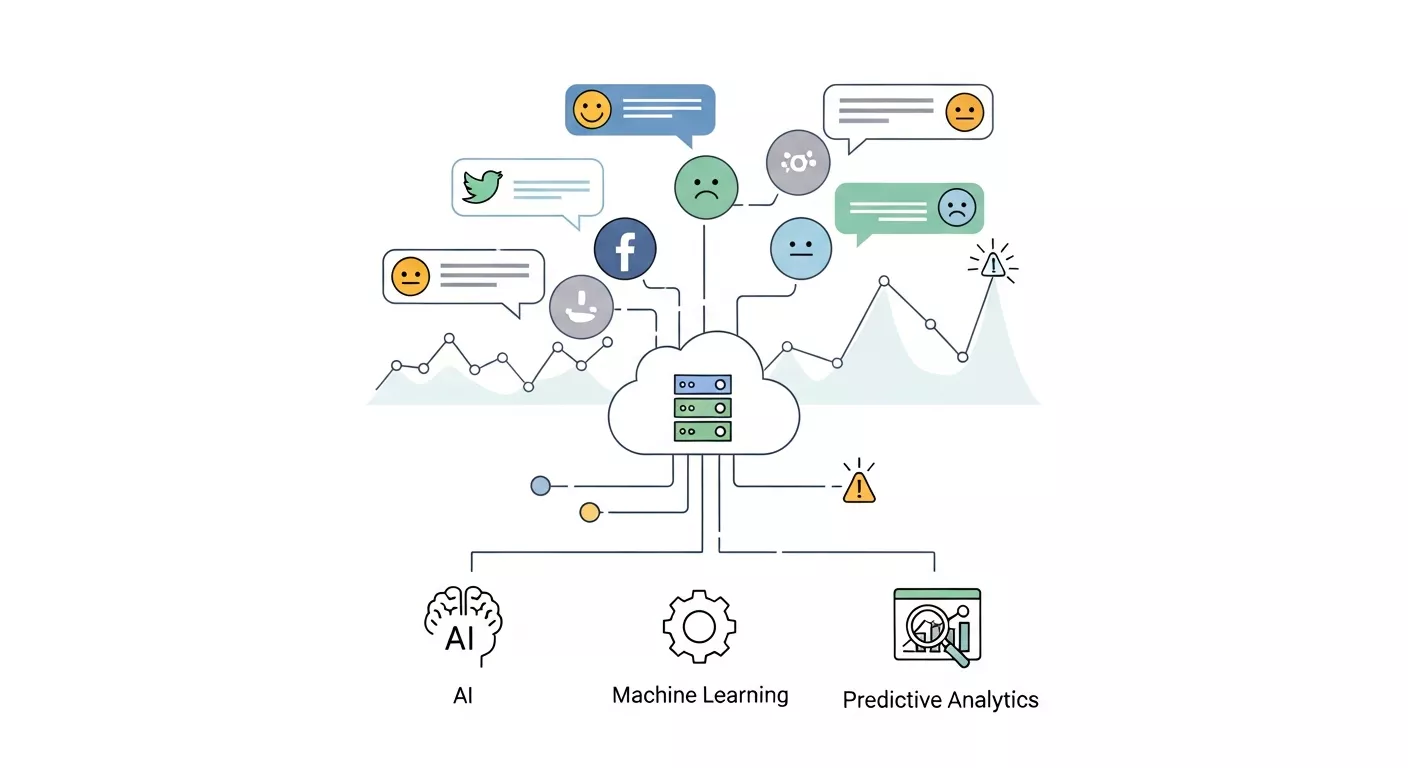
Artificial intelligence supercharges social listening by automating data collection and interpretation at scale. Here’s how AI contributes to proactive ORM:
1. Natural Language Processing (NLP):
NLP allows AI systems to understand human language in a nuanced way, going beyond simple keyword tracking. This includes interpreting slang, emojis, hashtags, and context-specific expressions, as well as monitoring conversations in multiple languages. For example, a social media mention containing sarcasm or regional slang can be correctly classified as positive, negative, or neutral, preventing misinterpretation and ensuring brands respond appropriately. NLP also enables AI to extract sentiment from multimedia content like images or videos when combined with computer vision, expanding ORM beyond text.
2. Machine Learning Models:
Machine learning (ML) powers continuous improvement in sentiment analysis. By learning from historical data and human-corrected classifications, ML models become increasingly accurate at identifying sentiment, detecting nuanced tones, and recognizing patterns of engagement. For instance, if a particular phrasing or meme consistently triggers negative sentiment, the system learns to flag it faster in future interactions. Over time, this reduces false positives and negatives, making ORM efforts more reliable and efficient.
3. Anomaly Detection:
AI excels at detecting unusual patterns that could indicate emerging reputational risks. Sudden spikes in mentions, unusual engagement trends, or concentrated negative sentiment in specific threads or regions can be automatically flagged for immediate investigation. For example, if a single negative post goes viral in a particular country, AI-driven anomaly detection alerts the brand team in real time, allowing them to respond before the situation escalates. This proactive approach can prevent small issues from snowballing into major PR crises.
4. Predictive Analytics:
AI can predict potential reputation issues before they fully develop by analyzing historical incidents and correlating them with emerging signals. Predictive analytics helps brands understand which topics or behaviors are likely to generate negative attention, enabling preventative measures. For instance, if past product launches faced backlash due to specific features, AI can monitor early conversations around a new launch and forecast reputational risk, giving teams the chance to adjust messaging or address concerns early.
5. Streamlined Decision-Making and Efficiency:
By automating monitoring, classification, and analysis, AI reduces the manual labor involved in ORM, freeing human teams to focus on strategic decision-making. AI dashboards can provide real-time summaries, highlight urgent issues, and suggest recommended actions based on data-driven insights. This integration of automation with human expertise ensures that brands remain agile, informed, and capable of responding to both immediate and long-term reputational challenges.
Building Your Proactive ORM Strategy
To shift from reactive to proactive reputation management, follow these key steps:
- Define clear objectives: Align goals such as reducing negative sentiment by X%, improving average response time, or boosting brand advocacy scores.
- Select the right tools: Evaluate platforms that combine social listening, AI analytics, and unified dashboards (e.g., Brandwatch, Talkwalker, Meltwater, Sprinklr).
- Configure advanced keyword sets: Include brand names, product lines, competitor mentions, industry jargon, misspellings, and crisis keywords (e.g., “recall,” “scam,” “outage”).
- Set up automated alerts: Trigger notifications for high-negative sentiment, sudden share surges, or influencer mentions.
- Develop response playbooks: Create templated replies and escalation protocols for different scenarios—product issues, PR crises, customer praise, etc.
- Integrate with other systems: Connect ORM software to CRM, helpdesk, and social publishing tools for seamless workflows.
- Train your team: Educate customer service, marketing, and PR staff on interpreting AI insights and following escalation paths.
Best Practices for Proactive ORM
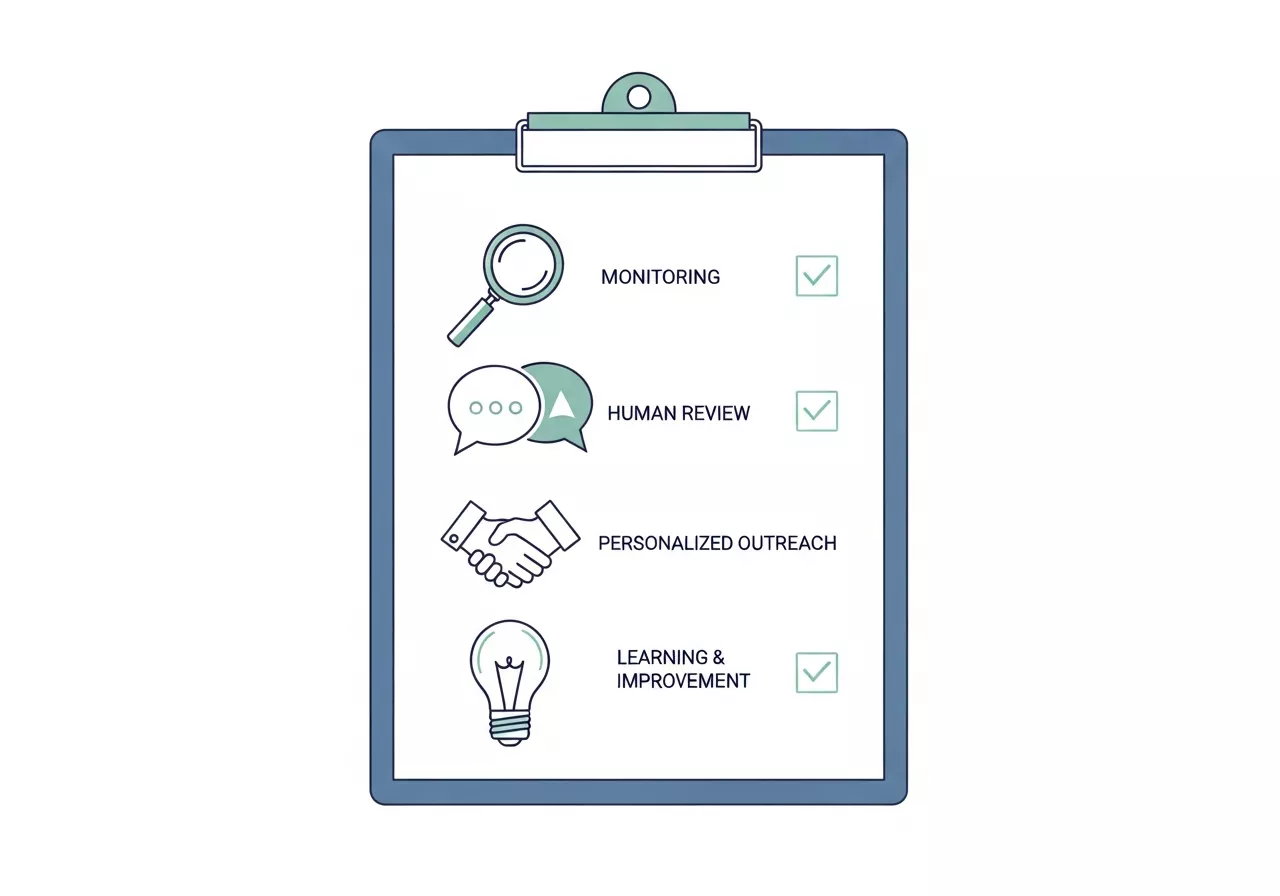
Once your strategy is live, maintain excellence by:
- Regularly refining keyword filters: Exclude irrelevant chatter, spam, and false positives.
- Combining automated and human review: AI flags, but humans decide tone and next steps.
- Personalizing outreach: Always address users by name, reference their context, and offer concrete solutions.
- Documenting learnings: After every major incident, conduct a post-mortem to improve processes.
- Maintaining transparency: Publicly share updates on resolutions when appropriate to build trust.
Measuring Success in Proactive ORM
Track these key performance indicators (KPIs) to gauge the impact of your proactive ORM efforts:
- Average response time: Time between a social mention and your initial engagement.
- Sentiment trendline: Net positive vs. negative mentions over weekly, monthly, and quarterly periods.
- Share of voice: Your brand’s share compared to competitors in relevant conversations.
- Resolution rate: Percentage of negative issues closed or escalated within SLA.
- Advocacy lift: Growth in mentions by brand supporters and influencers.
Leveraging Predictive Intelligence for Early Threat Detection
Proactive ORM isn’t just about listening—it’s about predicting. Modern AI systems use predictive intelligence to detect patterns that signal potential reputation threats long before they surface in public conversations. Instead of reacting to issues already gaining traction, brands can neutralize risks by understanding what is likely to happen next.
How Predictive Intelligence Works
Predictive intelligence combines machine learning, historical data, and behavior modeling to forecast reputational risk. These engines continually analyze millions of data points, identifying anomalies and patterns associated with past crises.
Key capabilities include:
1. Sentiment Trajectory Forecasting
AI evaluates multi-day or multi-week trends to predict whether sentiment around a topic is improving, stable, or declining. This helps brands take action before sentiment dips into negative territory.
2. Keyword Surge Monitoring
AI tracks unusual spikes in keyword usage—such as “refund,” “poor quality,” or “lawsuit”—which often precede viral complaints or coordinated negative campaigns.
3. Competitor Risk Benchmarking
Predictive models can compare your brand’s risk exposure to competitors, offering a strategic perspective on industry-wide reputation vulnerabilities.
4. Behavioral Pattern Recognition
By analyzing behavior patterns from past crises—such as influencer posts, Reddit threads, or customer complaints—AI identifies similar triggers early.
Why Predictive Intelligence Is a Game-Changer
- Enables immediate preemptive communication
- Prevents small issues from growing into crises
- Protects revenue by avoiding reputation-driven churn
- Provides insight into long-term brand health and perception
Predictive intelligence elevates ORM from surveillance to strategic foresight, giving brands the opportunity to steer conversations before they escalate.
Even with the best tools, proactive ORM can falter if you:
- Over-automate responses: Robotic replies frustrate users—always aim for authentic, humanized engagement.
- Ignore private channels: DMs, emails, and niche forums often harbor early warnings.
- Violate privacy laws: Comply with GDPR, CCPA, and other regulations when collecting and storing user data.
- Chase every mention: Focus on high-impact conversations rather than vanity metrics.
AI-Driven Content Strategy for Reputation Building

Proactive ORM isn’t only about preventing negative sentiment—it’s also about building positive reputation assets that strengthen brand credibility. AI plays a pivotal role in shaping impactful content strategies by identifying what audiences value, expect, and respond to.
How AI Shapes Content Strategy
AI tools analyze large-scale social data to identify high-performing themes, common customer concerns, and positive brand moments. These insights allow brands to create targeted content that resonates deeply with their audience.
Key applications include:
1. Content Gap Identification
AI highlights topics your audience frequently discusses but that your brand rarely addresses—such as sustainability, product features, or customer service practices.
2. Optimization of Messaging Tone and Style
AI evaluates which tones—empathetic, humorous, authoritative—perform best in different scenarios, enabling consistent and effective communication.
3. Real-Time Trend Integration
AI suggests topics or formats that align with trending discussions, helping your brand remain relevant and visible.
4. Automated Content Drafting
Generative AI can produce drafts of posts, emails, FAQs, responses, and educational content—reducing labor while maintaining a strategic edge.
Reactive Content Strategy vs. AI-Driven Proactive Content Strategy
| Aspect | Reactive Content Strategy | AI-Driven Proactive Strategy | Impact |
|---|---|---|---|
| Timing | Responds after an issue emerges | Anticipates needs before issues begin | Prevents negative sentiment |
| Insights | Based on manual observation | Powered by data, sentiment, and trends | High accuracy & scalability |
| Messaging | Generic and broad | Personalized & context-aware | Stronger audience engagement |
| Efficiency | Labor-intensive | Automated & optimized | Faster, cost-effective content creation |
| Reach | Limited to planned campaigns | Enhanced through trend-driven content | Boosts visibility & shareability |
Benefits of AI-Driven Content Strategy
- Positions the brand as a thought leader
- Increases share of voice organically
- Strengthens loyalty and trust
- Reduces reliance on crisis-driven communication
By integrating content intelligence into your ORM strategy, your brand moves from damage control to reputation building, creating a stronger foundation for long-term success.
Integrating ORM with Crisis Simulation and Scenario Planning
Proactive ORM becomes far more effective when paired with AI-powered crisis simulation. Instead of simply preparing for generic “PR issues,” brands can use AI to model realistic scenarios based on actual data, sentiment patterns, and past incidents.
What AI-Powered Crisis Simulation Involves
1. Scenario Modeling Using Real Data
AI analyzes historical crises—both internal and industry-wide—to create detailed simulation models. These simulations can predict how specific triggers (e.g., outages, product defects, viral posts) might unfold.
2. Impact Prediction and Escalation Paths
Simulations reveal how fast a crisis could spread, which channels are likely to amplify it, and which influencers may become involved.
3. Testing Team Readiness
Brands can test how quickly their PR, customer experience, and crisis teams respond in simulated scenarios, identifying gaps in skills or communication processes.
4. Message Effectiveness Scoring
AI evaluates whether drafted responses are likely to de-escalate or inflame the situation based on sentiment modeling and linguistic analysis.
Benefits of Crisis Simulation in Proactive ORM
- Enhances team preparedness
- Reveals weaknesses in communication workflows
- Improves accuracy of crisis playbooks
- Reduces reputational damage during real events
- Builds organizational confidence and alignment
AI-powered crisis simulations give brands the strategic advantage of practice before impact, ensuring smoother navigation through real-world crises.
Conclusion: Turning Insights into Action
Proactive Online Reputation Management powered by AI and social listening transforms brand protection from firefighting to foresight. By continuously monitoring sentiment, anticipating crises, and engaging meaningfully with audiences, you build trust and credibility long before issues go viral. Begin by defining clear ORM objectives, selecting the right technology stack, and training your team to interpret data intelligently. Over time, your brand will not only mitigate negative feedback but also amplify positive experiences, driving loyalty and sustainable growth in an increasingly noisy digital world.
Ready to move from reactive to proactive ORM? Start your social listening trial today, set up AI alerts, and join thousands of brands staying one step ahead of the conversation.
FAQ: Proactive Online Reputation Management with AI and Social Listening
1. What is proactive online reputation management (ORM)?
Proactive ORM is the practice of monitoring and managing your brand’s online presence before negative events escalate. It uses AI and social listening tools to detect sentiment shifts, identify potential issues, and enable immediate, informed responses.
2. How does AI improve proactive ORM?
AI enhances ORM by analyzing large volumes of online conversations in real time, detecting sentiment, spotting trends, predicting potential crises, and automating alerts. This allows brands to act quickly, accurately, and at scale.
3. What is social listening, and why is it important?
Social listening goes beyond keyword tracking by understanding the context, emotion, and intent behind online conversations. It helps brands uncover hidden feedback, track emerging trends, and identify key influencers affecting their reputation.
4. Which key metrics should I track in proactive ORM?
Important KPIs include:
- Average response time to mentions
- Sentiment trendlines (positive, neutral, negative)
- Share of voice compared to competitors
- Resolution rate of negative issues
- Advocacy lift from brand supporters and influencers
5. What tools are recommended for proactive ORM?
Popular tools include:
- Social Listening Platforms: Brandwatch, Talkwalker, Meltwater, Sprinklr
- AI Sentiment Analysis Tools: MonkeyLearn, Lexalytics
- CRM & Helpdesk Integrations: Salesforce, HubSpot, Zendesk
6. How do I balance automation and human interaction in ORM?
Use AI for monitoring, alerts, and drafting responses, but ensure humans review and personalize communication for complex issues. Over-automation can lead to robotic, impersonal engagement.
7. What are common pitfalls in proactive ORM?
- Over-automating responses
- Ignoring private channels (DMs, niche forums, emails)
- Violating privacy laws (GDPR, CCPA)
- Focusing on all mentions instead of high-impact conversations
8. Can proactive ORM improve customer loyalty?
Yes. By addressing issues quickly, responding personally, and showing that customer feedback matters, brands build trust, improve satisfaction, and encourage long-term loyalty.
9. How quickly can AI detect potential reputation risks?
Modern AI-driven ORM systems can flag concerning mentions within minutes, allowing brands to respond before negative sentiment spreads widely.
10. How does predictive analytics work in ORM?
Predictive analytics uses historical data, trend analysis, and AI algorithms to forecast which mentions or topics could escalate into reputational risks, helping brands intervene proactively.
Learn more about: Online Reputation Tips for Real Estate Agents in Competitive Markets