
In today’s digital landscape, the reputation of any organization can be established or torn down with a single customer review. As feedback portals proliferate and social media channels amplify every interaction, companies face mounting pressure to maintain authenticity and transparency. Traditional reputation management systems often controlled by centralized third-party platforms can fall prey to data manipulation, biased moderation, and the risk of single-point outages. Such vulnerabilities undermine consumer confidence and leave businesses exposed to reputational damage.
This year, a revolutionary approach has emerged: blockchain-powered reputation management. By harnessing a decentralized, cryptographically secure ledger, companies can ensure that each review, rating, or response is recorded immutably, timestamped authentically, and accessible for verification by all stakeholders. This method enhances trust by preventing post-publication edits, enabling comprehensive audit logs, and empowering customers with verifiable proof of authenticity. Leading government agencies like the National Institute of Standards and Technology highlight blockchain’s ability to provide transparency and strengthen data integrity (https://www.nist.gov)
In this comprehensive guide, we will examine the foundational principles of distributed ledger technology, explore the architectural models for secure review storage, and discuss decentralized identity frameworks that combat fake accounts. We will also address practical deployment challenges and outline best practices drawn from top research institutions such as Stanford University (https://www.stanford.edu). By adopting blockchain-powered reputation management, your organization can fortify its online credibility, deepen customer engagement, and thrive in the trust economy.
Understanding the Foundations of Decentralized Reputation Systems

The concept of a distributed ledger is central to blockchain-powered reputation management. At its core, a blockchain functions as an append-only database shared across a network of nodes. Each new entry whether a customer review, star rating, or service rating is grouped into a block, cryptographically linked to its predecessor. This design ensures tamper resistance: once a block is confirmed, altering its contents would require rewriting every subsequent block in harmony with network consensus. In today’s digital marketplace, this immutability addresses long-standing concerns about data fraud and unauthorized modifications on review platforms.
Transparency is equally vital. With permissioned or public chains, stakeholders gain a real-time, end-to-end view of all transactions. Auditors, regulators, and customers can verify that feedback was recorded at a specific timestamp and has not been amended. This level of openness can strengthen brand credibility and foster deeper consumer trust, especially in industries where reputation directly impacts regulatory compliance, such as healthcare or finance.
Decentralization removes the single-point-of-failure risk inherent in traditional ORM systems. Central servers can be targeted by hackers, face downtime, or suffer insider threats that lead to data tampering. A distributed ledger, by contrast, replicates data across multiple nodes; even if one node goes offline or is compromised, the network as a whole remains intact and trustworthy. This year (2026), organizations are increasingly recognizing these advantages and exploring hybrid models that combine private consortia with public blockchains for optimized performance and control.
To fully leverage these capabilities, decision-makers must grasp consensus mechanisms such as Proof of Work, Proof of Stake, and Byzantine Fault Tolerance. Each model offers distinct trade-offs between speed, security, and resource consumption. For example, permissioned ledgers often employ Byzantine protocols to achieve rapid finality without the energy-intensive mining required by some public chains. By selecting an appropriate framework, businesses can balance cost, scalability, and data integrity in their blockchain-powered reputation management initiatives.
Smart contracts elevate the value proposition by automating critical workflows. For instance, when a customer submits feedback, a smart contract can trigger reward distribution, update a reputation score, and record the time of engagement. This automation reduces manual intervention, cuts operational costs, and enhances consistency. In today’s fast-evolving environment, such efficiencies are crucial for companies aiming to scale their customer experience initiatives without sacrificing data reliability.
Real-world pilots illustrate the promise. Some e-commerce platforms have begun recording seller ratings on a private blockchain, enabling buyers to verify historical performance before making a purchase. In tourism, decentralized reputation logs for accommodations and tour guides help travelers confirm service quality across multiple booking sites. These examples demonstrate how blockchain-powered reputation management is moving beyond theoretical discussions into tangible business outcomes.
However, organizations must coordinate these new systems with legacy ORM tools. Integrating APIs that push and pull data between traditional review portals and blockchain networks is essential to maintain continuity for end users. Proper design of such interfaces ensures that front-end experiences remain familiar, while back-end safeguards benefit from distributed ledger security and transparency.
Architecting Secure and Transparent Review Storage
In today’s environment, customers expect immediate, accurate access to trustworthy feedback. To meet this demand, organizations must design robust architectures that leverage blockchain’s immutable storage while handling large volumes of review data. A hybrid approach is common: core metadata and cryptographic hashes reside on-chain, ensuring an unbreakable audit trail, while the full review text, images, and multimedia content are stored off-chain in systems like IPFS or secure cloud repositories. This strategy balances the need for decentralization with practical considerations around data size and retrieval speed.
Each review entry begins with a hashing process that converts the review text, author identifier, timestamp, and relevant transaction details into a unique digest. Recording this hash on a distributed ledger guarantees that any subsequent attempt to alter or delete the underlying content will be immediately detectable. When a customer, auditor, or regulator wishes to validate a review, the system re-computes the hash and compares it to the on-chain record. A match confirms authenticity, while any discrepancy flags potential tampering.
Permissioned blockchain networks are especially useful for enterprise-grade deployments. By restricting participation to vetted nodes—such as corporate partners, regulatory bodies, or internal servers—companies can achieve higher throughput and lower transaction fees than would be possible on public chains. Permissioned ledgers also enable granular access controls, allowing different stakeholders to view or append data based on predefined roles. For instance, a compliance officer may have read-only access to all review logs, while a customer support agent can only append response records.
To streamline integration with existing CRM and content management systems, secure APIs and middleware components are critical. These interfaces handle data serialization, encryption, and transaction submission to the blockchain layer. Developers often employ standardized libraries such as Hyperledger Fabric’s SDK or Ethereum’s Web3.js to abstract low-level protocol complexities. This modular approach accelerates development and ensures interoperability with a wide range of vendor solutions.
Auditability remains a key benefit. Comprehensive dashboards can visualize review submission patterns, response times, and anomaly detection metrics. Since every transaction is immutably stored, audit teams can reconstruct the full chain of events from review creation through brand response. This level of granularity supports regulatory reporting requirements and internal quality assurance processes, helping organizations meet stringent data integrity standards in sectors like healthcare, finance, and government.
Adding another layer of protection, some projects anchor on-chain records to multiple public blockchain landscapes simultaneously. This process, known as cross-chain anchoring, embeds a reference to the private ledger’s state in widely adopted public networks like Ethereum or Bitcoin. As a result, even if a corporate node is compromised, attackers cannot modify review history without also tampering with records on multiple high-security blockchains an almost impossible feat given their vast computational resources.
Leveraging Decentralized Identity for Authentic Feedback
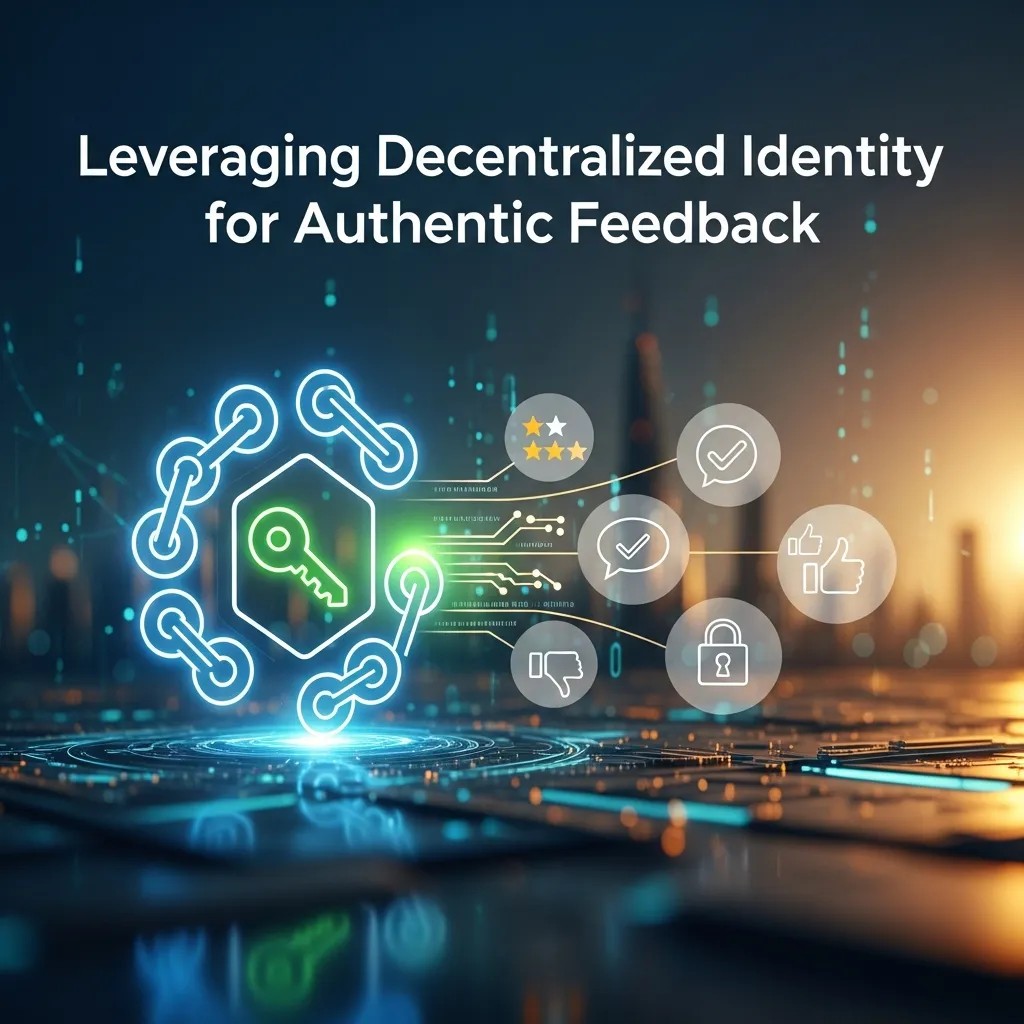
Today, one of the biggest threats to brand reputation is fraudulent or duplicate accounts posting dishonest reviews. Traditional ORM platforms often struggle to validate user identities at scale without compromising privacy. Blockchain-powered reputation management leverages decentralized identity (DID) frameworks to address this gap. By issuing verifiable credentials signed digital attestations businesses can ensure that only authenticated individuals contribute feedback, reducing the incidence of fake or malicious reviews.
Self-sovereign identity models allow users to control their personal data without relying on centralized authorities. Each participant holds cryptographic keys in a secure wallet, enabling them to prove attributes such as membership status, purchase history, or eligibility for rewards without revealing sensitive information. When a customer submits a review, the system checks their DID against a trust registry and records a minimal on-chain footprint usually the DID identifier and timestamp. This way, brands can confirm that the reviewer is a genuine customer without exposing private details, thus aligning with data protection regulations like GDPR.
Verifiable credentials come into play by offering layered verification. For example, a retailer might issue a ‘purchase receipt credential’ after verifying a transaction. When the user writes feedback, the smart contract validates the user’s claim before accepting the review on the blockchain. This process deters bot farms and coordinated manipulation campaigns, ensuring reviews represent genuine customer experiences.
Interoperability among identity providers is crucial. Emerging standards from the W3C’s decentralized identifiers working group facilitate seamless credential exchange across platforms. Organizations can integrate DID resolvers into their reputation systems, enabling cross-platform trust. This year (2026), pilot programs in sectors such as travel, healthcare, and professional services demonstrate that interoperable credentials can harmonize reputation data across multiple review sites, reducing fragmentation and boosting consumer confidence.
In addition to verifying new reviews, blockchain-based identity solutions support dynamic reputation scoring. Each verified interaction—review submissions, responses, endorsements—contributes to a cumulative reputation token held on-chain. Tokens can reflect overall customer standing, incentivizing consistent, high-quality feedback. Brands can design token-based loyalty programs that reward honest reviewers with discounts, early access, or governance privileges in a decentralized application (DApp) module.
Implementing decentralized identity requires thoughtful user onboarding. Clear documentation, intuitive wallet interfaces, and optional recovery mechanisms are essential to drive adoption. Companies should partner with trusted identity providers or leverage open-source platforms like Hyperledger Indy to accelerate deployment. By prioritizing ease of use, they can encourage broader participation and maximize the benefits of blockchain-powered reputation management.
Overcoming Implementation Challenges
Despite the transformative potential of a decentralized feedback ecosystem, integrating blockchain into existing infrastructure poses several hurdles. Chief among these are scalability, privacy compliance, and organizational alignment. Understanding these obstacles and planning accordingly will ensure that your blockchain-powered reputation management initiative achieves its objectives whilst maintaining operational viability.
Scalability remains a pressing concern. Public blockchains can experience network congestion, leading to delayed transaction confirmations and variable costs. To mitigate this, companies may opt for permissioned or consortium-based networks, which offer higher throughput and predictable fees. Layer 2 solutions—such as state channels or sidechains—can further offload transaction volume from the main ledger, processing high-frequency operations off-chain while anchoring final checkpoints on the primary network.
Privacy compliance is equally critical. Regulations like GDPR and CCPA require firms to honor user data deletion requests and restrict the storage of personally identifiable information (PII). Since blockchain’s immutability conflicts with traditional ‘right to be forgotten’ mandates, organizations must adopt privacy-by-design strategies. One approach is to store hashes of user data on-chain and keep actual PII within a controlled off-chain database. If a deletion request arises, the off-chain record can be erased while the on-chain hash remains harmless—no direct personal data is stored in the ledger.
Integration complexity can slow adoption. Legacy CRM and content management systems are often not built to interact with blockchain networks. To bridge this gap, enterprises should develop middleware layers or employ integration platforms that translate between RESTful APIs and blockchain RPC protocols. Building reusable microservices for common tasks—like transaction signing or state synchronization—can reduce development time and standardize interactions across multiple projects.
Another challenge is securing organizational buy-in. Blockchain projects frequently require cross-functional collaboration between IT, legal, marketing, and compliance teams. Establishing a governance framework—complete with project champions, steering committees, and clear success metrics—helps maintain momentum and align stakeholders. Training programs and pilot phases allow teams to gain hands-on experience, demystify technical concepts, and build confidence before scaling to full production.
Finally, user adoption can be a barrier. Asking customers to manage cryptographic keys or install unfamiliar wallets may deter participation. Strategies to alleviate this include offering custodial wallet services, providing social login options that issue temporary credentials, or integrating single sign-on (SSO) solutions. Clear user interfaces and responsive support channels also enhance trust and lower the entry threshold for nontechnical audiences.
Best Practices and Emerging Trends
To fully leverage the benefits of blockchain-powered reputation management, organizations must adopt best practices across technology selection, governance, and user engagement. Incorporating these guidelines helps ensure a resilient, scalable system that satisfies both internal stakeholders and end users.
- Select the Appropriate Ledger Type: Start with a permissioned or consortium blockchain to control access and achieve higher transaction throughput. As your system gains traction, consider integrating public blockchain anchors embedding periodic snapshots into networks like Ethereum or Bitcoin to boost security and public verifiability.
- Implement Privacy by Design: Avoid storing sensitive data directly on-chain. Instead, maintain detailed records off-chain while recording cryptographic hashes on the ledger. Utilize zero-knowledge proofs or confidential computing techniques to verify authenticity without exposing underlying content. This approach aligns with data protection regulations and preserves customer privacy.
- Develop Clear Governance Frameworks: Establish formal policies that define node participation criteria, consensus rules, and data retention requirements. Create a steering committee that includes representatives from IT, legal, compliance, and customer support teams. Regularly review governance documents to reflect changes in regulatory landscapes or technological advancements.
- Provide User Education and Support: Demystify blockchain concepts for customers and employees by offering concise guides, interactive tutorials, and responsive helpdesk services. Simplify the onboarding experience with custodial wallet options or enterprise single sign-on (SSO) integration. A frictionless user journey encourages participation and boosts the quality of feedback.
- Monitor and Audit Continuously: Deploy analytics tools that track key performance indicators such as transaction latency, error rates, and review submission volumes. Leverage smart contract event logs to detect anomalies or manipulation attempts. Schedule periodic audits with third-party firms or internal teams to validate system integrity and compliance.
Emerging Trends to Watch

- Interoperable Reputation Networks: Companies are beginning to collaborate on shared reputation frameworks that enable credentials to migrate across industries. For example, professional service platforms, gig economy apps, and e-commerce sites can exchange verified reputation scores, reducing redundancy and enhancing user trust.
- AI-Driven Fraud Detection: Machine learning models are being integrated with blockchain logs to analyze review patterns, identify outliers, and flag suspicious behavior in real time. Combining on-chain transparency with advanced analytics accelerates the detection of coordinated manipulation campaigns.
- Tokenized Incentive Schemes: Token rewards are increasingly used to motivate quality contributions. Customers may earn fungible or non-fungible tokens (NFTs) for submitting detailed, verified reviews, which they can redeem for discounts, exclusive content, or voting rights in decentralized applications.
- Decentralized Autonomous Reputation Organizations (DAROs): Looking ahead, some innovators envision community-governed entities that oversee reputation protocols, adjust consensus parameters, and arbitrate disputes. Such structures operate transparently and democratically, aligning incentives between brands and consumers.
- By embracing these best practices and staying attuned to emerging developments, organizations can position themselves at the forefront of blockchain-powered reputation management, delivering secure, trustworthy feedback ecosystems that drive customer loyalty and business growth.
Frequently Asked Questions (FAQ)
What is blockchain-powered reputation management?
Blockchain-powered reputation management uses a decentralized ledger to record and verify customer feedback, ensuring immutability and transparency for all stakeholders.
How does decentralized identity prevent fake reviews?
Decentralized identity frameworks issue verifiable credentials tied to user transactions or memberships, allowing only authenticated individuals to submit reviews without exposing personal data.
Can blockchain systems comply with privacy regulations like GDPR?
Yes. By storing only cryptographic hashes on-chain and keeping personal data off-chain, organizations can honor deletion requests while maintaining an immutable audit trail.
What are the costs and complexities of integrating blockchain?
Costs vary based on network choice, consensus mechanism, and integration complexity. Permissioned networks and Layer 2 solutions can lower fees and improve scalability, while middleware and reusable microservices reduce development overhead.
How do tokenized incentives enhance review quality?
Token rewards motivate genuine, high-quality feedback by providing tangible benefits such as discounts or governance rights encouraging users to engage honestly and frequently.
How does blockchain improve trust in online reputation systems?
Blockchain improves trust by making all review records transparent, tamper-proof, and time-stamped, ensuring that feedback cannot be altered or deleted without detection.
What industries benefit most from blockchain reputation management?
Industries like e-commerce, hospitality, healthcare, fintech, and SaaS benefit the most, as they rely heavily on customer trust and verified reviews.
Can blockchain eliminate fake reviews completely?
While it significantly reduces fake reviews through identity verification and transaction-based validation, no system can fully eliminate manipulation, but blockchain makes it extremely difficult.
How does smart contract automation support reputation systems?
Smart contracts can automatically verify reviews, distribute rewards, and enforce platform rules without human intervention, improving efficiency and reducing bias.
What is the future of blockchain in reputation management?
The future includes AI-integrated blockchain systems, cross-platform reputation scores, and decentralized identity ecosystems that give users full control over their digital trust profile.
Conclusion
In today’s trust-driven economy, maintaining an authentic, transparent online presence is imperative for sustained success. Blockchain-powered reputation management offers a secure, tamper-proof solution that addresses the vulnerabilities of centralized review platforms. By leveraging distributed ledgers, cryptographic auditing, and decentralized identity frameworks, organizations can guarantee the integrity of customer feedback and foster genuine trust with stakeholders.