Business Reputation is the real-world trust signal that shapes buying decisions, customer loyalty, and long-term growth by reflecting how consistently a brand delivers, responds, and behaves across every touchpoint.
Business Reputation is one of those phrases people use often without fully defining it. Many describe it as a good name, a positive image, or strong public sentiment, but that explanation is too shallow. Business Reputation is not just what a company says about itself. It is the sum of what people believe after watching the brand behave over time. When customers see consistency, they feel safe. When they see mixed signals, they hesitate. That is why Business Reputation is not a side effect of marketing; it is a core business asset.
In practical terms, Business Reputation influences whether someone clicks, calls, buys, stays, or recommends. A strong product can still struggle if Business Reputation is weak. A small company can outperform larger competitors if Reputation feels trustworthy. The market constantly interprets signals, and Business Reputation is the story those signals tell. That story can help sales move faster or force the business to overcome unnecessary friction. Either way, Reputation matters in every stage of growth.
This is where Online Reputation Management becomes essential. Online Reputation Management is the discipline that helps a brand watch, shape, and respond to the public story that forms around it. Without that discipline, Reputation becomes vulnerable to reviews, search results, social mentions, and customer complaints. With it, Reputation becomes easier to protect and strengthen. The goal of this article is to move beyond buzzwords and explain what Business Reputation actually means in real business life.
Why Business Reputation Is More Than Image
People sometimes confuse Business Reputation with branding. Branding is what a business presents. Business Reputation is what people conclude. Those two things are related, but they are not the same. A brand can look polished while Reputation remains weak if customer experience is poor. A brand can also appear modest while Reputation stays strong because customers trust the service and the people behind it.
That difference matters because Reputation is built through repeated proof. Every delivery, reply, refund, product improvement, and apology contributes to Business. Customers do not build trust from one message alone. They build it from patterns. When a business consistently does what it promises, Business Reputation becomes stronger. When it frequently overpromises and underdelivers, Reputation weakens quickly. That is why perception is never just cosmetic; it is operational.
Business Reputation also affects internal behavior. Teams work differently when they know the public is watching. Good Business often reflects good systems, clear communication, and accountability. Poor Reputation often reveals process gaps, slow responses, and inconsistent leadership. So when we talk about Business Reputation, we are really talking about the visible result of how the business works every day.
The Psychology Behind Business Reputation

Human beings are wired to reduce risk. When someone is considering a product or service, Business Reputation becomes a shortcut. People read reviews, scan comments, check search results, and look for signs that the company is stable. They may not say it directly, but they are asking a simple question: can I trust this business? Reputation answers that question before the first conversation even happens.
That psychological function explains why Business carries so much weight. Buyers do not want unnecessary stress. They want confidence. They want to believe the company will deliver, respond, and stand behind its promise. If Business feels uncertain, the buyer hesitates. If Business feels reliable, the buyer moves forward more easily. This is not only true for large purchases. It also applies to small everyday buying decisions where the customer has many options.
Because Reputation affects emotional safety, it can never be treated as a purely technical issue. It lives at the intersection of psychology and performance. If a company understands that, it can design better experiences. It can answer questions faster, communicate more clearly, and create a stronger sense of reliability. Those habits protect Reputation far more effectively than slogans ever could.
What Actually Shapes Business Reputation
Business Reputation is shaped by a wide set of signals, not just reviews. Customers observe tone, timing, product quality, consistency, transparency, and follow-through. If the support team answers quickly but the product team keeps missing deadlines, Business will still suffer. If the marketing message sounds strong but the service experience feels weak, Reputation will also suffer. The public sees the full picture, not the internal explanation.
One of the biggest misconceptions is that Business only lives online. In reality, online signals are just the visible layer. The deeper layer is the actual customer experience. Online Reputation Management helps connect those layers by tracking what people say digitally while also revealing the deeper causes behind their feedback. That is why strong Business Reputation depends on both perception and operations.
The most important factors that shape Business Reputation include responsiveness, consistency, product quality, ethical behavior, customer support, and the ability to recover after mistakes. A company that handles problems calmly often protects Business Reputation better than a company that never admits anything is wrong. Customers respect accountability. They notice when the brand learns and improves. That learning process is one of the strongest foundations of Business Reputation.
Business Reputation and Trust
Trust is the foundation of Business Reputation. Without trust, marketing becomes harder, sales cycles grow longer, and customer loyalty becomes fragile. Business Reputation is the public version of trust, and trust is built through repeated evidence. Every time a company communicates clearly and delivers as promised, Business Reputation gains another small layer of strength.
Trust also behaves like a compound asset. Once Business Reputation becomes solid, each new interaction starts from a better position. Customers are more forgiving. Prospects are more willing to consider the offer. Partners are more comfortable collaborating. That is why Business Reputation can create momentum. It reduces the energy needed to convince people because the brand already has credibility.
On the other hand, trust loss is expensive. One major failure can damage Business Reputation for months if the company handles it poorly. That does not mean businesses must be perfect. It means they must be responsive, responsible, and consistent. Those behaviors preserve Business Reputation even when issues arise.
Why Online Reputation Management Matters
Online Reputation Management exists because most public trust now begins on a screen. People search before they buy, and what they find shapes their expectations. Online Reputation Management helps businesses monitor and influence those first impressions. It can surface reviews, manage responses, improve search visibility, and identify recurring problems before they spread further. In that sense, Online Reputation Management is not a cosmetic task; it is a protection system for Business Reputation.
Online Reputation Management also helps businesses understand the gap between what they believe about themselves and what the market sees. A company may think it is responsive, but if customers complain about slow replies, Business Reputation is telling a different story. Online Reputation Management reveals those gaps so the business can correct them. That correction is often what separates businesses with strong Business Reputation from those with fragile trust.
At the same time, Online Reputation Management should not be confused with hiding criticism. Strong Business Reputation is not built by deleting everything negative. It is built by responding well, learning openly, and using feedback to improve the real experience. When Online Reputation Management supports that mindset, Business Reputation becomes more durable.
Reputation Is Not Static
A lot of people think Business Reputation is something a company either has or does not have. That is not true. Business Reputation changes over time. It can strengthen through consistency or weaken through neglect. It can improve after good service or collapse after repeated mistakes. Because Business Reputation is dynamic, it needs continuous attention.
This is where Futureproof Reputation Management Strategies become useful. Businesses cannot assume the same approach will work forever. Platforms change. Customer expectations change. The volume of feedback changes. Futureproof Reputation Management Strategies are designed to adapt with those changes instead of breaking under them. They help the business keep Business Reputation stable even as conditions evolve.
Futureproof thinking also matters because public judgment moves fast. One trend can highlight a weakness that was not visible before. One new channel can expose a complaint at scale. Futureproof Reputation Management Strategies prepare for that kind of change by building systems that monitor, respond, and improve regularly. A company that invests in this mindset protects Business Reputation over the long term.
The Hidden Cost of Weak Business Reputation
Weak Business Reputation does not always show up as a dramatic crisis. Often, it appears as hesitation. People delay decisions. Sales teams spend longer convincing prospects. Customer retention slips. Referral volume drops. In many cases, the business does not immediately realize Business Reputation is the cause because the symptoms appear in different departments.
That hidden cost is why reputation deserves more attention. When Business Reputation weakens, the company often has to spend more on acquisition to get the same result. The marketing budget goes up because trust is low. The sales cycle slows because objections increase. Support becomes busier because customer confidence is lower. So weak Business Reputation affects both revenue and efficiency.
This is also why prevention is cheaper than recovery. It is far easier to protect Business Reputation with strong systems than to repair it after trust has already eroded. A business that pays attention early saves time, money, and energy later.
How Businesses Misread Reputation
Many businesses assume that if customers are not openly complaining, Business Reputation must be fine. That assumption is dangerous. Silence does not always mean satisfaction. Sometimes it means people are leaving quietly. Sometimes it means they simply have not had a strong enough reason to complain publicly. Business Reputation should be measured by behavior, not by the absence of noise.
Another common misunderstanding is believing that polished branding can fix weak reality. It cannot. Business Reputation is not sustained by style alone. If the actual customer experience does not match the promise, the market eventually notices. That gap is where trust breaks down. The smartest companies treat Business Reputation as a reflection of reality, not as a mask for it.
A third mistake is assuming that Business Reputation is only the responsibility of marketing. In truth, the whole company shapes it. Sales, service, operations, leadership, and product all contribute. Online Reputation Management can only do so much if the underlying experience remains inconsistent.
ORM and the Customer Journey
Online Reputation Management supports Business Reputation best when it follows the full customer journey. People first encounter the brand through search, social proof, or a recommendation. Then they investigate. Then they evaluate trust. Then they buy. After the purchase, they decide whether the experience matched the promise. Each stage affects Business Reputation.
During the pre-purchase stage, Online Reputation Management helps ensure the public story is accurate and reassuring. During the post-purchase stage, it helps the company respond to feedback and protect future trust. This is important because Business Reputation is shaped by both expectation and experience. If the journey feels smooth, Reputation improves. If the journey feels confusing, Business Reputation weakens even if the product itself is good.
The best brands think about reputation at each step, not only after a review is posted. They understand that every interaction affects Business and that Online Reputation Management is part of that bigger system.
The Role of Structure
Business Reputation improves when the company has structure. Structure gives the brand a consistent way to respond, recover, and learn. Without structure, every issue becomes a scramble. With structure, Business Reputation is less likely to suffer from delay or inconsistency.
This is where ORM Workflow Design for SMB Success becomes useful. Small and medium businesses do not need a massive corporate process to manage reputation. They need a practical workflow that tells the team what to watch, how to respond, and when to escalate. That kind of lean system keeps Business Reputation protected without wasting resources.
A lean workflow is not about being minimal for the sake of it. It is about being effective. If the business can monitor the right signals, respond quickly, and fix recurring issues, Business Reputation will usually benefit. The simpler the system, the more likely the team is to actually use it.
Common Reputation Errors
One of the fastest ways to weaken Reputation is to ignore small problems. Small issues often signal deeper trouble. Another mistake is replying too slowly. People interpret silence as indifference. A third mistake is sounding defensive instead of helpful. Defensive communication can turn one complaint into a public trust problem. These are all examples of Common ORM Mistakes.
Another frequent problem is inconsistency. If one team member says one thing and another says something different, Business suffers because the brand appears confused. That confusion spreads quickly, especially online. The solution is not just better wording. It is better coordination. When the business works as one system, Reputation becomes easier to protect.
It is also a mistake to treat every complaint as an attack. Most people are not looking to destroy the business. They want resolution. If the company responds with respect, Business can survive even difficult moments.
Brand Reputation Control and Leadership

Business Reputation is ultimately influenced by leadership. Leaders shape culture, tone, standards, and response system speed. If the leadership does not care about public trust, the rest of the organization will usually mirror that attitude. That is why Brand Reputation Control is not just a communications task. It is a leadership discipline.
Brand Reputation Control works best when leaders model accountability. They should be willing to acknowledge mistakes, fix them, and communicate clearly. That behavior sets a standard for the rest of the company. It also helps the public see that Reputation matters at the top, not just in the marketing department.
Strong Brand Reputation Control also requires alignment. A brand cannot have one voice in marketing and another in support. Customers notice that immediately. When the message is unified, Reputation feels more trustworthy. When it is fragmented, trust weakens.
The Link Between Perception and Profit
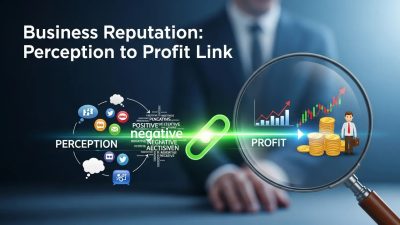
Business Reputation matters because perception shapes profit. If people believe the brand is credible, reliable, and worth their time, they are more likely to buy. If they believe the brand is careless or inconsistent, they hesitate. That is the Perception to Profit Link in real terms. Business Reputation influences buying behavior before the sale and loyalty after it.
This link also affects pricing power. A stronger Reputation can justify higher prices because customers feel safer paying them. It can also reduce churn because people are less likely to leave a brand they trust. In many cases, Business improves revenue without requiring a proportional increase in marketing spend.
That is why reputation is an economic asset. It changes the cost of acquiring customers and the value of keeping them. Brands that understand this make better strategic decisions. They do not treat Business Reputation as a soft metric. They treat it as part of business performance.
How People Form Judgment Quickly
The human mind forms fast opinions. When people see a business for the first time, they use quick signals to decide whether the brand looks credible. Reputation is the summary of those signals. That summary may be based on review scores, website clarity, social proof, tone, or search results. It does not take long for someone to decide whether the business feels trustworthy.
Because judgment happens quickly, businesses must be careful with first impressions. A weak first impression can make every later step harder. A strong first impression can make every later step easier. Business affects both. That is why presentation, clarity, and consistency matter so much.
People also remember negative experiences more strongly than neutral ones. That means Business Reputation can be shaped disproportionately by a few bad moments. Companies need to be aware of that psychological effect and respond accordingly. One bad interaction left unresolved can influence many future decisions.
A Practical Table
| What Shapes Business Reputation | Why It Matters | What It Affects |
|---|---|---|
| Customer service | Shows care and responsiveness | Trust and retention |
| Product delivery | Proves reliability | Satisfaction and referrals |
| Public replies | Reflects tone and accountability | Perception and confidence |
| Search presence | Sets first impressions | Clicks and inquiries |
| Internal consistency | Prevents confusion | Brand credibility |
How Strong Reputation Builds Momentum
Business Reputation does more than reduce risk. It creates momentum. A trusted business earns easier introductions, smoother conversations, and more repeat purchases. That momentum compounds because every positive experience makes the next one more likely. The stronger Reputation becomes, the less effort the company must spend proving itself.
This is one reason why good reputation is so valuable for growth. It lowers friction. It makes marketing more efficient. It improves sales confidence. It helps the business move faster because the market already has reasons to believe. Business , when strong, becomes a growth engine.
That momentum also benefits internal teams. Employees are more motivated when they work for a business that is respected. They feel the impact of the brand’s credibility in their daily work. Business Reputation therefore supports not only external trust but internal pride.
Using Content to Support Reputation
Content can strengthen Business Reputation by explaining the brand, clarifying values, and answering common questions. Helpful content creates confidence. It gives prospects and customers useful information before they ever contact the team. That informational value is part of reputation.
Online Reputation Management often includes content because content shapes what people find. If the business publishes strong, useful content, it helps guide the narrative around Business . That does not mean hiding criticism. It means adding clarity. When a brand educates the market well, Business Reputation becomes easier to understand and trust.
This is especially important in competitive spaces where customers compare multiple businesses before deciding. Content can tip the balance by making the brand feel more knowledgeable, more transparent, and more human.
What Business Reputation Means in Daily Operations
At the operational level, Business Reputation is not abstract at all. It shows up in how quickly the team answers messages, how carefully the team handles mistakes, and how consistently the company follows through. A business with strong operations usually has stronger Business Reputation because it creates fewer reasons for doubt.
That is why reputation management should be connected to process improvement. If the same complaint keeps happening, the business should not only respond to it. It should remove the cause. If response times are slow, the workflow should be fixed. If confusion keeps appearing, the communication should be simplified. Business Reputation grows when operations improve.
A Simple Review Cycle
A useful reputation cycle can be light but effective. Monitor the signals weekly. Review the patterns monthly. Adjust the process quarterly. This keeps the business aware without overwhelming the team. Business Reputation benefits when issues are handled early and lessons are not forgotten.
The review should ask simple questions. What complaints are repeating? Which responses worked best? Where did the team slow down? What content helped? What did customers praise most? Those questions turn reputation work into practical learning. That learning is one of the best ways to protect Business Reputation over time.
Futureproof Thinking for the Long Run
Futureproof Reputation Management Strategies matter because the environment will continue to change. New platforms will matter. Old channels will fade. Customer expectations will shift. Businesses that build flexible systems will protect Business Reputation better than those that rely on temporary fixes.
Futureproof strategies do not need to be complicated. They need to be adaptable. They should help the business monitor the right places, respond with clarity, and learn continuously. When those habits become routine, Business Reputation becomes more resilient. That resilience is valuable because it reduces shock when the market changes.
Why This Matters More for Smaller Businesses
Small businesses often feel reputation damage faster than large ones. They have fewer customers, smaller margins, and less room for error. That is why Business Reputation is especially important for them. One strong review can help. One major complaint can hurt. The stakes are higher.
That is also why lean systems are so useful. SMBs need practical processes that help them protect Business Reputation without adding unnecessary overhead. A focused workflow, consistent tone, and regular review cycle can go a long way. Small businesses do not need complexity. They need reliability.
The Real Meaning Beyond Buzzwords

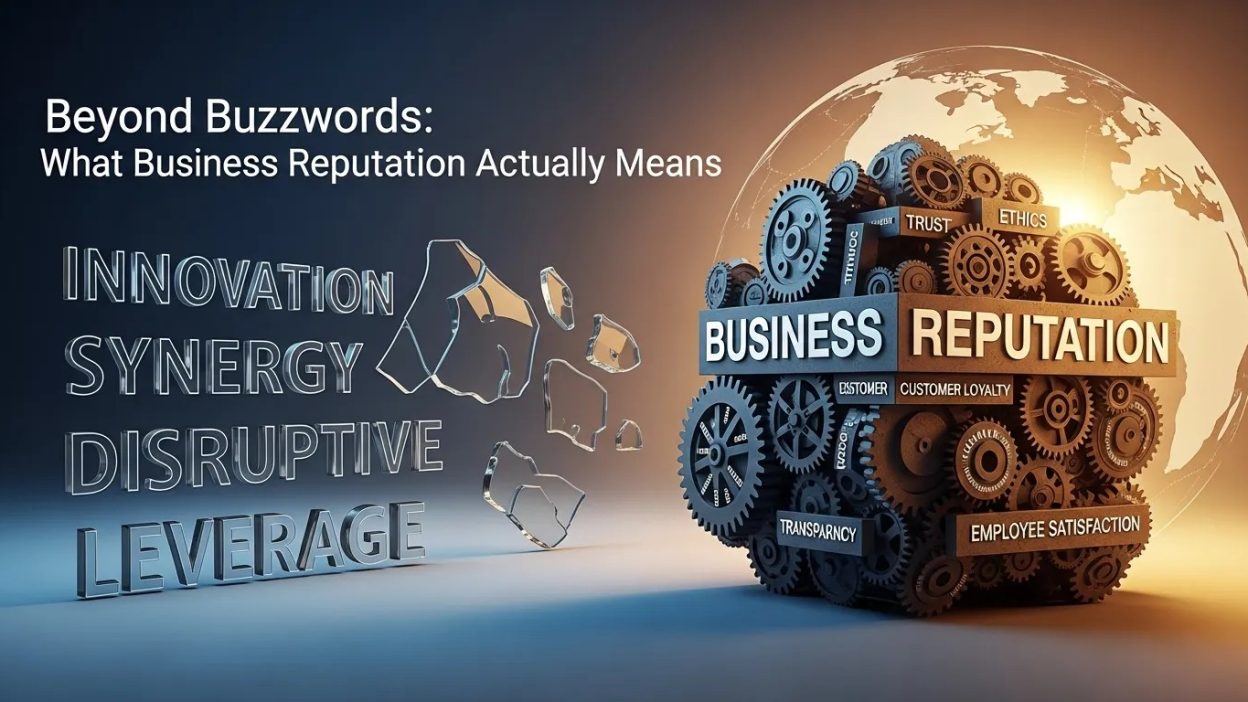
Business Reputation is not a slogan and not a vanity label. It is the real-world result of how the company behaves in front of the market. It is the confidence people feel when they choose the brand. It is the trust that makes sales easier and loyalty stronger. It is also the warning signal that tells a company when something is going wrong.
Once that meaning is clear, the conversation changes. Business becomes something to manage actively, not something to mention casually. It becomes a strategic asset. It becomes part of growth, resilience, and customer experience. That is what Reputation actually means.
Conclusion
Business Reputation is the public result of trust, behavior, and consistency. It affects how people search, compare, buy, and recommend. When a company understands Business Reputation clearly, it can make better decisions about service, communication, and growth. Online Reputation Management helps protect that trust, while Futureproof Reputation Management Strategies keep the system adaptable over time. Lean ORM Workflow Design for SMB Success gives smaller businesses a practical way to respond fast and stay organized. Avoiding Common ORM Mistakes to Avoid Before Damage Hits and strengthening Brand Reputation Control both support the same goal: a business that earns confidence through action, not just words. Business Reputation is not buzz. It is the foundation of how the market decides to believe in a brand.
Frequently Asked Question (FAQ)
What is Business Reputation?
Business Reputation is the public trust and perception formed by a company’s behavior, communication, and customer experience.
Why is Business Reputation important?
It affects whether people buy, stay, and recommend the business.
How does Online Reputation Management help?
Online Reputation Management monitors and improves the public story around the brand.
What is the difference between brand and reputation?
Brand is what the business presents. Business Reputation is what people conclude from experience.
How does Business Reputation affect profit?
Strong Business Reputation improves trust, conversion, retention, and referrals.
What are Common ORM Mistakes to Avoid Before Damage Hits?
They include slow replies, silence, inconsistency, and ignoring feedback.
Why is Lean ORM Workflow Design for SMB Success useful?
It gives smaller businesses a simple, practical system for protecting trust.
What is Brand Reputation Control?
Brand Reputation Control is the discipline of keeping messaging and behavior consistent across the company.
Can Business Reputation be improved?
Yes, through consistency, accountability, fast response, and better customer experience.
Is Business Reputation really a business asset?
Yes, because it directly influences revenue, loyalty, and market confidence.