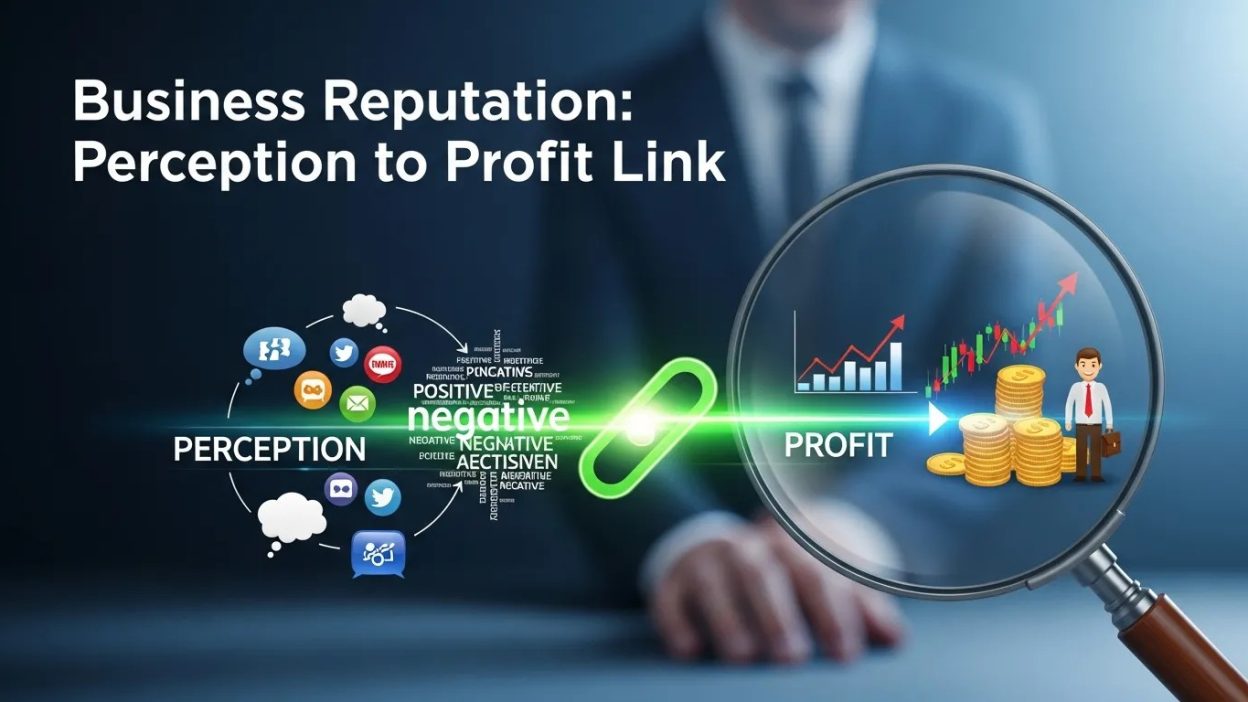
Business Reputation shapes trust, buying confidence, and long-term revenue by turning public perception into commercial advantage through consistent communication, strong ORM, and customer-centered brand behavior.
Business Reputation is never just a public image problem. It is a revenue problem, a trust problem, and a growth problem all at once. When people evaluate a company, they do not separate the product from the experience, or the experience from the story they hear online. They judge the whole picture. That is why Business Reputation becomes one of the strongest forces in the buying journey. A brand with strong trust can move faster, convert easier, and recover better when challenges appear.
The Perception to Profit Link is the bridge between how people feel and how they spend. When Business Reputation is positive, buyers assume lower risk. They believe the company is reliable, responsive, and worth their money. When Business Reputation is weak, the opposite happens. The market becomes cautious, conversion slows, and every sales conversation has to work harder. This is why reputation is not a soft concept. It is a measurable business asset.
ORM also plays a major role here. Online Reputation Management is the practical system that protects Business Reputation across reviews, search results, social mentions, and customer feedback. If ORM is weak, the reputation story becomes fragmented. If ORM is disciplined, Business Reputation can grow even in a competitive market. That is the focus of this guide: how Business Reputation moves from perception to profit, and how companies can protect that link with intentional strategy.
What Business Reputation Really Means
Business Reputation Meaning goes far beyond ratings or public praise. It is the combined judgment people make after observing behavior over time. That includes customer support, product quality, delivery speed, complaint handling, communication tone, and the consistency of the entire experience. Strong Business Reputation does not happen by accident. It is created when the company delivers repeated proof that it can be trusted.
People often think reputation is only a marketing issue, but it touches every part of the organization. Sales influences expectations. Operations influences fulfillment. Support influences recovery. Leadership influences credibility. Every one of those areas contributes to Business Reputation. If one area is careless, the public may not distinguish between departments. They simply feel that the brand is unreliable.
This is why the Business Reputation concept must be treated as a system. If the system is healthy, perception improves. If the system is weak, even good products can struggle. The goal is to make sure every customer touchpoint strengthens Business Reputation instead of damaging it.
How Perception Becomes Revenue
The Perception to Profit Link works because people make faster decisions when they feel safe. Business Reputation helps create that sense of safety. Buyers do not want to spend time researching every detail. They want signals that reduce uncertainty. Positive reviews, clear communication, fast replies, and visible accountability all support that feeling. When Business Reputation is strong, the purchase decision becomes easier.
This relationship is especially important in crowded markets. Two companies may offer similar products, but the one with stronger Business Reputation often wins because it feels more dependable. That emotional edge matters. It can shorten the sales cycle, improve conversion rates, and increase referrals. In other words, the business earns more by being trusted more.
The opposite is also true. If Business Reputation is weak, buyers delay. They ask more questions. They compare more options. They leave more often before purchase. That is how perception quietly turns into lost revenue. A good strategy must therefore treat Business Reputation as part of revenue operations, not just brand management.
Why ORM Is Central to the Link

ORM is one of the main systems that protects Business Reputation in the digital age. It shapes what people see when they search, what they read in reviews, and how quickly the brand responds when concerns arise. A strong ORM system does not merely remove negativity. It builds a better public story around Business Reputation.
A company that ignores ORM often discovers that small issues become visible fast. A review reply left unanswered can suggest indifference. A complaint ignored on social media can suggest disorganization. In both cases, Business Reputation suffers because the silence creates a story. Effective ORM replaces silence with clarity.
ORM also helps businesses learn. The complaints people post online are often clues about the customer experience. If the same issue appears multiple times, the problem is not just reputational. It is operational. That is why Business Reputation improvement often starts with ORM data. The public voice reveals what the company must fix internally.
The Psychology Behind Trust
Human psychology gives Business Reputation its power. People rely on social proof, pattern recognition, and emotional shortcuts when deciding whether a brand is safe. They often do not analyze every detail. They scan for signs of quality, consistency, and honesty. If Business Reputation appears stable, the brain reduces risk. If it appears unstable, the brain raises caution.
This is why reputation management is so deeply behavioral. Customers do not only buy what a company sells. They buy the feeling that the company will deliver without unnecessary stress. Business Reputation helps create that feeling. It lowers resistance, especially in first-time buyers who do not yet have personal experience with the brand.
The psychology of trust also explains why recovery is possible. When a company responds well, admits mistakes, and shows improvement, people often forgive more than brands expect. Business Reputation can bounce back if the organization acts with maturity. Trust may take time to rebuild, but it can be rebuilt through consistency.
Building a Strong Reputation System
A strong system starts with visibility. Business Reputation cannot be managed if the company does not know what people are saying. Monitoring should include search results, review platforms, social channels, customer emails, and support tickets. The goal is not to watch everything manually. The goal is to know where risks are forming. Business Reputation stays healthier when the warning signs are seen early.
Next comes response design. ORM should define who handles what, how quickly the team should reply, and when a case must be escalated. A response system does not need to be complicated to be effective. It just needs to be clear. When the process is clear, Business Reputation is less likely to be harmed by delay or confusion.
Then comes improvement. Reputation work should feed back into product, service, and communication decisions. If customers repeatedly mention the same pain point, the business should not only reply to the complaint. It should fix the underlying cause. That is how Business Reputation becomes stronger over time instead of merely defended in the moment.
The Role of Brand Reputation Control
Brand Reputation Control is the broader discipline that keeps the entire public story aligned. It is more than replying to complaints. It includes tone, messaging, consistency, and leadership behavior. When Brand Reputation Control is strong, the company feels coherent. When it is weak, people notice mixed signals quickly.
Business Reputation depends on that coherence. A company may have a great product, but if the public communication feels careless or defensive, trust drops. Brand Reputation Control helps prevent this by making sure the brand speaks with one voice. That voice should be calm, helpful, and credible. It should make people feel that the company is in control even when a problem exists.
Brand Reputation Control also supports internal discipline. It reminds teams that every response is part of a larger trust equation. One careless reply can undo several positive interactions. That is why businesses that take Business Reputation seriously usually build response standards, review rules, and communication guidelines.
Lean ORM and the SMB Advantage
Lean systems are especially important for smaller companies. When resources are limited, the Business Reputation challenge cannot be solved with extra headcount alone. It needs a workflow that is simple enough to maintain and strong enough to protect trust. That is where lean design helps.
For SMBs, a lean system should watch the most important channels, respond quickly to the most common issues, and escalate only when needed. This keeps the workload realistic while preserving quality. Business Reputation improves when the team is not overwhelmed by unnecessary complexity. Small teams benefit most from clarity and repeatability.
A lean approach also helps SMBs stay agile. If the workflow is simple, it can be adjusted fast as the business grows. This flexibility matters because the reputation environment changes over time. Business Reputation is not static, so the system protecting it should not be static either.
Futureproof Reputation Thinking
Futureproof Reputation Management Strategies focus on durability. They ask how the company will manage trust not just today, but as the business expands, the market shifts, and customer expectations rise. Business Reputation improves when the system can adapt without breaking.
A futureproof strategy includes monitoring system, escalation, training, and regular review. It also includes content that supports the brand narrative. Positive educational content, helpful FAQs, and clear positioning can strengthen Business Reputation before a problem even appears. That is the difference between reactive defense and long-term protection.
Futureproof thinking matters because reputation damage often happens when processes fall behind reality. A system built for a small audience may not work when volume increases. A response style that worked last year may sound stale today. Business Reputation remains strong when the business keeps the system current.
Mistakes That Break the Link
One of the biggest risks is waiting too long to reply. Business Reputation can decline quickly when customers feel ignored. Another common mistake is inconsistent tone. If one reply feels warm and another feels cold, the public story weakens. A third mistake is failing to connect feedback to action. If complaints are answered but never fixed, Business Reputation does not truly improve.
Another problem is overreliance on automation. Automation can help with speed, but it cannot replace judgment in sensitive situations. If the replies feel robotic, trust erodes. Business Reputation depends on a human sense of care, especially when problems are emotionally charged. The best systems use automation to support, not replace, the relationship.
The final major mistake is not measuring outcomes. If the business does not know whether response speed, review trends, or sentiment analysis are improving, it cannot tell if the reputation system is working. Business Reputation should be measured in terms of trust, conversion, and customer loyalty, not just volume of activity.
Reputation and the Buying Journey
Every stage of the buying journey is influenced by Business Reputation. Early in the journey, people are looking for signals. Middle-stage buyers are comparing confidence. Late-stage buyers are reducing risk. In all three phases, a strong reputation makes the decision easier. That is why Business Reputation belongs inside the sales strategy.
Search behavior shows this clearly. People often look up reviews before contacting a brand. They may read a company page, compare ratings, or search for complaints. If Business Reputation appears strong, the buyer moves forward. If it looks uncertain, they slow down. The company may never know how many deals were influenced by this invisible filter.
Business Reputation also affects post-purchase behavior. When customers feel confident, they are more likely to stay, recommend, and buy again. That means reputation is not only an acquisition tool. It is a retention tool too. The profit impact continues long after the first sale.
Reputation Drivers
| Driver | What It Influences | Effect on Business Reputation |
|---|---|---|
| Review quality | First impressions | Trust growth |
| Response speed | Customer confidence | Reduced frustration |
| Consistent messaging | Brand clarity | Higher credibility |
| Issue resolution | Satisfaction | Better retention |
| Helpful content | Search perception | Stronger authority |
How to Make the System Work in Practice

To protect Business Reputation, the company should begin with a clear owner and a simple workflow. One person or team should monitor the most important channels. Another should handle responses. Another should track patterns and report them. That separation keeps the system lean while still reliable.
Then the business should define standards for tone and timing. The tone should be respectful and calm. The timing should be fast enough to show attentiveness. The team should know when to respond publicly and when to move the conversation private. Business Reputation improves when those decisions are made consistently.
Finally, the company should review its reputation data regularly. Monthly reviews can reveal trends, recurring complaints, and new opportunities. That routine keeps the brand from drifting. Business Reputation is strongest when the system learns as it goes.
Why Trust Compounds
Trust compounds the same way interest does. Small positive signals build over time and make future decisions easier. Business Reputation works like that too. A good response today makes tomorrow’s buyer more confident. A helpful review reply can influence a future visitor. A clear support experience can lead to a referral later.
This compounding effect is what makes reputation management so valuable. A company with strong Business Reputation spends less energy explaining itself. It earns more trust before the conversation begins. That is a real competitive advantage. The brand becomes easier to choose, easier to recommend, and easier to defend in the market.
Connecting Reputation to Culture
Culture shapes behavior, and behavior shapes Business Reputation. If employees are encouraged to be honest, responsive, and customer-centered, the public sees that in the brand experience. If internal communication is poor, that weakness eventually appears outside. Reputation work starts inside the organization long before it appears in public.
Leaders play a key role here. They set the tone for how mistakes are handled and how customers are treated. If leadership values accountability, the team usually follows. Business Reputation is stronger when the internal culture supports the external promise.
Where ORM Fits in the Long Game
ORM is not a one-time task. It is a long-term operating discipline. The best ORM systems keep watch, respond well, and learn continuously. They protect Business Reputation while helping the company grow with less friction. Over time, this becomes part of the business model.
The long game also means recognizing that perception can change. Markets evolve. Competitors get louder. Customer expectations rise. ORM keeps Business Reputation resilient in the middle of that change. It ensures the brand does not lose trust simply because it stopped paying attention.
Final Practical Guidance
Keep the workflow simple. Keep the response tone human. Keep the monitoring regular. Keep the improvement loop active. Those four habits will do more for Business Reputation than a complicated plan no one uses. The goal is not perfection. The goal is steady trust. Business Reputation becomes an asset when the company earns it repeatedly and protects it consistently.
Lean Workflow Notes for Growth
A lean process works best when it stays practical. ORM Workflow Design works best when it keeps the reputation task small enough for a busy SMB team to actually maintain. That matters when there are only a few people available to handle support, replies, and reporting. The goal is not to create a large system. The goal is to create a usable one, because Business Reputation depends on consistency. A simple rhythm also keeps Business Reputation stable as volume grows.
Common ORM Mistakes are the reality many teams face when feedback starts arriving faster than the business can manage. The best response is not panic. It is structure. When the team understands what to watch, how to respond, and when to escalate, the work becomes manageable. This small layer of discipline protects the larger reputation system and keeps the customer experience steady.
Review Rhythm That Keeps the System Honest

A reputation workflow gets stronger when it is reviewed on a regular cadence. Weekly monitoring catches immediate issues, while monthly reviews reveal patterns that are easy to miss in the moment. A simple scorecard can track response speed, repeat complaints, resolved cases, and sentiment shifts. That gives the team a clear view of whether the process is helping or drifting.
The purpose of review is not to blame people. It is to improve the system. If a reply took too long, the workflow should show why. If a complaint repeated, the issue should point to a process gap. Small adjustments made early are far easier than large corrections made after public frustration has spread.
Conclusion
Business Reputation is the link between perception and profit because trust changes how people buy, stay, and recommend. When companies understand Business Reputation Meaning, align ORM with real customer signals, and apply Futureproof Reputation Management Strategies, they create a system that protects revenue instead of reacting to damage. Lean execution, Brand Reputation Control, and a clear response workflow all help make that system stronger. The companies that win long term are the ones that treat Business Reputation as a measurable business asset, not a side project. When reputation is managed well, perception becomes confidence, and confidence becomes sustainable profit.
Frequently Asked Questions (FAQ)
What is Business Reputation?
Business Reputation is the public trust and perception formed from customer experience, communication, and consistency.
Why is Business Reputation important?
It affects whether people buy, stay, and recommend the brand.
What does Business Reputation Meaning include?
It includes trust, credibility, service quality, and the overall customer experience.
How does ORM support Business Reputation?
ORM monitors and improves what people see and say about the brand online.
What is the Perception to Profit Link?
It is the connection between customer perception and business revenue.
Why does Brand Reputation Control matter?
It keeps messaging and behavior aligned so the brand appears reliable.
What are Futureproof Reputation Management Strategies?
They are long-term systems that help a brand stay trusted as conditions change.
How do Common ORM Mistakes affect reputation?
They weaken trust by creating delays, inconsistency, and unresolved issues.
Can small businesses improve Business Reputation?
Yes, especially by using lean ORM, clear standards, and consistent responses.
Does Business Reputation affect profit directly?
Yes, stronger reputation usually improves conversion, retention, and referrals.