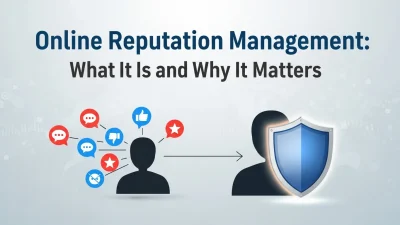
Your online reputation shapes trust, credibility, and revenue—learning how to improve online reputation management is no longer optional in today’s digital-first economy.
This guide explains how to improve online reputation management using proactive strategies, AI-powered tools, review management, SEO, crisis planning, and brand monitoring. You’ll learn practical frameworks for businesses and individuals to build trust, recover from negative content, and create sustainable digital credibility.
How to Improve Online Reputation Management: Step-by-Step Framework
Improving your online reputation requires more than reactive responses—it demands a structured, repeatable system. This step-by-step framework shows exactly how to improve online reputation management using data, technology, customer experience, and strategic communication.
1. Audit Your Current Online Reputation
You cannot improve what you do not measure. The first step in how to improve online reputation management is conducting a comprehensive audit of your existing digital footprint.
This audit reveals how your brand, business, or personal identity is currently perceived across the internet.
Key actions include:
- Google your brand name, executives, products, and services
- Review Google Business Profile listings for accuracy and sentiment
- Analyze brand mentions across social media platforms
- Evaluate customer reviews on Google, Yelp, Trustpilot, marketplaces, and industry-specific sites
- Identify negative articles, outdated content, or misleading information
This process answers a critical question:
How do customers, prospects, and stakeholders currently perceive you online?
A reputation audit forms the baseline for all future improvements.
2. Monitor Business Reputation Online Consistently
Monitoring is the backbone of sustainable online reputation management. Without real-time visibility, reputation issues escalate before brands can respond.
Essential monitoring tools and methods include:
- Google Alerts for brand names, executives, and products
- Social media monitoring platforms to track conversations and mentions
- AI-powered sentiment analysis to detect emotional trends at scale
- Review management services that centralize feedback across platforms
Understanding what is social media monitoring and combining it with AI-driven online reputation management ensures you detect risks early, identify engagement opportunities, and maintain constant awareness of brand perception.
Consistency—not occasional check-ins—is what separates proactive ORM from reactive damage control.
3. Optimize Owned Digital Assets
To control companies’ online reputation, you must first own your digital real estate. Owned assets give you authority, credibility, and long-term control over messaging.
Core essentials include:
- A fully optimized, SEO-friendly website
- Google Business Profile optimization with accurate data and frequent updates
- Verified business listings across directories and maps
- Consistent brand voice, visuals, and messaging across platforms
When optimized properly, owned assets dominate search results, push down negative content, and reinforce trust signals. This step is foundational for anyone learning how to manage online reputation management effectively and sustainably.
4. Master Customer Review Management
What is customer review management?
It is the structured process of collecting, responding to, analyzing, and leveraging customer feedback to strengthen credibility and improve customer experience.
Best practices include:
- Proactively asking satisfied customers for reviews
- Responding professionally to every review—positive or negative
- Turning negative reviews into growth opportunities, especially in e-commerce reputation management
- Reporting and attempting to remove fake or malicious reviews when possible
Handling negative feedback with empathy and professionalism is one of the most visible signals of brand maturity and trustworthiness.
5. Turn Negative Reviews Into Growth Opportunities
Negative reviews are not failures—they are insights into unmet expectations.
How to manage a negative review effectively:
- Acknowledge the issue publicly and respectfully
- Apologize when appropriate without shifting blame
- Offer a clear and actionable resolution
- Move the conversation offline to email or phone
Brands that understand how to improve reputation management use criticism to strengthen transparency, demonstrate accountability, and build deeper customer trust rather than damage it.
6. Invest in Content That Builds Authority
Content is the most scalable and controllable reputation asset. High-quality content shapes perception, strengthens SEO, and builds long-term authority.
High-impact content types include:
- Educational blog posts answering customer questions
- Video testimonials for online reputation and trust-building
- Thought leadership articles from executives or founders
- Case studies and digital marketing success stories
Building trust with video testimonials is especially powerful—visual proof humanizes your brand and dramatically improves engagement and credibility.
7. Integrate AI-Powered Online Reputation Management
AI-driven online reputation management is transforming how brands monitor, analyze, and respond at scale.
Key AI applications include:
- AI-powered sentiment analysis across reviews and social platforms
- AI chatbots and machine learning for customer support and response consistency
- Predictive crisis detection using behavioral data patterns
- Deepfakes AI reputation management tools to detect misinformation and impersonation
Online reputation management with AI and social listening enables faster decision-making, better prioritization, and reduced human error.
8. Build a Crisis Management Plan
Knowing how to create a crisis management plan protects long-term brand equity and minimizes financial and reputational damage.
Crisis planning essentials include:
- Clearly defined escalation workflows
- Pre-approved response templates
- Designated internal and external spokespersons
- Cross-functional coordination between legal, PR, and customer support teams
- Transparency and timely communication policies
A documented crisis response plan turns chaos into controlled action and is a hallmark of advanced online reputation management.
9. Integrate Customer Experience With Reputation Strategy
Reputation and customer experience are inseparable. Every interaction influences public perception.
Key integration areas include:
- Monitoring customer feedback across the entire journey
- Mapping customer relationship types and touchpoints
- Aligning service teams with brand promises
- Building a business recovery plan for service failures
Understanding how customer feedback builds trust ensures your reputation strategy reflects real experiences—not just marketing messages.
10. Measure and Optimize the ROI of Online Reputation Management
Reputation management must be measurable to remain effective.
Key metrics to track include:
- Review ratings and volume growth
- Branded search click-through rates
- Customer retention and lifetime value
- Crisis recovery time and sentiment rebound
- Conversion rate improvements
Tracking the ROI of online reputation management ensures continuous optimization, accountability, and long-term scalability.
Conclusion
Learning how to improve online reputation management is no longer a reactive task—it is a strategic, long-term discipline that protects trust, strengthens visibility, and fuels sustainable growth. In a digital world where perceptions are formed instantly and shared widely, proactive monitoring, customer-centric engagement, AI-driven insights, and crisis preparedness are essential. Brands and individuals who invest consistently in online reputation management don’t just reduce risk—they build authority, resilience, and lasting credibility that compounds over time.
Frequently Asked Questions (FAQs)
1. What is online reputation management?
Online reputation management (ORM) is the process of monitoring, influencing, and improving how a business or individual is perceived across digital platforms such as search engines, social media, review sites, and online publications. It focuses on building trust, managing feedback, and protecting credibility over time.
2. Why is online reputation management important for businesses?
Online reputation management is important because most customers research brands online before making decisions. A strong reputation increases trust, conversions, and brand loyalty, while unmanaged negative content can lead to lost revenue and long-term credibility damage.
3. How long does it take to improve online reputation management?
Improving online reputation management can take a few weeks for initial improvements, such as better review responses and content updates. However, building a strong, sustainable reputation typically requires several months of consistent monitoring, engagement, and optimization.
4. How can I monitor my business reputation online?
You can monitor your business reputation online using tools like Google Alerts, review management platforms, social media monitoring software, and AI-powered sentiment analysis. These tools help track mentions, reviews, and overall brand sentiment in real time.
5. How should businesses handle negative reviews?
Negative reviews should be handled professionally and empathetically. Acknowledge the issue publicly, apologize when appropriate, offer a solution, and move the conversation offline. When managed correctly, negative reviews can become opportunities to build trust and demonstrate accountability.
6. Can online reputation management help with SEO?
Yes. Online reputation management directly impacts SEO by improving branded search results, increasing click-through rates, and strengthening trust signals such as reviews and authoritative content. Positive online sentiment supports long-term search engine visibility.
7. What role does AI play in online reputation management?
AI helps automate monitoring, analyze sentiment at scale, detect potential crises early, and support faster customer responses through chatbots and machine learning. AI-driven online reputation management allows brands to react quickly and manage large volumes of data efficiently.
8. How do I remove fake or malicious reviews?
Fake reviews can be reported to platforms like Google, Yelp, or Trustpilot by providing evidence that they violate platform policies. While not all reviews can be removed, strong review management and positive content can minimize their impact.
9. Is online reputation management only for large companies?
No. Online reputation management is equally important for small businesses, startups, professionals, and personal brands. Even a single negative review or article can significantly affect trust, making ORM essential at every business stage.
10. Is online reputation management a one-time task?
No. Online reputation management is an ongoing process. Digital conversations, customer expectations, and search algorithms constantly change, requiring continuous monitoring, engagement, and optimization to maintain a strong reputation.