Discover how to improve reputation management through review monitoring, social media engagement, crisis management planning, and corporate reputation strategies. Strengthen trust, boost credibility, and safeguard your brand’s long-term success in today’s digital landscape.
Whether you’re an individual, a small business, or a global corporation, your reputation is one of your most precious assets. How others view you directly impacts their actions to hire you, buy from you, or even associate with your company. But in the era of instantaneous online feedback and social media, overseeing your reputation is about more than just providing a good product or service. You need a proactive reputation strategy.
This manual offers concrete applications to help you manage your reputation progress. Whether You’re Interested In Boosting Your Personal Brand Or Elevating Your Company, Here’s How You Can Get Ahead. Whether it is building your own personal brand or increasing visibility for your company, the following tips will ensure you stay ahead of the curve. How to improve reputation management starts with having a consistent, active strategy.
Why Reputation Management is the Key to Your Business’s Success
Hear what other people have to say about you or your brand can be the difference between getting a job, a contract, or closing that deal. Research indicates that 88% of consumers place as much trust in online reviews as personal recommendations, and almost 75% of job seekers are likely to consider a company’s reputation before they even apply. The numbers only serve to further underpin the need for a good public image to be upheld.
Reputation management isn’t about saying we can control what everyone says of us. It’s all about the ability to change minds by being your best self and showing others that you or your company is worth trusting. This mindset is key when looking at how to improve reputation management in today’s digital world.
Here’s How Your Business Can Benefit From Good Reputation Management
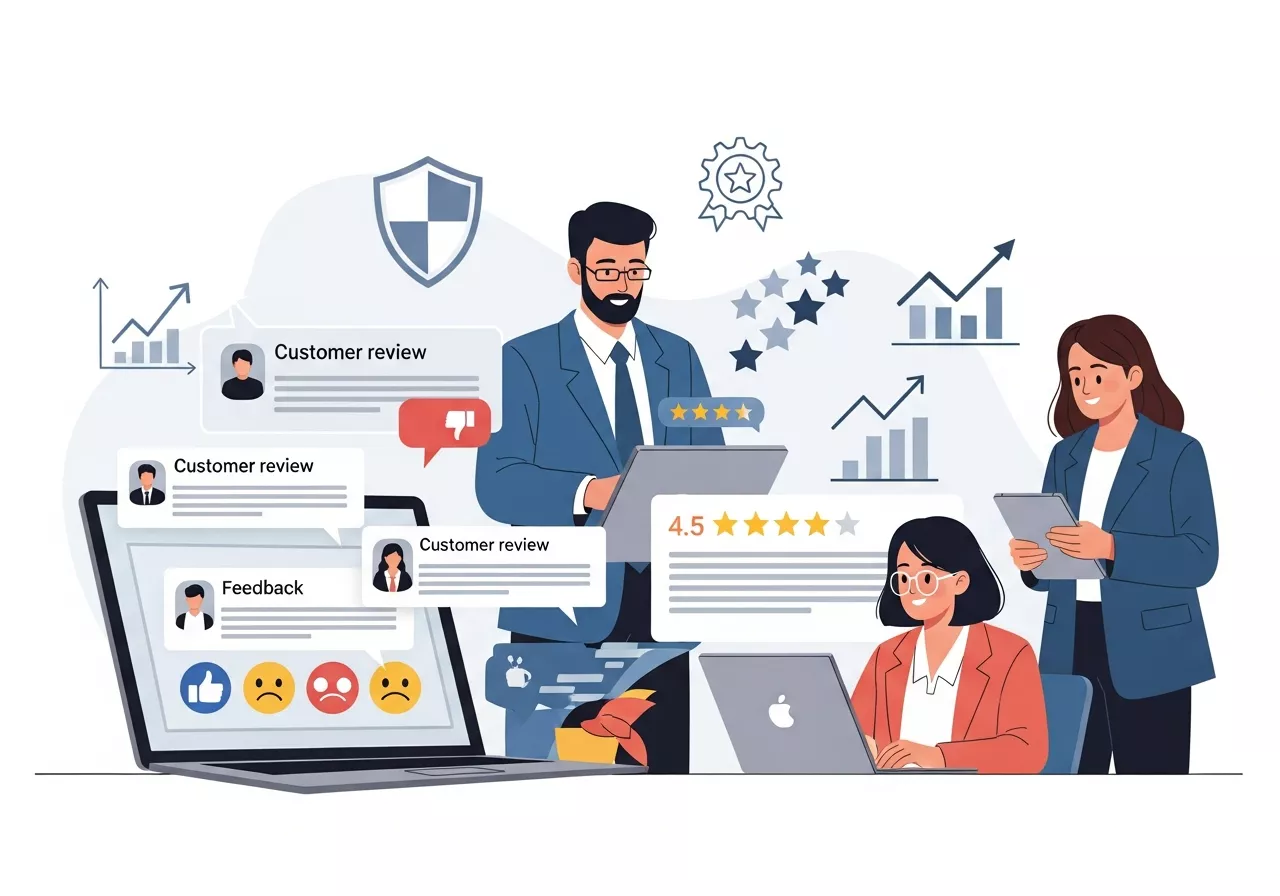
Good reputation management is more than just responding to reviews—it’s about proactively shaping how your business is perceived in the eyes of customers, employees, and partners. Implementing a strong reputation strategy provides tangible benefits that directly impact growth, revenue, and brand credibility.
Key Benefits Include:
- Establishing Customer Trust and Loyalty: Customers are more likely to engage and make repeat purchases when they trust your brand. A strong reputation signals reliability and professionalism.
- Attracting Better Job Applicants: Talented professionals often research company culture and reputation before applying. A positive public image makes your business an attractive workplace.
- Minimizing the Damage of Bad Press: By actively managing your reputation, you can address negative coverage quickly, preventing it from spreading and reducing its long-term impact.
- Reinforcing Competitive Advantage: Brands with a strong reputation stand out in crowded markets. Consumers are more likely to choose companies they perceive as trustworthy and credible.
- Boosting Revenue and Partnerships: A reputable business attracts more clients, investors, and collaborations, enhancing growth opportunities.
With these benefits in mind, the question becomes: how to improve reputation management effectively? Let’s break it down into actionable steps.
Track Online Content and Reviews
The first step in improving your reputation is knowing what’s being said about you online. You cannot protect or enhance your reputation if you are unaware of public perception. Tracking mentions, reviews, and content related to your brand is crucial.
Why Monitoring Matters:
- Identify potential issues before they escalate.
- Understand customer sentiment and expectations.
- Highlight positive feedback that can be leveraged for marketing.
- Stay ahead of competitors by observing trends in your industry.
Pay Attention to How People Talk About You
Monitoring online mentions goes beyond simply reading reviews. You need to analyze tone, frequency, and context.
Tools to Use for Monitoring:
- Google Alerts: Set up alerts for your business name, key products, or executives to receive instant notifications.
- Social Media Listening Tools (Hootsuite, Sprout Social): Track mentions, hashtags, and keywords across platforms like Twitter, LinkedIn, Instagram, and Facebook.
- Review Sites (Yelp, Google Reviews, TripAdvisor, Trustpilot, etc.): Regularly monitor reviews in your industry to detect patterns or recurring concerns.
- Blog and Forum Mentions: Search niche forums, industry blogs, and discussion boards for mentions that may not appear on mainstream platforms.
Pro Tip: Create a weekly or monthly report summarizing mentions, sentiment, and trends. This will allow your team to respond proactively and strategically.
How to Use Monitoring Insights
Once you track online content and reviews, take actionable steps:
- Celebrate Positive Mentions: Share testimonials, case studies, and success stories on your website and social media.
- Respond to Negative Feedback: Address concerns quickly and professionally. This demonstrates accountability and commitment to improvement.
- Adjust Strategies Based on Feedback: If customers repeatedly mention an issue, use it to refine your products, services, or communications.
- Leverage Data for Marketing: Positive feedback and high ratings can be highlighted in campaigns to build trust with potential clients.
Example: A local café noticed multiple reviews mentioning slow service during peak hours. By addressing the issue, adjusting staffing, and responding to reviewers, the café not only improved its ratings but also increased repeat visits.
By consistently tracking online content and implementing structured review management, you can maintain a strong reputation, anticipate challenges, and capitalize on positive feedback. This approach forms the foundation of how to improve reputation management for any business, big or small.
Respond to Comments (Positive or Negative)
“Good and bad, there’s something left on the table if you leave that review unanswered,” she said. By responding, you show your audience you value them.
How to Respond to Feedback:
Positive Reviews: Thank customers, demonstrating appreciation and building goodwill.
Illustration: “Thanks for the shout-out, [Name]! We are so happy you’re loving [specific product/service].”
Negative Reviews: Respond politely, be empathetic with the concern, and solve professionally. Provide solutions or tell them to reach out to you directly to troubleshoot.
Not responding to feedback can turn into friction, but responding in a timely manner can create good relationships even with unhappy customers. If you’re thinking about how to improve reputation management, this is a core habit to master.
Develop a strong social media platform

Today’s consumers increasingly turn to social media for their opinions on brands. A lack of Internet presence/agency or unpolished social profiles can work against your reputation.
Be Active and Engaging
Its ok to consistently post in your brand’s or personal social media. Not only will it keep your audience engaged, but it also shows that you are there and available. Consistency on social media is a huge part of how to improve reputation management in real time.
Pro-Tip:
Use the platforms most relevant to your audience. For a B2B company, consider LinkedIn. If you’re trying to reach millennials or Gen Z, focus on Instagram and TikTok.
Share Value-Driven Content
Share resources, tips or stories that embody your values and are consistent with your brand. For example:
- Customer success stories/case studies.
- Instructional content on your products/services.
- Real stories that describe the role and team at your company.
Consistency builds the positive perception your audience has of you or your company. Another strong tactic in how to improve reputation management is sharing authentic content that reflects your values.
Handle Social Media Crises Quickly
Your company must be proactive against social media-related crises.
Bad press can travel fast on social media. If you ever have a post go viral in a bad way, try to act quickly:
- Publicly recognize the problem without being defensive.
- Describe what the mentee can do to correct it or rectify the misunderstanding.
- Follow up with new developments to demonstrate accountability.
Timely and transparent action can mitigate long-term damage. This responsiveness is critical in mastering how to improve reputation management.
Create a Crisis Management Plan

A Crisis Management Plan is essential for businesses of all sizes. Whether dealing with negative publicity, social media backlash, or operational failures, being prepared ensures your brand can respond quickly and protect its reputation.
How to Create a Crisis Management Plan:
- Identify Potential Risks: Anticipate scenarios such as product failures, negative media coverage, regulatory issues, or employee misconduct.
- Assign Roles and Responsibilities: Define who manages internal communication, external PR, social media, and legal matters during a crisis.
- Develop Response Protocols: Prepare templated messages, press releases, and social media responses to ensure timely and consistent communication.
- Monitor Online Mentions: Leverage social listening and review management tools to detect crises early.
- Post-Crisis Review: After resolving the issue, evaluate the response effectiveness and update the plan accordingly.
Table: Example Crisis Response Roles
| Role | Responsibility | Response Time |
|---|---|---|
| Crisis Manager | Oversees overall response | Immediate |
| PR Spokesperson | Handles media communication | Within 1 hour |
| Social Media Lead | Monitors and responds to online feedback | Within 30 minutes |
| Legal Advisor | Evaluates legal implications | Within 2 hours |
| Customer Service Lead | Manages customer queries | Within 1 hour |
Pro Tips:
- Regularly train your team with simulated crisis scenarios.
- Keep key stakeholders informed throughout the crisis.
- Use the crisis management service if in-house resources are limited.
A well-structured Crisis Management Plan allows your business to act decisively, maintain transparency, and recover faster, turning potential disasters into opportunities to strengthen credibility.
Transparency And Consistency Take Precedence
Transparency is one of the best ways to gain trust and keep your reputation strong.
Communicate Openly
If you’ve made an error or there’s a big change happening with your business, honesty is the best policy. Proactively communicate when things go awry:
Describe how you’re solving a problem.
Communicate what customers or stakeholders are in for in the future.
Transparency shows that one is accountable, and accountability is instrumental in creating long-term credibility. It’s a cornerstone of how to improve reputation management and sustain it.
Implement a Corporate Reputation Management Strategy
A strong Corporate Reputation Management strategy is the foundation of a resilient business. Reputation is no longer confined to customer perception—it extends to investors, partners, employees, and the broader public. Companies that fail to actively manage their reputation risk losing trust, market share, and opportunities.
Key Elements of Corporate Reputation Management:
- Monitoring Public Sentiment: Regularly track mentions of your brand across social media, news outlets, forums, and review platforms. Tools like Brand24, Mention, and Google Alerts help businesses identify potential reputation risks before they escalate.
- Internal Alignment: Employees are the face of your brand. Training them to reflect company values, engage positively with clients, and act responsibly can strengthen corporate reputation from within.
- Stakeholder Engagement: Maintain transparent communication with investors, partners, and key stakeholders. Regular updates on company initiatives, CSR activities, and strategic plans reinforce trust.
- Crisis Readiness: Integrate Crisis Management Plan protocols to respond effectively to negative events. Proactive preparation demonstrates accountability.
- Continuous Brand Audits: Evaluate your public perception regularly. Identify gaps between how your brand wants to be seen and how it is actually perceived, then adjust strategies accordingly.
Benefits of a Corporate Reputation Management Strategy:
- Improves credibility in the marketplace
- Builds long-term stakeholder trust
- Reduces the negative impact of crises
- Strengthens competitive advantage
Example: A UK-based tech company experienced a minor data breach. Because it had an established Corporate Reputation Management strategy, it quickly communicated with clients, addressed concerns, and shared transparent updates. This proactive response mitigated reputational damage and reinforced trust.
Be Consistent on All Channels
Your messaging (words), your tone (how you say those words), and your action should reflect each other from your digital space to in-case-you-were-still-wondering (and-we-hope-you-weren’t), your in-person space. A ‘mismatch’ (promising a high level of customer service online, but failing to deliver on site) may damage your reputation.
Example:
If you are an online business touting sustainability projects, you need to make sure what you’re talking online is what you’re walking IRL (in real life). If not, they risk being labeled as guilty of “greenwashing.”
Consistency proves your brand practices what it preaches and builds trust over the long term. This is a foundational concept in how to improve reputation management.
How to Foster Community and Positive Engagement

“Your audience is one of the most important components to reputation management. One of the best ways to enhance your reputation is to turn followers into advocates or customers.
Engage with Your Audience
Encourage community support from prices to loyal customers, to even volunteers (productive local community members) to fulfill value by addressing the needs of the community. Make your customers and community feel important by interacting:
Host question and answer sessions to answer any questions.
Publish value related to your customers (i.e., content that highlights your customers’ successes).
For more engagement, make some fun polls, surveys or contests.
Promote User-Submitted Content
Satisfied customers are your best evangelists. Ask them to talk about their experiences with the product and post about your brand and tag you:
Encourage those to write reviews through reward systems.
Post customer-generated content on your profile to demonstrate gratitude.
Support Social Causes
It brings more humanity to your business or brand/signature dwhen oing business. Managed services, pro bono work, donations, local charity — they all make your reputation as an ethical, socially responsible company stronger.
Tip:
Always back up the right causes. If you jump on a bandwagon solely for popularity, such insincerity can come back to haunt you. Avoiding insincerity is essential to improve reputation management authentically.
Take Control of SEO
Fame gets you known; reputation gets you noticed. Search engines are frequently the first place people go to find out about you.
You and Your Brand for SEO PERFECTION
Dominate the First Search Result Page (SERP) – Build Or Update Profiles Like Your LinkedIn, Google Business, Website or Portfolio.
Produce Quality Content – A blog, video, or thought leadership piece can show that you know your industry and help suppress any negative content about you or your brand.
Backlink Strategies – Collaborate with industry titans to promote and direct industry-relevant traffic back to your site, resulting in higher credibility.
Another powerful tactic for how to improve reputation management is by taking control of what search engines say about you.
Optimize Review Management for Long-Term Credibility
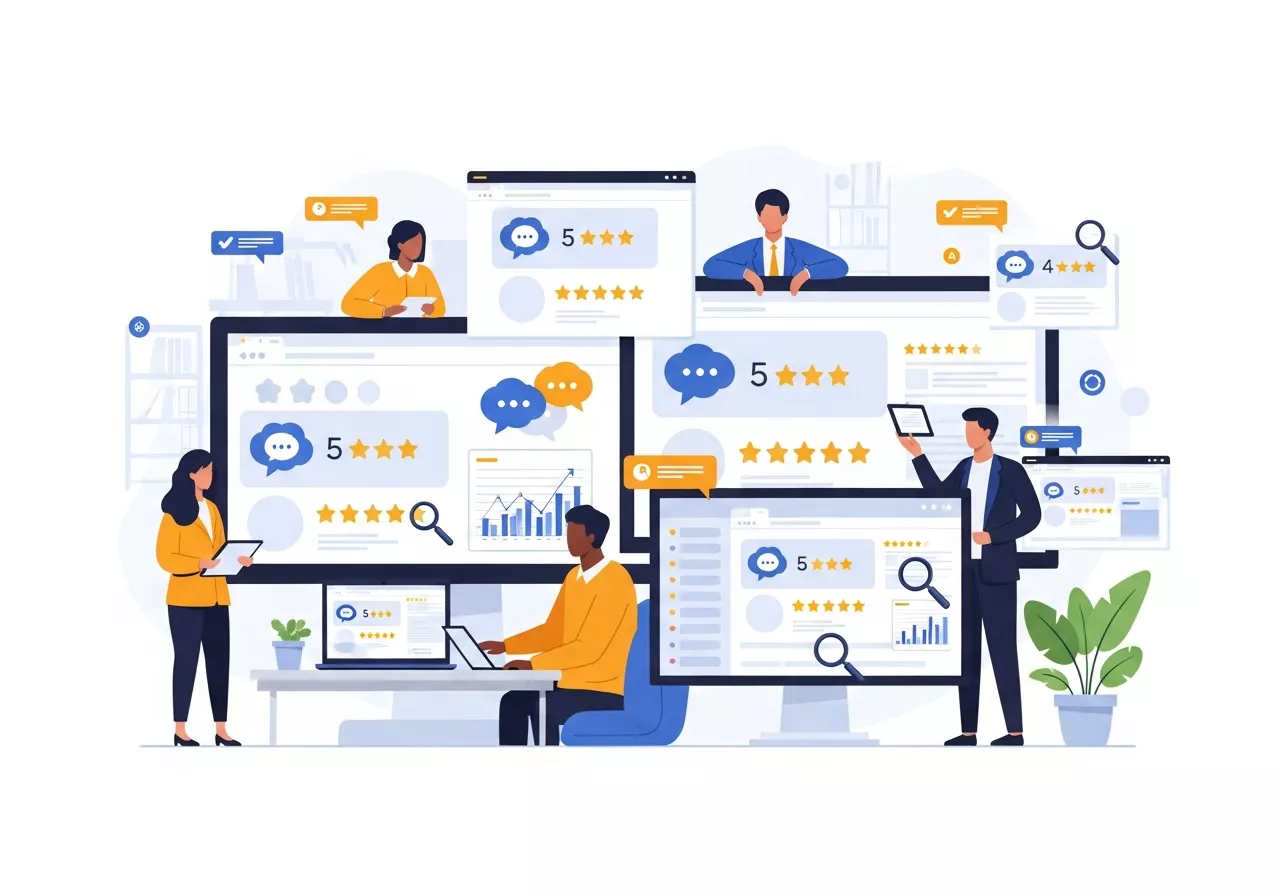
Online reviews are among the most influential factors in shaping public perception. Effective review management can transform satisfied customers into brand advocates while minimizing the impact of negative feedback.
Steps to Optimize Review Management:
- Encourage Positive Reviews: Send follow-up emails after purchases or service delivery to prompt satisfied customers to leave reviews.
- Respond Promptly: Address both positive and negative feedback to demonstrate engagement and care.
-
-
Positive: Thank and acknowledge customers personally.
-
Negative: Be empathetic, offer solutions, and invite offline resolution.
-
- Monitor Industry Review Sites: Stay on top of platforms like Google Reviews, Yelp, TripAdvisor, or sector-specific directories.
- Leverage Review Insights: Analyze patterns in feedback to improve products, services, and customer experience.
Benefits of Effective Review Management:
- Builds consumer trust and loyalty
- Enhances SEO and search visibility
- Provides actionable insights for improvement
- Mitigates the impact of negative reviews
Example: A hospitality business in London implemented structured review management. By responding to reviews within 24 hours and highlighting positive customer experiences, it improved its online rating from 3.8 to 4.6 in six months, attracting more bookings.
Pro Tip: Integrate review management with social media and Corporate Reputation Management strategies for a holistic approach that maximizes trust and authority.
Overcome Negative Content
Suppress negative links/reviews by creating enough positive content to drive them down, or contact platforms directly to get misleading content removed.
Keep in mind that a carefully cultivated online presence is an intentional form of reputation management. When considering how to improve reputation management, replacing bad with good is one of the most effective long-term strategies.
Turn Your Reputation Management Campaign Into An Action Plan
Reputation enhancement is not a one-time project. One might say it’s a relentless effort to build trust, establish credibility and forge long-term relationships. Keep an eye on your reputation and interact at every platform and be transparent in all your communications.
By implementing these tactics, you will position yourself or your business as an authority figure within your industry, poised to withstand any crisis and continue to be a success in the long run. It’s exactly how to improve reputation management that delivers lasting business impact.
FAQ: How to Improve Reputation Management
1. What is reputation management and why is it important?
Reputation management is the process of monitoring, influencing, and controlling how your business or personal brand is perceived by the public. It is important because a strong reputation:
- Builds trust with customers and partners
- Enhances brand credibility and market position
- Attracts better talent and business opportunities
- Reduces the impact of negative publicity
A good reputation can directly affect sales, partnerships, and long-term growth.
2. How can businesses track their online reputation?
Tracking online reputation involves monitoring online mentions, reviews, and social media activity. Key tools include:
- Google Alerts for brand or product mentions
- Social media listening tools like Hootsuite or Sprout Social
- Review platforms such as Yelp, Google Reviews, TripAdvisor, or industry-specific sites
Tracking allows you to respond quickly to feedback, spot trends, and maintain control over public perception.
3. What is a Crisis Management Plan, and how does it help?
A Crisis Management Plan is a structured strategy to respond to events that could damage your reputation. It helps by:
- Defining roles and responsibilities during a crisis
- Providing pre-approved communication templates
- Enabling quick and consistent responses to minimize damage
- Protecting customer trust and brand credibility
Using a crisis management service can further ensure that your business reacts professionally and effectively during emergencies.
4. How do I respond to negative reviews effectively?
Responding to negative reviews is a key part of review management. Best practices include:
- Respond politely and professionally
- Acknowledge the issue and show empathy
- Offer solutions or a way to resolve the problem offline
- Respond promptly to demonstrate accountability
Timely and constructive responses can even turn dissatisfied customers into loyal advocates.
5. What are the benefits of Corporate Reputation Management?
Corporate Reputation Management involves strategically managing your company’s overall reputation. Benefits include:
- Increased customer trust and loyalty
- Stronger competitive positioning
- Attraction of top talent and better partnerships
- Mitigation of risks from negative publicity
It’s a proactive approach to maintaining a positive brand image across all stakeholders.
6. How can I improve my online reputation quickly?
Quick steps to improve your online reputation include:
- Claiming and optimizing your online profiles (Google Business, LinkedIn, etc.)
- Encouraging satisfied customers to leave positive reviews
- Responding to feedback (both positive and negative) promptly
- Sharing authentic content that reflects your values
- Suppressing or addressing negative content using SEO and review management strategies
7. How does review management impact my business?
Review management is essential for improving trust and credibility. Proper management:
- Increases customer confidence in your products or services
- Boosts your SEO and search visibility
- Helps identify areas for improvement
- Reduces the long-term impact of negative feedback
8. Can small businesses benefit from reputation management?
Absolutely. Even small businesses can see significant benefits from proactive reputation strategies:
- Better local search rankings through review management
- Increased trust and repeat business from customers
- Stronger online presence relative to competitors
- Ability to handle crises professionally and maintain credibility
9. How often should a business monitor its reputation?
Businesses should monitor their reputation continuously. Best practices:
- Weekly check-ins for social media and online mentions
- Monthly review audits of overall brand perception
- Real-time alerts for critical mentions, reviews, or crises
Frequent monitoring ensures early detection of issues and helps maintain a positive brand image.
10. How do I create a successful reputation management strategy?
Steps to create a strategy include:
- Audit your current online presence and public perception
- Define your goals (e.g., brand awareness, trust, customer retention)
- Monitor online mentions, reviews, and social media activity
- Develop protocols for responding to positive and negative feedback
- Integrate SEO, social media, and crisis management plans
- Regularly review and adjust your strategy based on insights
A structured plan ensures long-term success in how to improve reputation management.
Learn more about: Harnessing Video Testimonials to Elevate Your Online Reputation