Monitoring customer feedback is no longer optional—it’s the most powerful way to protect reputation, strengthen trust, and drive sustainable business growth in a digital-first world.
Monitoring customer feedback helps businesses understand customer sentiment, improve experiences, prevent reputation crises, and fuel innovation. This guide explains how feedback monitoring works, why it matters, which tools to use, and how it integrates with online reputation management, AI sentiment analysis, and long-term brand strategy.
What Is Monitoring Customer Feedback?
Monitoring customer feedback is the structured, ongoing process of collecting, tracking, analyzing, and acting on customer opinions across every digital and offline touchpoint. This includes online reviews, surveys, social media mentions, emails, live chats, support tickets, forums, and even indirect conversations where customers discuss your brand without tagging you.
Unlike casual review reading, monitoring customer feedback is a strategic business function. It transforms raw opinions into actionable insights that guide decision-making across marketing, operations, customer experience, and leadership. Businesses that monitor customer feedback systematically gain a real-time understanding of how they are perceived and where improvements are needed.
Effective monitoring customer feedback connects customer voices directly to measurable outcomes such as conversion rates, retention, brand trust, and revenue growth. It allows organizations to move from reactive damage control to proactive improvement.
When done correctly, monitoring customer feedback becomes the foundation of online reputation management and long-term brand stability. It supports brand perception management by aligning messaging with real customer expectations, enables crisis prevention by identifying early warning signs, and strengthens customer loyalty through visible responsiveness and accountability.
At scale, monitoring customer feedback also plays a critical role in sustainable business recovery plans, ensuring that trust is rebuilt systematically after setbacks rather than left to chance.
Why Monitoring Customer Feedback Matters More Than Ever
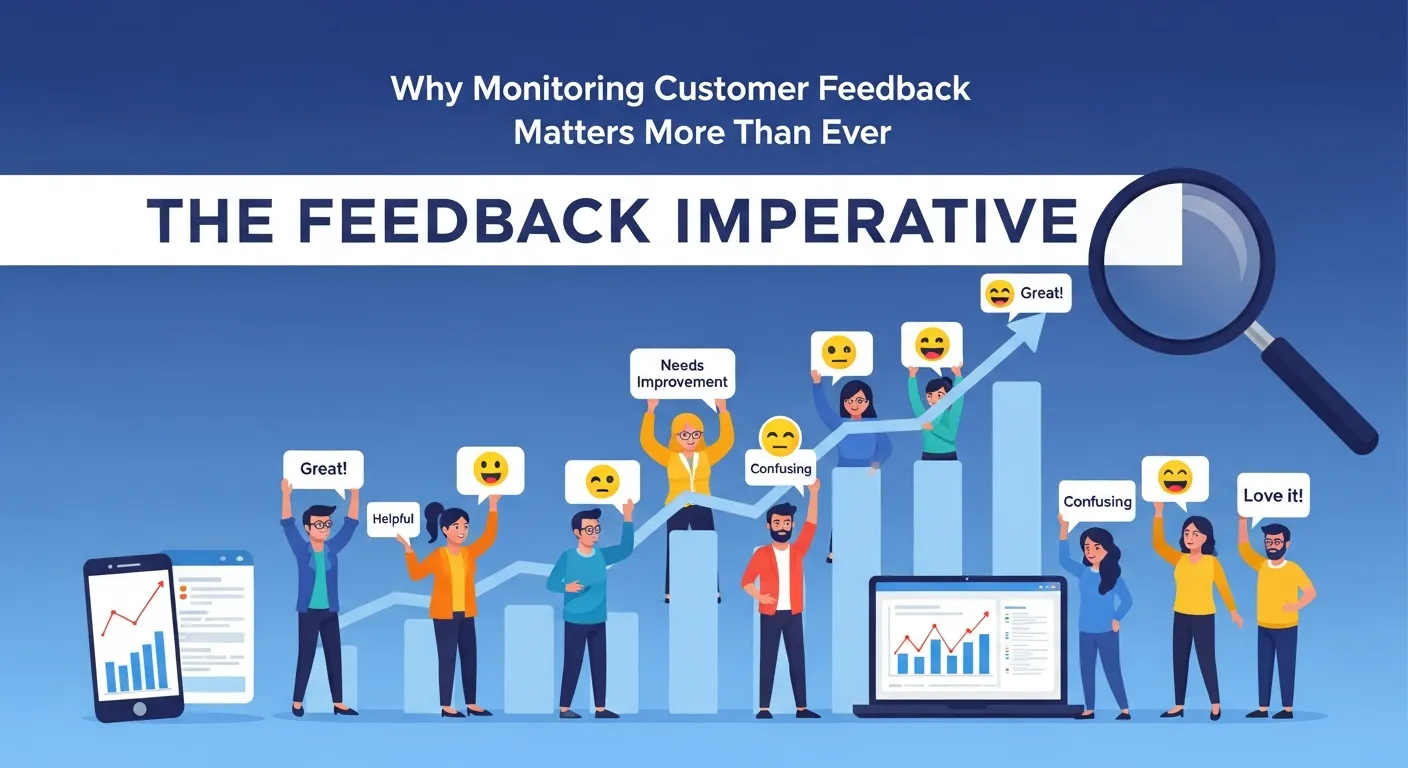
Today’s customers research brands extensively before making purchasing decisions. Reviews, comments, ratings, and social conversations influence trust in seconds—often before a business has the chance to speak for itself. In this environment, monitoring customer feedback is no longer optional; it is a competitive necessity.
Monitoring customer feedback helps businesses detect negative sentiment early, allowing them to intervene before issues escalate into reputation crises. It enables companies to convert negative reviews into growth opportunities for e-commerce and service-based businesses by addressing root causes and demonstrating transparency.
Organizations that actively monitor customer feedback can improve products, services, and customer journeys faster than competitors who rely on internal assumptions. Real feedback highlights gaps, unmet expectations, and emerging trends that traditional analytics often miss.
From a branding perspective, monitoring customer feedback strengthens brand positioning and credibility. Customers trust brands that listen, respond, and evolve based on real experiences. Public responses to feedback also signal professionalism and accountability, reinforcing trust among future buyers.
Most importantly, monitoring customer feedback protects long-term digital reputation. Ignoring feedback means allowing customers to control your brand narrative without guidance—often amplifying negative experiences while positive ones go unnoticed. Businesses that monitor feedback consistently retain control over perception, trust, and authority in an increasingly opinion-driven marketplace.
| Aspect | Traditional Feedback | Monitoring Customer Feedback |
|---|---|---|
| Scope | Limited surveys | Multi-channel ecosystem |
| Speed | Slow reactions | Real-time insights |
| Analysis | Manual | AI-powered sentiment analysis |
| Reputation Impact | Reactive | Proactive online reputation management |
| Strategy | Short-term | Long-term brand resilience |
Essential Channels for Monitoring Customer Feedback
Effective monitoring customer feedback requires visibility across both direct and indirect channels. Each source reveals different insights about customer experience, satisfaction, and reputation risks.
Direct Feedback Channels
Direct feedback channels provide structured, first-party data straight from customers. These inputs are essential for measuring satisfaction and identifying operational gaps.
Key direct feedback sources include:
- Customer satisfaction surveys (CSAT)
- Net Promoter Score (NPS) surveys
- Post-purchase and post-service feedback forms
- Customer support tickets and helpdesk logs
- Live chat and chatbot transcripts
These channels deliver quantitative and qualitative data that can be tracked over time. When monitored consistently, they reveal patterns such as recurring complaints, service delays, product issues, and customer expectations. This data directly supports customer feedback strategy, service optimization, and business recovery planning.
Online Reviews and Review Management
Online reviews represent the most public and influential form of customer feedback. They shape brand perception before customers ever interact with your business.
Primary review platforms include:
- Google Business Profile
- Trustpilot
- Yelp
- Industry-specific and niche review sites
Monitoring customer feedback through structured review management services helps businesses:
- Learn how to manage a negative review professionally
- Respond quickly with empathy and transparency
- Detect spam or fake reviews and understand how to remove fake reviews within platform policies
- Strengthen trust signals for search engines and local SEO
Consistent review monitoring supports online reputation management, improves search engine reputation management, and protects long-term brand credibility.
Social Media Monitoring
What Is Social Media Monitoring?
Social media monitoring is the systematic process of tracking brand mentions, hashtags, comments, tags, replies, and story mentions across social platforms such as Facebook, Instagram, X (Twitter), LinkedIn, TikTok, and YouTube.
Unlike traditional feedback channels, social media captures real-time, unfiltered customer sentiment. Monitoring customer feedback on social platforms allows businesses to understand how their brand is discussed publicly and how fast opinions can spread.
Through effective social media monitoring, businesses can identify:
- Honest, spontaneous customer opinions
- Viral reputation risks before they escalate
- Influencer-driven brand conversations
- Early warning signs of service or product issues
- Shifts in brand perception and sentiment
This makes social media monitoring a critical component of online reputation management with AI and social listening, where speed, context, and response quality determine trust and credibility.
Advanced monitoring tools combined with AI-powered sentiment analysis help brands prioritize high-risk mentions, flag emotional language, and respond before negative narratives gain momentum.
Indirect Feedback Sources
Not all customer feedback happens in visible or controlled environments. Some of the most valuable insights appear in spaces where customers feel free to speak openly—often without tagging the brand.
Common indirect feedback sources include:
- Industry forums and discussion boards
- Reddit threads and niche communities
- Facebook and WhatsApp groups
- Blog comments and third-party articles
- Direct emails and unsolicited messages
Monitoring customer feedback across these channels provides raw, unbiased insights that rarely surface in surveys or official reviews. Customers tend to be more candid in these environments, sharing detailed experiences, comparisons, and frustrations.
By monitoring indirect feedback sources, businesses can:
- Discover hidden reputation risks
- Understand competitor comparisons
- Identify unmet customer expectations
- Improve products, services, and messaging
- Strengthen proactive online reputation management
When combined with social media monitoring and review management, indirect feedback completes a 360-degree customer insight system, allowing brands to listen beyond their own platforms and stay ahead of potential reputation threats.
Key KPIs include:
- Customer satisfaction score (CSAT)
- Review response time
- Sentiment improvement rate
- Revenue retention
- Customer lifetime value
These metrics connect monitoring customer feedback to the ROI of online reputation management.
Common Mistakes in Monitoring Customer Feedback
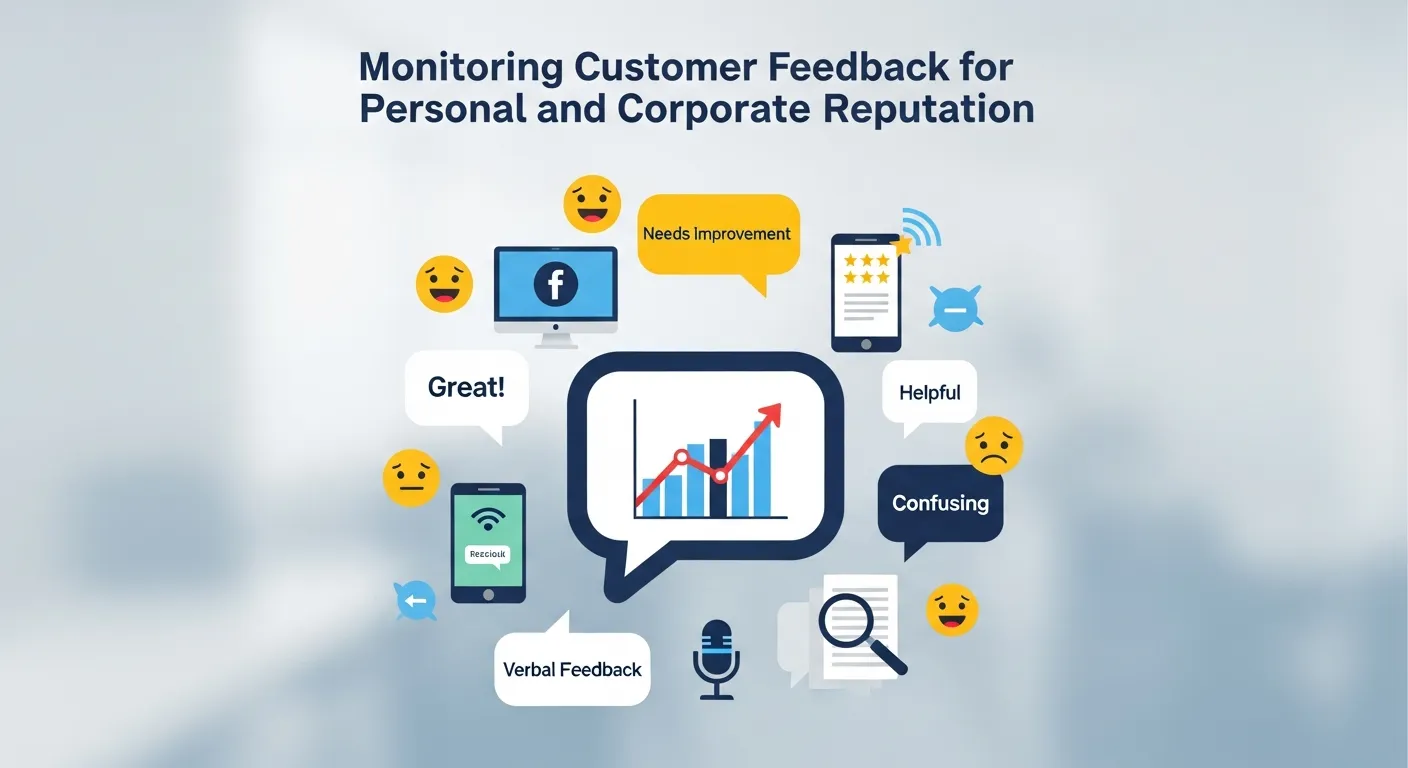
Monitoring customer feedback transforms opinions into strategy, complaints into growth, and conversations into competitive advantage. Businesses that treat feedback as intelligence—not noise—build stronger reputations, resilient brands, and loyal customer communities. Listening consistently, responding authentically, and acting decisively is how feedback becomes your most powerful business asset.
FAQs: Monitoring Customer Feedback
1. What does monitoring customer feedback mean?
Monitoring customer feedback is the structured, ongoing process of collecting, tracking, analyzing, and responding to customer opinions across reviews, surveys, social media, emails, support interactions, and public discussions. It connects customer sentiment directly to experience improvement, online reputation management, and business decision-making.
2. Why is monitoring customer feedback important?
Monitoring customer feedback helps businesses identify problems early, improve products and services, strengthen brand trust, and prevent reputation crises. It ensures customer expectations are understood and addressed before dissatisfaction impacts revenue or credibility.
3. How does monitoring customer feedback support online reputation management?
Feedback monitoring is the foundation of online reputation management. It enables early detection of negative sentiment, improves review response quality, supports search engine reputation management, and strengthens trust signals across platforms like Google Business Profile and review sites.
4. What tools help with monitoring customer feedback?
Common tools include CRM systems, review management platforms, social media monitoring tools, AI-powered sentiment analysis software, and customer feedback dashboards that centralize insights from multiple channels into one system.
5. Can monitoring customer feedback increase revenue?
Yes. Monitoring customer feedback improves retention, reduces churn, increases repeat purchases, and drives referrals. Businesses that act on feedback consistently see higher customer lifetime value and stronger conversion rates.
6. How often should customer feedback be monitored?
Customer feedback should be monitored daily for reviews, social media mentions, and support interactions. Weekly or monthly analysis is recommended for identifying long-term trends, recurring issues, and strategic improvement opportunities.
7. What role does AI play in monitoring customer feedback?
AI supports monitoring customer feedback by analyzing sentiment, detecting patterns, identifying risks early, and scaling feedback analysis across large volumes of data. AI-powered systems improve speed and accuracy, while human judgment provides context and empathy.
8. How should businesses respond to negative feedback?
Businesses should respond to negative feedback calmly, empathetically, and transparently. Acknowledge the concern publicly, offer a solution, and move detailed discussions offline. Proper responses turn negative feedback into trust-building opportunities.
9. Is monitoring customer feedback useful for small businesses?
Absolutely. Monitoring customer feedback allows small businesses to compete with larger brands by building trust, improving service quality, and responding quickly to customer concerns without large marketing budgets.
10. What happens if businesses ignore customer feedback?
Ignoring customer feedback leads to reputation damage, customer churn, declining trust, and missed growth opportunities. Over time, unmanaged feedback allows customers—not brands—to control the public narrative, weakening long-term brand equity.