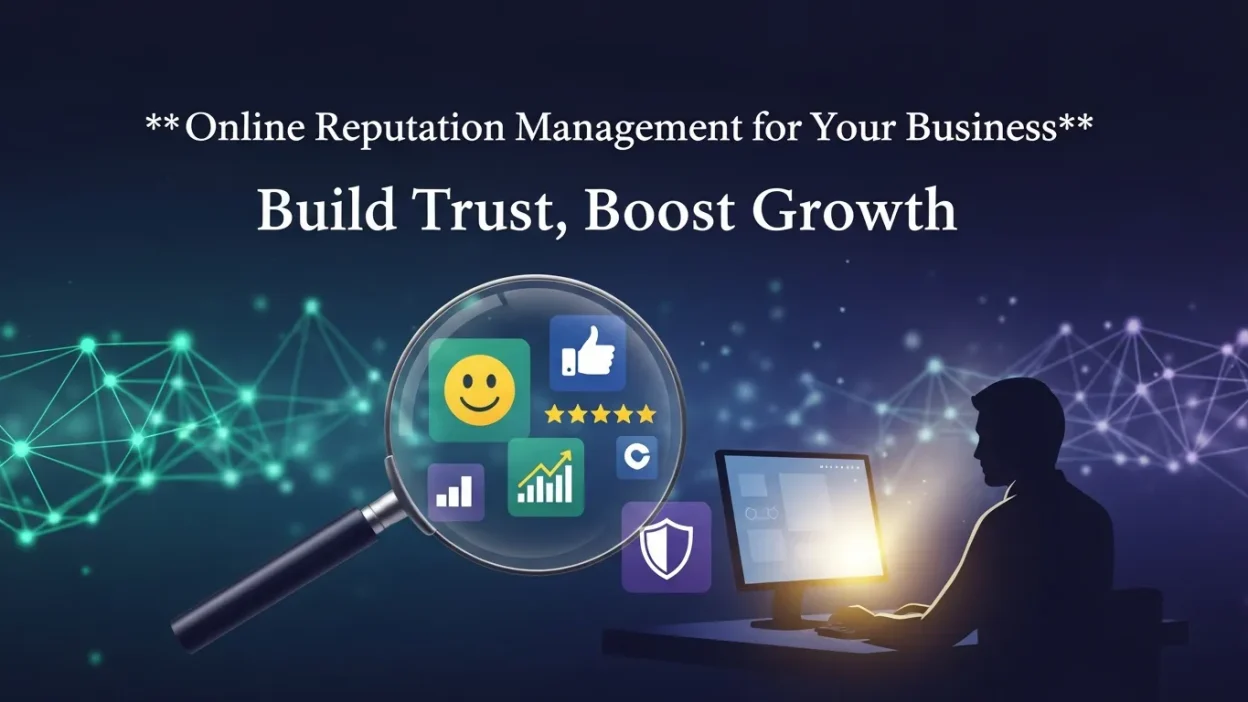
In the digital age, your brand is defined by what search engines say about you. Online Reputation Management is the strategic art of shaping public perception to drive growth and trust.
This comprehensive guide explores the essential pillars of Online Reputation Management. We cover everything from conducting deep digital audits and leveraging AI-powered sentiment analysis to executing proactive online reputation management strategies. Learn how to transform customer feedback into a competitive advantage and safeguard your business’s future.
Why You Need Online Reputation Management
Online Reputation Management (ORM) used to be a luxury reserved for Fortune 500 companies facing PR disasters. Today, it is a survival requirement. Potential customers are increasingly influenced by online reviews, social media discourse, and the results they find on the first page of Google. Your online presence is the never-ending story of your business, and if you aren’t writing it, someone else will.
Research indicates that a significant majority of consumers trust online reviews as much as personal recommendations. Trust, business, and potential opportunities are frequently lost over a single negative remark or a mishandled public situation. By mastering Online Reputation Management, you protect one of your most valuable—yet amorphous—intangible assets: your Brand Equity.
The ROI of Online Reputation Management
Investing in Online Reputation Management isn’t just about damage control; it’s about revenue. A positive digital reputation leads to:
- Higher Conversion Rates: Trusted brands close deals faster.
- Better Talent Acquisition: High-quality employees check Glassdoor before applying.
- Reduced Marketing Costs: A strong reputation creates organic Brand Awareness and word-of-mouth.
Conducting a Comprehensive Digital Audit
Before you can build, you must assess. A deep Brand Audit allows you to see your business through the eyes of a stranger.
1. The Google Search Deep Dive
Start by searching for your business name. Don’t stop at the first result; look at the first three pages.
- Search Engine Reputation Management (SERM): Identify which sites rank for your name. Are they blogs, news sites, or your own properties?
- Inaccuracies: Look for outdated addresses, wrong phone numbers, or old logos that dilute Building Brand Consistency.
2. Review Site Evaluation
Analyze platforms like Yelp, TripAdvisor, and Trustpilot. What is customer review management? It starts here, by discerning patterns in criticisms. If multiple reviews mention slow service, you have an operational issue that is becoming a reputation issue.
3. AI-Powered Sentiment Analysis
In 2026, manual monitoring isn’t enough. Use AI-powered sentiment analysis to process thousands of comments across social media. These tools can identify the “emotional temperature” of your brand, helping you distinguish between a one-off complaint and a systemic trend.
4. Employee-Review Websites
Platforms like Glassdoor and Indeed reflect your internal culture. Your Corporate Reputation Management is heavily influenced by how you treat your staff. A toxic internal reputation eventually leaks into the public sphere.
Monitoring Your Digital Footprint

Proactive Online Reputation Management requires constant vigilance. SURPRISE is the enemy of reputation.
Essential Monitoring Tools
To effectively monitor business reputation online, you need a “listening stack”:
- Google Alerts (Free): The baseline tool for tracking your name and key executives.
- Social Media Monitoring: Tools like Hootsuite and Sprout Social allow you to monitor social media mentions and hashtags in real-time.
- ReviewTrackers: Simplifies customer review management by aggregating feedback from multiple sites into one dashboard.
Online Reputation Management with AI and Social Listening
Advanced AI-driven online reputation management uses social listening to track “unbranded” conversations. For example, if you are a real estate agency, you should monitor terms like “best realtor in [City]” to join conversations where you aren’t even mentioned yet.
Strategic Tactics for Digital Growth
A good reputation is earned, not given. Use these tactics to cultivate Brand Authority.
1. Mastering Customer Feedback
How customer feedback builds a brand is through the “Response Loop.”
- Engage with Positive Feedback: Publicly thank happy customers. This encourages User-Generated Content (UGC).
- Negative Reviews into Growth Opportunities: Use complaints as a roadmap for product improvement.
2. Robust Content Strategy
Create useful, shareable content that aligns with your Brand Positioning.
- Video Testimonials Online Reputation: Video is the highest-trust medium. Building trust with video testimonials on your landing page can increase conversions by over 80%.
- SEO Services: Use Video SEO and Local SEO Services to ensure your positive content outranks negative results.
3. Partnering with Influencers
Influencer Marketing Services allow you to leverage the “borrowed trust” of established personalities. Ensure their Brand Personality matches yours to maintain Brand Alignment.
Navigating Negative Feedback and Crisis PR
No business is immune to criticism. How to manage online reputation management when things go wrong is the true test of a brand.
The Response Framework
When faced with a negative review:
- Acknowledge and Apologize: Show empathy without necessarily admitting legal fault.
- Offer Solutions: Provide a path to resolution.
- Take it Offline: Move the discussion to email or DM to prevent a public “flame war.”
Crisis Management Plan
A PR disaster requires Brand Crisis Management.
- Act Quickly: In the age of social media, an hour of silence feels like a week.
- Be Transparent: Even if the company is at fault, honesty is the only way to begin Recovering Online Reputation.
- Crisis Management Services: If the situation is viral, seek professional help. Advanced online reputation management firms specialize in “de-indexing” or suppressing harmful content.
Long-Term Reputation Sustainability
Sustainable Online Reputation Management is a marathon. It requires Reputation Management in Digital Marketing to be integrated into every department.
1. Google Business Profile Optimizing
Keep your profile updated. High-quality photos and regular “Google Posts” signal to the algorithm that your business is active and trustworthy.
2. Invest in Deep-Level SEO
Search Engine Reputation Management involves creating “defensive content.” By owning the top 10 results for your name (via social profiles, partner sites, and your blog), you leave no room for negative content to surface.
3. AI and Machine Learning in ORM
Leverage AI chatbots and machine learning to provide 24/7 customer support. Immediate responses prevent frustration from boiling over into public negative reviews.
| Metric | Tool | Success Indicator |
| Sentiment Score | Brandwatch / AI Tools | Increase in “Positive” vs “Negative” % |
| Review Velocity | Trustpilot / Yext | Consistent flow of 4-5 star reviews |
| Search Rank | SEMrush / Ahrefs | Positive assets occupying Page 1 of Google |
| Share of Voice | Sprout Social | Brand is mentioned more often than competitors |
Advanced Strategies for the Digital Landscape
As the digital ecosystem becomes more complex, traditional Online Reputation Management must evolve. Beyond just managing reviews, businesses must now navigate the intersection of artificial intelligence, high-stakes visual content, and specialized niche markets.
1. Navigating Deepfakes and AI-Generated Misinformation
In 2026, one of the greatest threats to corporate reputation management is the rise of hyper-realistic synthetic media. Deepfakes AI reputation management has become a specialized field. A single fabricated video of a CEO making controversial statements can tank stock prices or destroy consumer trust in minutes.
- Digital Provenance: Implement blockchain-based “watermarking” for all official corporate video content to verify its authenticity.
- Rapid Response Monitoring: Use AI-driven online reputation management tools specifically designed to detect synthetic media signatures across social platforms.
- Brand Safety in Digital Marketing: Ensure your brand resilience strategies include a protocol for immediately flagging and reporting deepfake content to platform moderators.
2. High-Trust Real Estate and Professional Services
For specific sectors, the “rules” of how to wield reputation online change. For instance, online reputation tips for real estate agents focus heavily on localized authority and hyper-specific social proof.
- Neighborhood Authority: Use Local SEO services to ensure you rank for specific zip codes, not just general terms.
- The Power of Video: Building trust with video testimonials is paramount here. A client walking through their new home while praising their agent is infinitely more valuable than a 5-star text review.
- SaaS Development Services & ORM: For software companies, reputation is built on User Experience (UX) and Branding. If your software is buggy, your reputation will suffer on sites like G2 or Capterra regardless of your marketing spend.
The Psychology of Brand Positioning & Perception
Successful Online Reputation Management is as much about psychology as it is about technology. Understanding Brand Perception in Marketing allows you to influence how people feel about your business, not just what they read.
1. Developing a Brand Archetype
Every iconic brand follows a Brand Archetypes Framework. Are you the “Hero” (Nike), the “Sage” (Google), or the “Magician” (Apple)?
- Brand Voice Strategy: Your responses to negative reviews should remain consistent with your archetype. A “Hero” brand might be direct and solution-oriented, while a “Caregiver” brand would be highly empathetic.
- Emotional Marketing: Use Emotional Marketing to connect with your audience. When people are emotionally invested in your brand, they are more likely to defend you during a crisis, providing organic Brand Resilience.
2. Luxury vs. CPG Brand Marketing
The strategy for Luxury Brand Marketing is often about “exclusivity” and “perfection,” making even a single negative review potentially devastating. Conversely, CPG Brand Marketing (Consumer Packaged Goods) focuses on “consistency” and “reliability” at scale.
-
Luxury: Focus on Sensory Branding and high-touch Customer Relationship Management.
-
CPG: Focus on Brand Awareness and high-volume Review Management Services.
Technical SEO and Defensive Content Engineering
To effectively remove negative search results from Google, you must engage in “Defensive Content Engineering.” This involves saturating the search results with assets you control.
1. The Multi-Channel Shield
Don’t just rely on your website. Advance online reputation management involves building a “shield” of diverse content types:
- Podcasts & Webinars: Host sessions on Trending Webinar Topics. These rank highly and show you are an active participant in your industry.
- Wikipedia Page Management: For notable brands, a Wikipedia page is a high-authority anchor. However, Wikipedia page management must be done ethically and transparently to avoid being flagged for “conflict of interest” editing.
- Guest Posting Services: Secure articles on high-DA (Domain Authority) sites like Forbes, Entrepreneur, or industry-specific journals. These act as “backlinks” that boost your own site’s authority while pushing down negative content.
2. Search Engine Reputation Management (SERM) Metrics
How do you know if your SEO efforts are working? Track these Brand Equity KPIs:
- Sentiment Velocity: How fast is positive content replacing negative content in the top 10?
- Click-Through Rate (CTR) for Positive Assets: Use Google Analytics to see if users are engaging with your “defense” content.
- Domain Authority Growth: Monitor your site’s authority using tools like Ahrefs or SEMrush.
Global Expansion and Cultural Branding
As you scale, managing online reputation management becomes a cross-cultural challenge.
- Brand Adaptation Strategies: What is perceived as “assertive” in one culture might be seen as “aggressive” in another. Your Brand Voice must be localized.
- Ethical Branding: In 2026, Ethical Branding is a global requirement. Consumers across the world prioritize sustainability and social responsibility. If your actions don’t align with your Brand Purpose Development, your reputation will suffer globally.
- Sonic Branding: As voice search and smart speakers become more prevalent, Sonic Branding (your brand’s “sound”) becomes a new touchpoint for Brand Recognition.
Reputation Management Tool Maturity
| Level | Strategy Focus | Key Tools | Primary Goal |
| Starter | Basic Monitoring | Google Alerts, Yelp | Catching direct mentions |
| Intermediate | Engagement & SEO | Hootsuite, ReviewTrackers, Local SEO | Building a positive “buffer” |
| Advanced | AI & Sentiment | Brandwatch, AI-powered Sentiment Analysis | Predictive crisis management |
| Elite | Full SERM & PR | Wiki Management, Deepfake Detection, Global PR | Complete narrative control |
The Convergence of Web3 and Decentralized Reputation
As we look toward the future, the architecture of the internet is shifting from centralized platforms to decentralized networks. This transition introduces revolutionary future opportunities for Online Reputation Management through blockchain technology and self-sovereign identity.
1. Blockchain-Verified Credentials and “Trustless” Trust
In the current ecosystem, reputation is often held hostage by third-party review sites. In the future, Online Reputation Management will likely pivot toward “On-Chain” reputation.
- Verified Reviews: By utilizing decentralized ledgers, businesses can ensure that every review is tied to a verified transaction. This is the ultimate solution for how to remove fake reviews, as anonymous, non-verified entities will lack the “proof of purchase” required to impact a score.
- Soulbound Tokens (SBTs): Professionals can use non-transferable NFTs to represent certifications, successful project completions, and peer endorsements. This creates a permanent, tamper-proof record of Personal Branding vs Reputation that search engines can verify with 100% accuracy.
2. Community-Led Governance and DAOs
For many brands, the future of Corporate Reputation Management lies in Decentralized Autonomous Organizations (DAOs). Here, the “community” has a literal stake in the brand’s success.
- Reputation as Equity: Customers who contribute positive value or helpful feedback can be rewarded with governance tokens, aligning the customer’s interest with the brand’s Brand Resilience Strategies.
- Decentralized Crisis Management: When a brand faces a hit, a loyal, decentralized community can act as a “rapid response team,” providing authentic User-Generated Content that outweighs centralized negative press.
Predictive Reputation and The “Proactive” AI Frontier

The next leap in AI-driven online reputation management is the move from descriptive (what happened) to predictive (what will happen). This creates an immense future opportunity for brands to neutralize threats before they even materialize in search results.
1. Algorithmic Trend Forecasting
By leveraging AI-driven trend forecasting, businesses can analyze vast datasets from social media, news cycles, and even geopolitical events to predict “reputation weather.”
- Simulated Crisis Exercises: AI can run millions of “what-if” scenarios—similar to a Brand Strategy Road Map—to see how a specific marketing campaign or product launch might be received by different cultural segments.
- Automated Branding Adjustments: Automated branding tools will soon be able to tweak a brand’s tone or messaging in real-time based on shifting public sentiment, ensuring Brand Alignment remains perfect even during volatile social shifts.
2. Personalized Reputation Filters
As search engines evolve into AI personal assistants, the way people “see” your reputation will become hyper-personalized.
- Niche Authority Scoring: Instead of a generic star rating, AI assistants will provide users with a “compatibility score” based on their specific values (e.g., “This brand has a 95% rating for sustainability, which matches your preferences”).
- Strategic Value: This means the future of how to wield reputation online is not about being “everything to everyone,” but about deep Brand Purpose Development that resonates with specific, high-value audiences. This is the hallmark of Sustainable Online Reputation Management.
The Next Decade of ORM
| Innovation | Current State | 2030 Opportunity |
| Identity | Fragmented social profiles | Unified, Blockchain-verified “Digital Passport” |
| Reviews | Vulnerable to bot attacks | Zero-knowledge proof (ZKP) verified feedback |
| Crisis Response | Manual PR statements | Real-time AI “Sentiment Buffering” |
| Search | List of links | AI-curated “Trust Graphs” |
Conclusion
Online Reputation Management is not a one-time project; it is a permanent commitment to your brand’s integrity. By being proactive, leveraging AI-powered online management, and maintaining a transparent Brand Voice, you turn your digital presence into an indestructible asset. Protect your reputation today, and it will provide the fruits of trust and growth for years to come.
FAQs
1. What is the difference between personal branding and reputation?
Personal Branding is the intentional image you create for yourself. Reputation is the collective perception others have of you. Online Reputation Management aims to align your branding with your actual reputation.
2. How can I remove fake reviews from Google?
To remove fake reviews, you must report them to Google as a violation of their terms (e.g., spam or conflict of interest). If Google refuses, you may need Online Reputation Management Services that specialize in removing negative content.
3. Why does my business need a crisis management plan?
A crisis management plan ensures you have a roadmap when things go wrong. Without it, companies often react emotionally, which can turn a small mistake into a viral disaster.
4. What is the “ROI of Online Reputation Management”?
The ROI is measured in “Trust Equity.” Higher trust leads to higher prices, better conversion rates, and lower employee turnover.
5. How does SEO affect my reputation?
SEO determines what people see first. Online Reputation Management uses SEO to push down negative links and elevate positive, controlled content.
6. Can AI help in reputation management?
Yes. AI-driven online reputation management can predict crises, analyze customer sentiment at scale, and automate responses to common queries through AI chatbots.
7. What are “Employee-Review” sites, and why do they matter?
Sites like Glassdoor show the “inside story” of your company. They are crucial for Corporate Reputation Management and attracting top-tier talent.
8. How often should I conduct a brand audit?
You should conduct a Brand Audit at least annually, or more frequently if you are in a high-volatility industry like Luxury Brand Marketing.
9. What is “Social Listening”?
What is social media monitoring? It’s tracking your mentions. Social Listening goes deeper, analyzing the context and trends of those mentions to inform your Brand Strategy Framework.
10. How can real estate agents manage their reputation?
Online reputation tips for real estate agents focus on building trust through Video Testimonials and high-velocity reviews on platforms like Zillow and Google.