Modern marketing is no longer about who shouts the loudest, but who is trusted the most. Smart marketing starts with a foundation of unshakeable digital credibility.
This guide explores the necessity of Online Reputation Management for Product Launch. By merging reputation management in digital marketing with strategic promotions, brands can leverage AI-powered sentiment analysis, video testimonials, and proactive customer engagement to turn digital perception into a high-performing revenue engine.
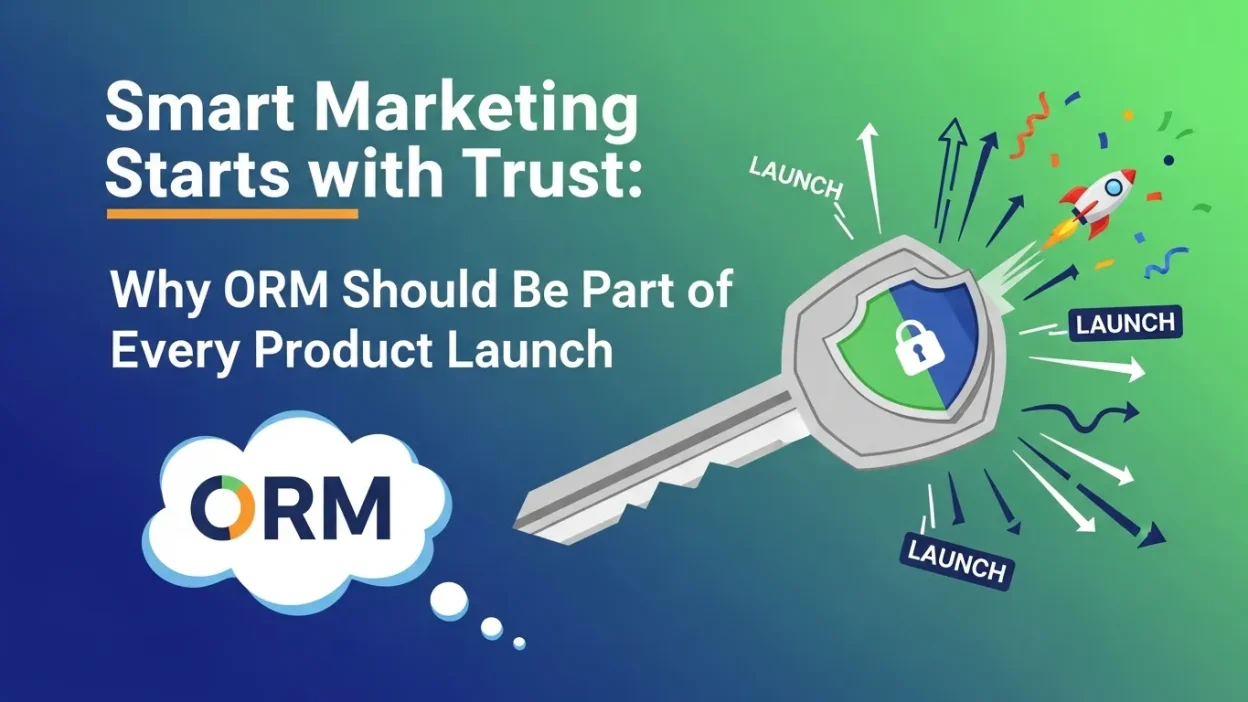
Smart Marketing Starts with Trust: Why ORM Should Be Part of Every Product Launch
When it comes to launching a product, you likely think of crafting compelling ads, setting up a robust campaign, and generating buzz. But if your digital presence doesn’t align with your promotions, you are essentially pouring water into a leaky bucket. In the hyper-connected economy of 2026, Online Reputation Management for Product Launch is the bridge between a customer’s initial interest and their final purchase decision.
Customers today are savvy. They don’t just look at flashy ad campaigns; they dig deeper. They read reviews, search social media, and scrutinize your reputation to decide if your product is worthy of their purchase. By making Online Reputation Management for Product Launch an integral part of your strategy, you’re not just selling a product; you’re selling trust and confidence.
The Role of Trust in Modern Marketing
Why Online Reputation Management Matters
Your online reputation is the foundation of customer trust. It defines how potential customers perceive your brand and whether they’re willing to invest. According to industry data from SEMrush, the ROI of online reputation management is often higher than traditional ad spend because it increases conversion rates across all channels.
- 87% of consumers read online reviews before making a purchase.
- 79% of people trust online reviews as much as personal recommendations.
- Negative feedback can cost a business up to 22% of its potential customers with just one bad article.
Promotions Aren’t Enough Without Trust
A cohesive marketing effort involves combining impactful promotions with solid digital reputation management. Even the most creative campaign can fail if negative reviews, poor ratings, or unanswered grievances oppose your message. A customer sees a promotion as a reason to “check you out,” but they convert only once they’re confident in your brand perception in marketing.
Strategies to Merge ORM and Promotions for Product Launches
1. Lay the Foundation with Positive Reviews
Nothing reinforces credibility like happy customers. A library of positive reviews gives potential buyers the assurance they need. Proactive online reputation management starts months before a launch by cultivating a “bank of goodwill.”
- Collect Reviews Early: Use SMS marketing and outbound email marketing to ask satisfied customers for feedback.
- Incentivize Participation: Offer loyalty points or discounts to encourage detailed, high-quality reviews that mention your focus keywords.
- Case Study: A direct-to-consumer mattress company increased its review collection efforts before a launch. By achieving a 4.9-star average through Google Business Profile optimization, their campaign attracted 40% more clicks.
2. Incorporate Testimonials into Your Ads
Authentic customer testimonials are highly persuasive. They offer relatable proof of your product’s value. Building trust with video testimonial content is statistically 12x more effective than text-based ads.
- User-Generated Content (UGC): Encourage customers to share photos or videos using your hashtag.
- Video SEO: Optimize these videos to appear in search results, providing a “Zero-Click” trust signal to researchers.
- Example: A skincare brand used side-by-side testimonial photos in their paid ads. This raised their conversion rate by 25% by enhancing their brand personality in marketing.
3. Be Transparent with Negative Feedback
Negative reviews provide valuable learning opportunities. How to manage a negative review determines whether a critic becomes a detractor or a brand advocate.
- Service Recovery Paradox: When a brand handles a mistake perfectly, the customer often becomes more loyal than if the mistake had never happened.
- Analyze Trends: Use AI-powered sentiment analysis to pinpoint recurring issues.
- Communicate Improvements: If you fixed a shipping issue based on feedback, highlight it in your next integrated marketing campaign.
4. Celebrate Milestone Achievements
Positive milestones reinforce brand positioning. Celebrating successes like “1,000 5-star reviews” builds authenticity.
- Social Proof: Integrate milestones like “Highest Rated Product of the Year” into your brand marketing strategy.
- Influencer Amplification: Have partners share your milestone posts to extend reach through influencer marketing services.
5. Align Campaigns with Brand Values
- In 2026, ethical branding is a major sales driver. Consumers want to support companies with a clear brand purpose development strategy.
- Sustainability: Highlight eco-friendly sourcing in your CPG brand marketing.
- Social Responsibility: Use brand storytelling to explain your sourcing, manufacturing, and labor practices.
- Inclusivity: Address issues raised by your community to build a sustainable online reputation management model.
6. Real-Time Engagement During Active Campaigns
Your work doesn’t end when the campaign starts. Real-time responses to feedback amplify trust.
- Social Media Monitoring: Actively monitor platforms for brand mentions using AI-driven online reputation management tools.
- Omnichannel Support: Use WhatsApp marketing services to answer pre-purchase questions instantly.
- The “Reddit Effect”: Participate in community discussions without “corporate-speak” to maintain brand voice strategy.
Advanced ORM: AI, Deepfakes, and Search Engines
AI-Powered Sentiment Analysis and Social Listening
Modern Online Reputation Management for Product Launch requires AI-powered online management. Tools that offer social listening allow you to track the “mood” of your audience in real-time, allowing for predictive trend marketing.
Managing Deepfakes and AI Misinformation
The dark side of viral marketing includes deepfakes ai reputation management challenges. Your crisis management plan must include a strategy for verifying official content.
- Digital Watermarking: Use metadata standards to prove the authenticity of your videos.
- Rapid Response: Have a building business recovery plan ready for AI-driven misinformation attacks.
Search Engine Reputation Management (SERM)
Search engine reputation management involves “suppressing” negative results by flooding the first page of Google with positive, owned assets.
- Wikipedia Page Management: For corporate clients, a factual Wikipedia page is the ultimate authority signal.
- Local SEO Services: Ensure your Google Business Profile reflects your current status and high ratings.
From Reputation to Revenue: The Financial Impact
Integrating Online Reputation Management for Product Launch directly impacts the bottom line.
| Strategy | Impact on Revenue | Technology Used |
| Sentiment Analysis | Predicts churn and upsell potential. | AI-driven online reputation management |
| Review Management | Increases conversion rates by up to 270%. | Review management services |
| Video Testimonials | Reduces cart abandonment by 15%. | Video SEO & YouTube |
| Crisis Management | Prevents long-term brand equity loss. | Online PR services |
The “Pre-Launch Audit”: Measuring Your Baseline
Before you can Boost Sales With Reputation Marketing, you must know your starting point. A comprehensive audit ensures that your Online Reputation Management for Product Launch isn’t sabotaged by old, unresolved issues.
- Sentiment Benchmarking: Use AI-powered sentiment analysis to evaluate your current brand standing. If your baseline is “neutral,” your launch needs a high-energy push. If it’s “negative,” you must prioritize recovering your online reputation before spending a dime on ads.
- Competitor Shadowing: Analyze the brand positioning strategy of your rivals. Where are they failing in their customer feedback? Your launch can position itself as the solution to their reputation gaps.
Strategic “Trust-Loading” in the Teaser Phase
The weeks leading up to a launch are the most critical for Online Reputation Management for Product Launch. This is called “Trust-Loading”—stacking social proof before the product is even available.
- Beta Tester Testimonials: Use video testimonials online reputation strategies from your beta group. These “authentic early looks” provide the social proof content needed to lower purchase anxiety on day one.
- Behind-the-Scenes Transparency: Share the “why” behind the product. This brand storytelling approach builds brand personality in marketing, making your reputation more resilient to cynical “hype” accusations.
Leveraging Micro-Communities for Niche Trust
In 2026, broad-market trust is harder to win. Online Reputation Management for Product Launch now relies on “Micro-Trust” within specific forums and groups.
- The “Reddit Shield”: Identify the subreddits most relevant to your launch. Engaging here with a transparent brand voice prevents “reputation fires” from starting in the shadows of the internet.
- Discord & Telegram Monitoring: For tech and crypto launches, real-time social media monitoring in private groups is essential to maintain brand safety in digital marketing.
Synchronizing Influencer Marketing with ORM
Influencers are the modern megaphones for your reputation. However, their reputation becomes yours. Online Reputation Management for Product Launch requires a strict vetting process for partners.
- Influencer Sentiment Check: Use AI-driven online reputation management to ensure your partners have a high “Trust Score” with their audience.
- The Co-Branded Trust Factor: Co-branding in marketing only works if both parties have aligned values. A mismatch here can lead to a brand crisis management scenario within hours of the launch.
“Zero-Click” Launch Optimization
As mentioned, users often decide to buy based solely on the search result page. Your Online Reputation Management for Product Launch must be visible without a single click.
- Schema Markup for Products: Ensure your product schema is set up so that your star ratings and “In Stock” status appear directly in Google’s AI snapshots.
- Google Business Profile “Offers”: Use the “Offers” feature to link your launch-day discounts directly to your 5-star local reputation, creating an instant digital payment solution path.
The Role of AI Chatbots in Real-Time Reputation

During a launch, your support team will be overwhelmed. This is where AI chatbots and machine learning become essential for Online Reputation Management for Product Launch.
- Instant Objection Handling: Set up your chatbots to address common “reputation-based” objections (e.g., “Is this shipping reliable?” or “How does the warranty work?”).
- Sentiment Escalation: Program your AI to recognize “angry” or “frustrated” inputs and immediately escalate them to a digital marketing expert to prevent a public negative review.
Converting “Waitlist” Hype into Review Momentum
Your waitlist isn’t just a sales list; it’s a reputation-building asset. Online Reputation Management for Product Launch utilizes these early fans to dominate the narrative.
- The “First 100” Strategy: Reach out to your first 100 buyers with a personalized WhatsApp marketing message. Their early positive feedback will set the tone for the entire launch window.
- UGC Incentives: Offer an “Exclusive Early Adopter” badge to users who post a video of their unboxing, fueling your viral content marketing strategy.
Managing Global Reputation and Brand Adaptation
If you are launching in multiple territories, your Online Reputation Management for Product Launch must be culturally sensitive. What works as a “trusted” message in New York may fail in Tokyo.
- Brand Adaptation Strategies: Ensure your reviews are translated accurately and reflect local values.
- Localized Social Listening: Use online reputation management with AI and social listening to track sentiment in different languages, ensuring your brand voice strategy remains consistent globally.
Post-Launch: Preventing the “Buyer’s Remorse” Dip
Reputation management doesn’t end when the sale is made. The “Post-Launch Dip” is when negative reviews usually spike due to shipping delays or learning curves.
- Proactive Follow-ups: Send “How-to” guides via SMS marketing before the product even arrives.
- Integrating Customer Experience: Use every support ticket as an opportunity for recovering online reputation. A fast, empathetic fix often leads to a customer editing their 3-star review into a 5-star one.
The Future: Blockchain-Verified Launch Trust
Looking toward 2027, Online Reputation Management for Product Launch will incorporate “Verifiable Trust” via blockchain.
- On-Chain Reviews: Imagine a launch where every review is tied to a blockchain-verified purchase. This eliminates the “fake review” problem entirely and sets a new standard for sustainable online reputation management.
- Immutable Brand Promises: Use smart contracts to “guarantee” your launch-day promises (like shipping dates or charity donations), creating a level of brand equity that competitors cannot touch.
Comparison: Traditional vs. ORM-Led Product Launches
| Feature | Traditional Launch | ORM-Led Launch (2026) |
| Focus | Advertising & Reach | Trust & Conversion |
| Feedback | Reactive (Wait for reviews) | Proactive online reputation management |
| Technology | Standard CRM | AI-driven online reputation management |
| Results | Spiky Sales, High Churn | Sustained Growth, High Loyalty |
The “Trust-to-Profit” Architecture: Technical Implementation
A successful Online Reputation Management for Product Launch requires a robust technical backend. You cannot manage a global reputation using spreadsheets; you need an integrated “Trust Stack.”
-
API Integrations: Connect your review management services directly to your e-commerce platform. This allows you to display “Verified Buyer” badges in real-time, which is a critical component of digital reputation management.
Automated Sentiment Triggers: Set up workflows where a 5-star review automatically triggers a brand awareness post on LinkedIn or X (Twitter), while a 1-star review creates an urgent ticket in your customer relationship management (CRM) system.
-
Schema for Trust: Implement “Review Schema” on your product pages. This technical step ensures that your star ratings appear in Google Search results, directly impacting your search engine reputation management efforts.
Psychological Anchoring and the “Halo Effect”
In marketing, the “Halo Effect” is a cognitive bias where a consumer’s positive impression of one trait (your great customer service) spills over to another trait (the quality of your new product).
- Anchoring Trust: Use personal branding vs reputation to your advantage. If your CEO has a stellar personal reputation, anchor the product launch to their personal values.
- Building Brand Consistency: Ensure that your brand voice strategy is identical across your creative content services and your support channels. Inconsistency breeds suspicion, which can derail Online Reputation Management for Product Launch.
- Social Proof Cascades: Start your launch with “Power Users.” When a newcomer sees experts praising the product, they are psychologically anchored to a positive perception.
Dark Social and Hidden Reputation Risks

A significant portion of online reputation management happens in “Dark Social”—private channels like WhatsApp, Slack, and Discord, where traditional social media monitoring tools cannot reach.
- Community Advocacy Programs: Since you can’t monitor every private chat, you must seed these communities with brand advocates. This is a core part of proactive online reputation management.
- The “Leak” Strategy: Intentionally “leaking” product details to trusted community members allows you to gauge sentiment and adjust your brand positioning strategy before the official Online Reputation Management for Product Launch begins.
- Encrypted Support: Offer WhatsApp marketing services as a support channel. Resolving a frustrated customer’s issue in a private, encrypted chat prevents that frustration from ever going public.
Reputation Resilience: Stress-Testing Your Brand
Before the “Big Day,” you must know if your brand can survive a crisis. Online Reputation Management for Product Launch involves “Stress-Testing” your operational limits.
- Scenario War-Gaming: What happens if your digital payment solutions fail during the launch? Or if a competitor launches a viral marketing attack? Use your crisis management plan to simulate these events.
- Load Testing Support: Can your AI chatbots and machine learning handle 1,000 queries per hour? Reputation is often damaged by silence, not just negativity.
- Brand Audit: Perform a final brand audit to ensure there are no “skeletons in the closet” (old social media posts or unresolved legal issues) that could be unearthed by critics during the launch.
The “LTV” of Reputation: Beyond the Initial Sale
The ultimate goal of Online Reputation Management for Product Launch isn’t just the first sale; it’s the Lifetime Value (LTV) of the customer.
- Post-Purchase Gratitude: Use SMS marketing to thank customers not just for the purchase, but for their trust. This reinforces brand loyalty and encourages a “secondary” wave of reviews.
- Reputation-Led Retention: Use AI-powered sentiment analysis to identify your most loyal customers and invite them into a “VIP Product Strategy Guide” group. This makes them feel like partners, further securing your corporate reputation management.
- The Feedback Loop: Turn launch-day critiques into the marketing copy for Version 2.0. By saying, “We listened to you,” you prove that your customer feedback strategy is genuine, cementing a sustainable online reputation management model.
Final “Reputation vs. Revenue” Table
| Phase | ORM Objective | Key Revenue Outcome |
| Pre-Launch | Trust-Loading & Baseline Audit | Lower Cost-Per-Click (CPC) |
| Launch Day | Real-time Engagement & Crisis Defense | Higher Conversion Rate (CVR) |
| Post-Launch | Review Harvesting & LTV Focus | Lower Churn & Higher Referrals |
Conclusion
Successful Online Reputation Management for Product Launch is an ongoing commitment to transparency and excellence. By combining actionable consumer trust with meticulously crafted messaging, you create a bond that brings customers to your brand and keeps them invested. Trust is the new currency—invest in your reputation to build a legacy of sustainable growth.
FAQs: Online Reputation Management for Product Launch
1. What is Online Reputation Management for Product Launch?
Online Reputation Management for Product Launch is the strategic process of monitoring, influencing, and protecting your brand’s digital perception, specifically during a new product release. By proactively managing reviews, social mentions, and search engine results, you ensure that early adopters and potential customers trust your brand. This trust directly translates into higher conversion rates and faster adoption, making Online Reputation Management for Product Launch a critical component of modern marketing strategy.
2. How do I remove fake reviews before a launch?
To maintain a strong product debut, Online Reputation Management for Product Launch requires addressing fake or misleading reviews. Start by flagging content that violates platform policies. If removal isn’t possible, focus on outranking it with positive, high-authority content through SEO and content marketing strategies. This ensures your new product launches with credible reviews and authentic social proof, reinforcing trust from day one.
3. Why do I need a crisis management plan?
A brand crisis management plan is essential for Online Reputation Management for Product Launch. It allows your team to react immediately to unexpected viral negativity, PR issues, or data breaches. Quick, empathetic responses protect your brand equity and prevent small incidents from escalating into reputational disasters that could derail your launch success.
4. How does AI help in reputation management?
AI-driven Online Reputation Management for Product Launch leverages machine learning to analyze sentiment, track social media chatter, and predict potential PR issues. Automated systems can draft timely responses, highlight at-risk mentions, and prioritize high-impact feedback, helping your team maintain a consistent, trustworthy brand presence during critical launch periods.
5. What is “Sustainable ORM”?
Sustainable Online Reputation Management for Product Launch focuses on building long-term credibility rather than quick fixes. By nurturing communities, generating authentic user feedback, and consistently delivering value, brands create a “trust buffer” that protects against future mistakes and ensures every new product release starts on a solid footing.
6. Can video testimonials boost sales?
Absolutely. Video testimonials are a cornerstone of Online Reputation Management for Product Launch. High-quality, relatable video content provides social proof and humanizes your brand, often leading to a 25% or higher increase in conversion rates. Integrating testimonials into landing pages, social media, and email campaigns ensures that trust drives immediate sales.
7. Is ORM different for Real Estate agents?
Yes. Online Reputation Management for Product Launch is industry-specific. For real estate agents, it emphasizes hyper-local trust, neighborhood reviews, and platforms like Zillow. Launching a new property listing or real estate service requires managing these local perceptions to maximize interest and inquiries.
8. What is the “Zero-Click” reputation?
Zero-click reputation occurs when customers form trust in your product without visiting your website. Through Online Reputation Management for Product Launch, this involves optimizing Google Business Profiles, star ratings, rich snippets, and review summaries so potential buyers can make confident decisions directly from search results.
9. How do I handle a viral negative post?
When negative content goes viral during a product launch, Online Reputation Management for Product Launch strategies is critical. Quickly acknowledge the issue, apologize sincerely, and move the conversation to a private channel such as WhatsApp marketing or direct email. Timely and empathetic responses can transform a potential crisis into an opportunity to strengthen trust.
10. What is the ROI of ORM?
The ROI of Online Reputation Management for Product Launch is measurable in multiple ways: reduced acquisition costs, higher customer lifetime value (LTV), stronger pre-launch trust, and increased resilience against competitors. Launching products with a proactive ORM strategy ensures that positive sentiment directly contributes to revenue growth, customer advocacy, and market share expansion.
You can learn more about: Double Your Impact: Combine Online Reputation and Promotion for Explosive Growth