In the hyper-connected landscape of 2026, Online Reputation Management serves as the definitive bridge between cold outreach and closed deals, ensuring your brand’s digital footprint matches your marketing promises.
This comprehensive guide examines how Online Reputation Management functions as the core of outbound success. We explore AI-powered sentiment analysis, crisis frameworks, and the psychological impact of digital trust on lead conversion, revenue growth, and long-term brand resilience.
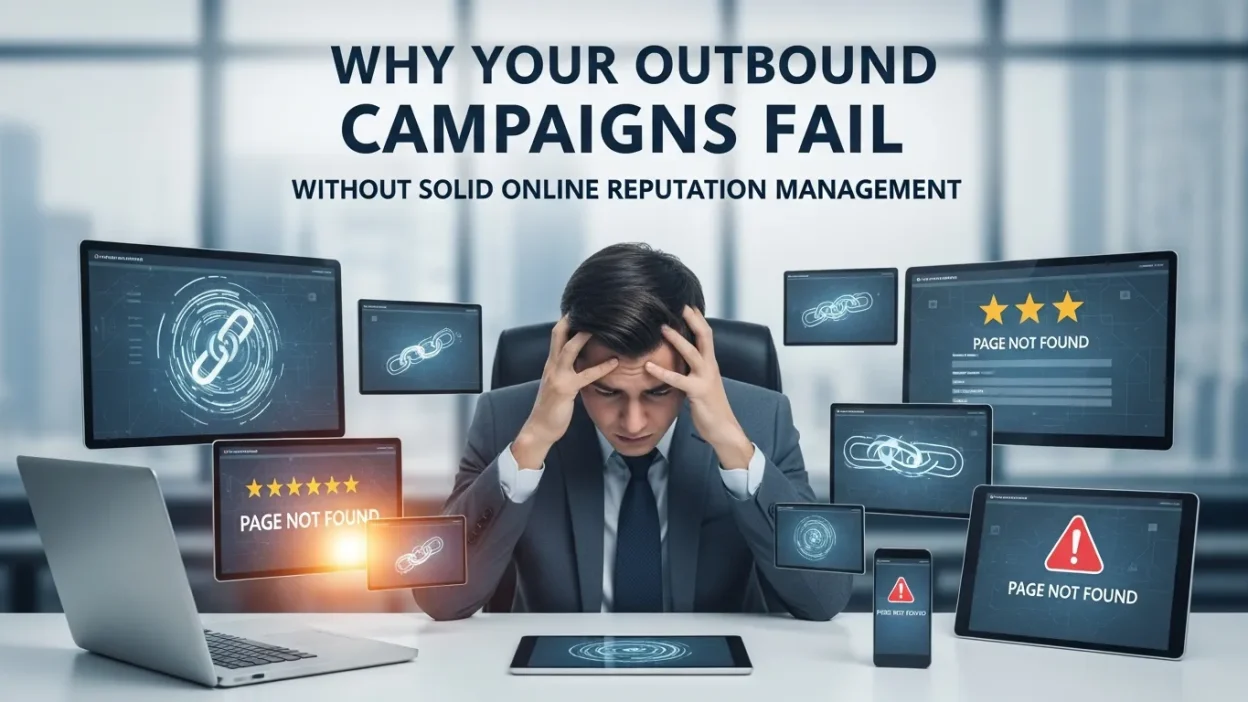
Why Your Outbound Campaigns Fail Without Solid Online Reputation Management
When was the last time you searched for a business online before interacting with them? Chances are, you’re not alone. Over 90% of people research a business online before engaging with it. Now imagine launching outbound campaigns that drive potential customers to Google your brand, only for them to find negative reviews, poor search results, or no presence at all. Without solid Online Reputation Management, your outbound campaigns can fall flat, costing you leads, trust, and revenue.
The Strategic Importance of Online Reputation Management in Outbound Marketing
Outbound marketing campaigns—whether via SMS marketing, cold emails, or outbound marketing LinkedIn sequences—are designed to grab attention. However, in 2026, attention is just the spark. The fuel for conversion is trust. The moment interest is piqued, your digital reputation becomes the deciding factor.
1. First Impressions in the Age of AI
Once someone receives your outbound email marketing or clicks on your ad, their next logical step is to research your company. A quick search on a generative AI engine or Google will tell them everything they think they need to know. If the first thing they see is negative reviews, outdated search results, or a poorly managed website, they’re unlikely to proceed.
2. Trust as the Currency of Conversion
Consumers trust businesses with high digital authority. According to a survey by BrightLocal, a staggering percentage of people trust online reviews as much as personal recommendations. If your online presence lacks trust signals like video testimonials, online reputation assets, and active social media, your outbound efforts will seem untrustworthy.
The Mechanics of AI-Driven Reputation Management
In 2026, Online Reputation Management has evolved beyond simple review monitoring. It now requires a sophisticated brand strategy framework integrated with advanced technology.
AI-Powered Sentiment Analysis
To effectively monitor business reputation online, companies are now leveraging AI-powered sentiment analysis. This tech doesn’t just count stars; it analyzes the emotional “mood” of the public across thousands of data points. By using AI-driven online reputation management, you can identify a potential PR fire before it becomes a viral crisis.
AI-Powered Online Management vs. Traditional PR
Traditional PR is reactive. AI-powered online management is proactive. It allows you to combine online reputation data with customer behavior patterns to predict how a new outbound campaign will be received by your target demographic.
Deepfakes AI Reputation Management
As we enter a more complex digital era, deepfakes AI reputation management has become a priority. This involves using forensic AI to watermark official content, ensuring that your brand voice isn’t hijacked by synthetic media or audio impersonations.
Common Problems: Why Campaigns Stall
| Problem | Impact on Outbound | Solution |
| Negative Reviews | 94% of people avoid the brand | How to manage a negative review strategy |
| Ghost Presence | Lowers brand legitimacy | Building brand authority via content |
| Inconsistent Branding | Creates cognitive dissonance | Integrated marketing & brand audit |
| Outdated Info | Leads to customer frustration | Google Business Profile optimization |
5 Proactive Steps to Improve Reputation Management
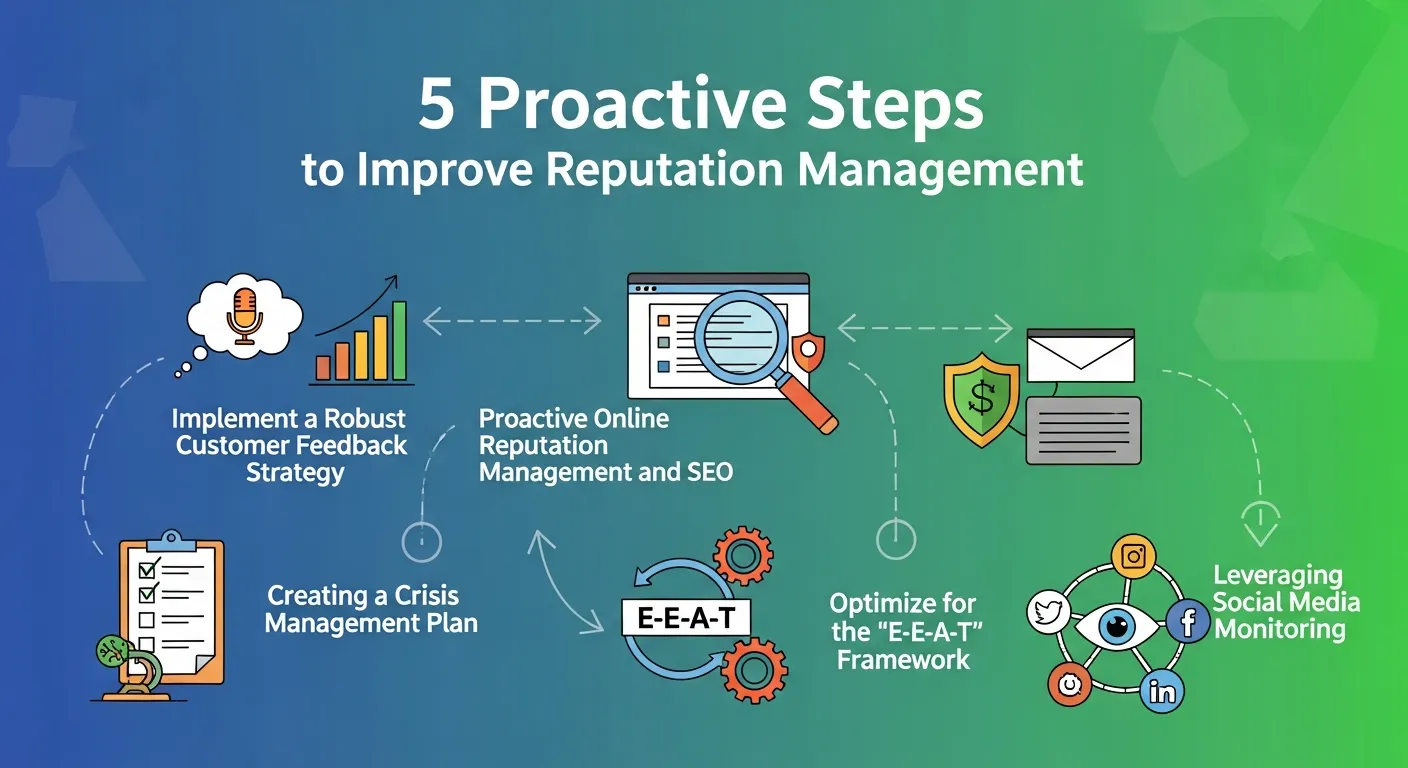
1. Implement a Robust Customer Feedback Strategy
Don’t wait for feedback—engineer it. Use WhatsApp marketing services or bulk SMS services to ask for reviews immediately after a successful delivery. How customer feedback builds a brand is through a continuous loop of social proof that reinforces your brand equity in marketing.
2. Proactive Online Reputation Management and SEO
If your company doesn’t rank on the first page of Google for your brand name, you are invisible. Worse, you are at the mercy of third-party sites. Invest in local SEO services and ethical link building to ensure your positive assets (case studies, video testimonials) appear at the top.
3. Creating a Crisis Management Plan
Every company faces setbacks. How to create a crisis management plan involves identifying a response team and preparing transparent templates. A solid brand crisis management strategy prioritizes honesty over “spin,” which is essential for recovering online reputation.
4. Optimize for the “E-E-A-T” Framework
Google prioritizes Experience, Expertise, Authoritativeness, and Trustworthiness. Online reputation management services often focus on these pillars to ensure that your search engine reputation management efforts lead to higher organic rankings.
5. Leveraging Social Media Monitoring
What is social media monitoring? It is the act of tracking mentions of your brand in real-time. By utilizing online reputation management with AI and social listening, you can engage with fans and mitigate risks before they escalate.
Advanced Growth: Personal Branding vs. Corporate Reputation
There is a significant difference between personal branding and reputation. Personal branding is how you want people to see you; reputation is how they actually see you. For founders and executives, a personal brand strategy should be a subset of the larger corporate reputation management plan.
The Role of Sonic Branding
In the age of Gemini Live and Alexa, sonic branding—your brand’s audio identity—is a new trust signal. It helps in building brand consistency across screenless environments, ensuring your brand personality in marketing is felt even when it isn’t seen.
The Ethics of “Algorithmic Transparency”
In 2026, a brand’s reputation is increasingly tied to how it uses technology. Consumers are no longer just asking “What do you sell?” but “How does your AI work?”
- The Reputation of Fairness: If your AI chatbots and machine learning models are perceived as biased or discriminatory, your Brand Reputation can be destroyed overnight.
- The Solution: Leading companies now publish “Algorithmic Transparency Reports.” Proving that your AI-driven online reputation management tools respect user privacy and data ethics is a massive differentiator in B2B digital marketing strategies.
“Review Hijacking” and Defensive Brand Positioning
As competition intensifies, “Review Hijacking”—where competitors or bad actors flood your pages with synthetic negative feedback—has become a major threat.
- Proactive Online Reputation Management: This involves setting up brand monitoring services that use forensic AI to detect bot patterns in reviews.
- The Defense: By building brand consistency and a loyal community, you create a “Digital Militia” of advocates who will publicly debunk fake claims, protecting your online reputation management efforts.
The Rise of “Social Listening” as a Product Development Tool
What is social media monitoring? In 2026, it’s much more than PR; it’s R&D.
- Feedback as Innovation: By using online reputation management with AI and social listening, brands can identify “unmet needs” mentioned in negative reviews of competitors.
- Reputation Win: Launching a feature that specifically solves a common complaint in your industry allows you to win on brand positioning and capture dissatisfied market share.
Sonic Branding: The Reputation of Sound
In a screenless, voice-first world (driven by Gemini Live and Alexa), your brand must be recognizable by sound alone.
- Audio Trust Signals: Sonic branding isn’t just a jingle; it’s the voice, the notification sound, and the “earcon” that signals a secure transaction.
- The Impact: Consistent audio identity prevents “Brand Confusion” in voice-assisted SMS marketing and WhatsApp marketing services, ensuring the customer feels safe interacting with your automated systems.
Digital Product Passports & Supply Chain Reputation
Modern Online Reputation Management extends all the way back to the raw materials.
- The Transparency Requirement: In 2026, Digital Product Passports (DPPs) allow consumers to scan a QR code to see the ethical and environmental history of a product.
- Brand Resilience Strategies: Brands that cannot provide this “Proof of Origin” suffer in brand perception in marketing, while those that do gain luxury brand marketing premiums.
The Psychology of “Reciprocal Trust” in Outbound Leads

When you send an outbound email marketing message, you are asking for trust. Online Reputation Management allows you to give trust first.
- The Strategy: Include links to third-party video testimonials or a brand strategy guide that details your failures and how you fixed them.
- The Result: Radical honesty in your personal branding vs reputation efforts creates “Reciprocal Trust,” which is the fastest way to lower the “Trust Gap.”
Managing Reputation in the Metaverse & Spatial Computing
As users move into 3D digital environments (Spatial Computing), Online Reputation Management becomes a 360-degree experience.
- Virtual Brand Safety: Ensuring your brand personality in marketing is correctly represented by your AI avatars in virtual spaces is critical.
- Brand Crisis Management: If your virtual storefront is “vandalized” in a digital space, your reputation management in social media team must be ready to respond in real-time.
The “Ghosting” Metric: Reputation and Responsiveness
In 2026, “Response Velocity” is a public metric. Many review platforms now display “Average Response Time” for brands.
- The Risk: If an outbound lead sees that you “ghost” customers who have problems, your outbound marketing will fail, regardless of the offer.
- The Fix: Use AI chatbots and machine learning to provide “Instant Acknowledgement,” even if the final resolution takes longer. This protects your customer review management scores.
Decentralized Identity (DID) for Review Verification
The biggest threat to Online Reputation Management is the loss of belief in “Verified Reviews.”
- Blockchain Verification: By 2026, high-trust brands will use Decentralized Identity to prove a reviewer is a real human who actually paid for the service.
- Competitive Advantage: Promoting that your reviews are “Blockchain-Verified” creates a luxury brand marketing aura of truth that competitors cannot match.
The ROI of “Community-Led” Reputation
A brand’s reputation is no longer what the brand says, but what the community says.
- Community-Led Growth (CLG): Investing in WhatsApp marketing services to build private VIP communities allows you to foster a core group of “Super-Fans.”
- The ROI: These fans act as an unpaid online reputation management team, providing video testimonials and defending the brand in Reddit threads and social comments.
Expanded Comparison Table: The 2026 Reputation Ecosystem
| Focus Area | Traditional (2024) | Advanced (2026) |
| Trust Source | Expert Opinions | Peer-to-Peer Verified Blockchain Data |
| Crisis Management | Legal Disclaimers | Forensic Content Authentication (C2PA) |
| Social Presence | Brand Broadcasting | Hyper-Local Creator Partnerships |
| Data Ethics | Privacy Policies | Algorithmic Accountability Reports |
| Search Engine Strategy | Keyword Density | Generative Engine Optimization (GEO) |
Predictive Reputation Modeling (PRM): The 2027 Standard
The future of Online Reputation Management is moving from reactive to predictive. By 2027, companies will use AI-driven trend forecasting to anticipate reputational shifts before they occur.
- The Opportunity: By analyzing “weak signals” (small shifts in consumer language or micro-trends on TikTok), PRM allows you to adjust your brand strategy framework months before a sentiment dip.
- Outbound Impact: Imagine knowing exactly which “pain points” are trending in your industry and adjusting your outbound email marketing to solve them before your competitors even notice the shift.
Bio-Metric Sentiment and “Empathy AI”
As wearables and emotional AI become mainstream, the next frontier is Emotion AI. This tech analyzes tone of voice and facial micro-expressions during sales calls to gauge true brand perception.
- The Opportunity: Instead of relying on a post-call survey, AI-powered sentiment analysis provides real-time “Trust Scores” during interactions.
- Reputation Win: If a prospect’s biometric data suggests “Skepticism,” the AI can prompt the salesperson to provide a specific video testimonial or case study to bridge the trust gap instantly.
Reputation in the “Agentic Web” (AI-to-AI Marketing)
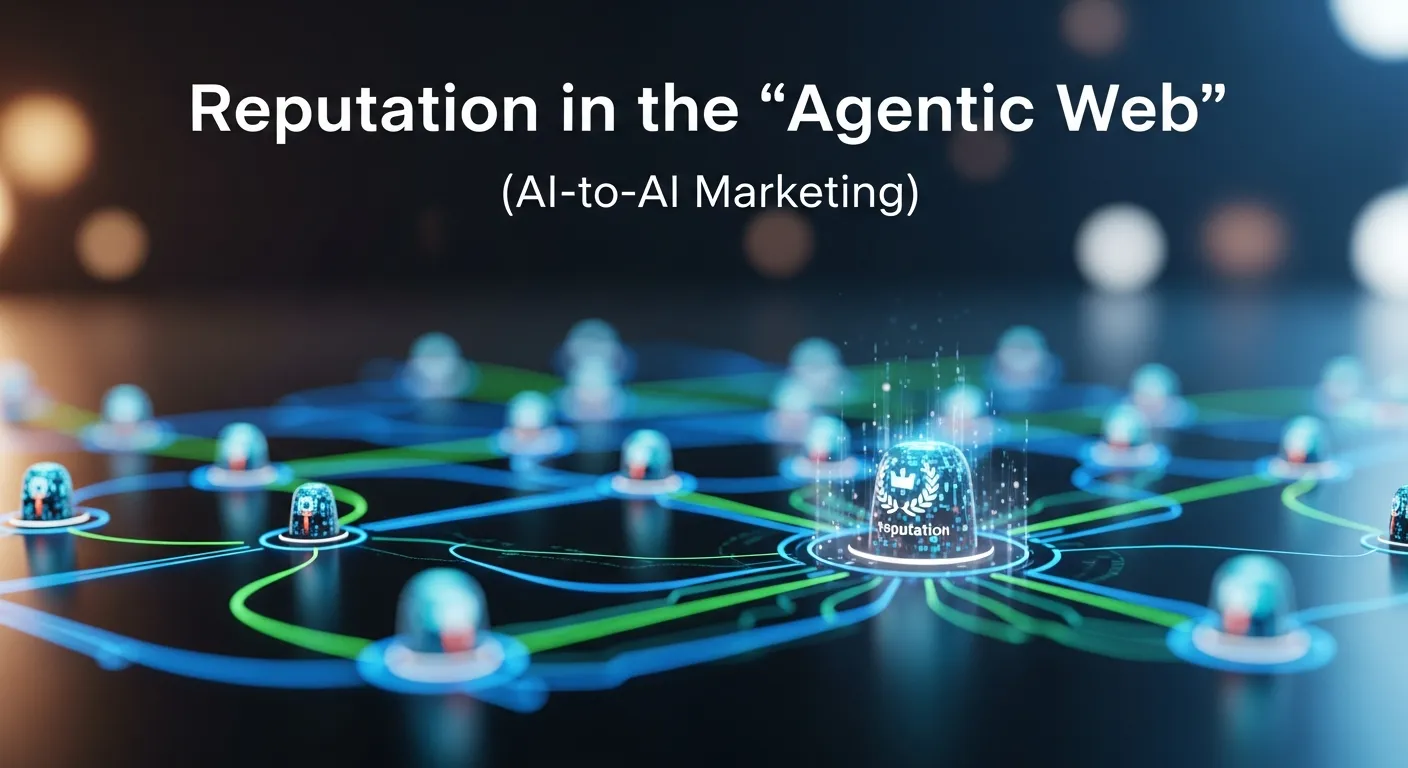
By 2028, much of your product promotion will be targeted at AI Agents (Personal Assistants) rather than humans.
- The Opportunity: Your Online Reputation Management strategy must convince a user’s AI assistant that your brand is the “Safest” and “Most Ethical” choice.
- The Strategy: This requires Generative Engine Optimization (GEO) at a high level, ensuring your brand awareness is baked into the training data of the world’s leading LLMs.
The “Trust Ledger”: Reputation-Based Financing
A future opportunity lies in the financialization of reputation. We are seeing the rise of Brand Equity KPIs as a metric for securing business loans.
- The Opportunity: Companies with high Online Reputation Management scores may soon qualify for lower interest rates or better insurance premiums.
- Business Recovery Plan: Maintaining a “Positive Sentiment Reserve” becomes a form of financial collateral, proving brand resilience strategies are in place.
Hyper-Personalized “Reputation Feeds.”
Generic review sites are dying. The future is “Contextual Trust,” where users see different reviews based on their own personality and values.
- The Opportunity: Using AI-driven trend marketing, your website can display customer feedback builds that specifically matches the viewer’s demographic or industry.
- Reputation Impact: An outbound lead from a tech startup will see reviews from other tech founders, while a corporate lead sees enterprise-level case studies.
Zero-Knowledge Proofs (ZKP) for Radical Privacy
As privacy laws tighten, Digital Reputation Management will rely on ZKPs—a way to prove your brand is compliant without ever seeing the customer’s raw data.
- The Opportunity: Positioning your brand as a “Privacy-First” entity through digital payment solutions that use ZKPs.
- The Result: You gain a reputation for brand safety in digital marketing that makes you the only viable choice for high-security industries like FinTech or Healthcare.
Decentralized Autonomous Organizations (DAO) & Reputation
In the future, the “Board of Directors” might be replaced by the community. Corporate reputation management will be handled through transparent, on-chain voting.
- The Opportunity: Brands that transition to a “Community-Owned” reputation model gain a level of brand loyalty that traditional business models cannot replicate.
- The Strategy: Use WhatsApp marketing services to host “Governance Groups” where your best customers help shape your brand strategy road map.
The “Anti-Fragile” Brand: Harnessing the Dark Side of Viral Marketing
The “Dark Side of Viral Marketing” involves dealing with “cancel culture” or coordinated attacks. The future opportunity is building an “Anti-Fragile” reputation.
- The Opportunity: Using a brand crisis management plan that leans into the controversy to strengthen the bond with your core audience.
- The Outcome: Like Patagonia or Nike, your brand becomes stronger by taking a stand, even if it creates temporary negative sentiment among non-customers.
Sensory Branding: Beyond Sight and Sound
We have discussed Sonic Branding, but the future includes “Haptic” and “Olfactory” (scent) branding in physical retail and high-end unboxing experiences.
- The Opportunity: Sensory branding creates a physical “memory anchor” for your brand.
- Reputation Link: When the “feel” of your product (haptics) matches the “luxury” of your luxury brand marketing pitch, the reputation for quality becomes undeniable.
The “Legacy” Metric: 100-Year Brand Longevity
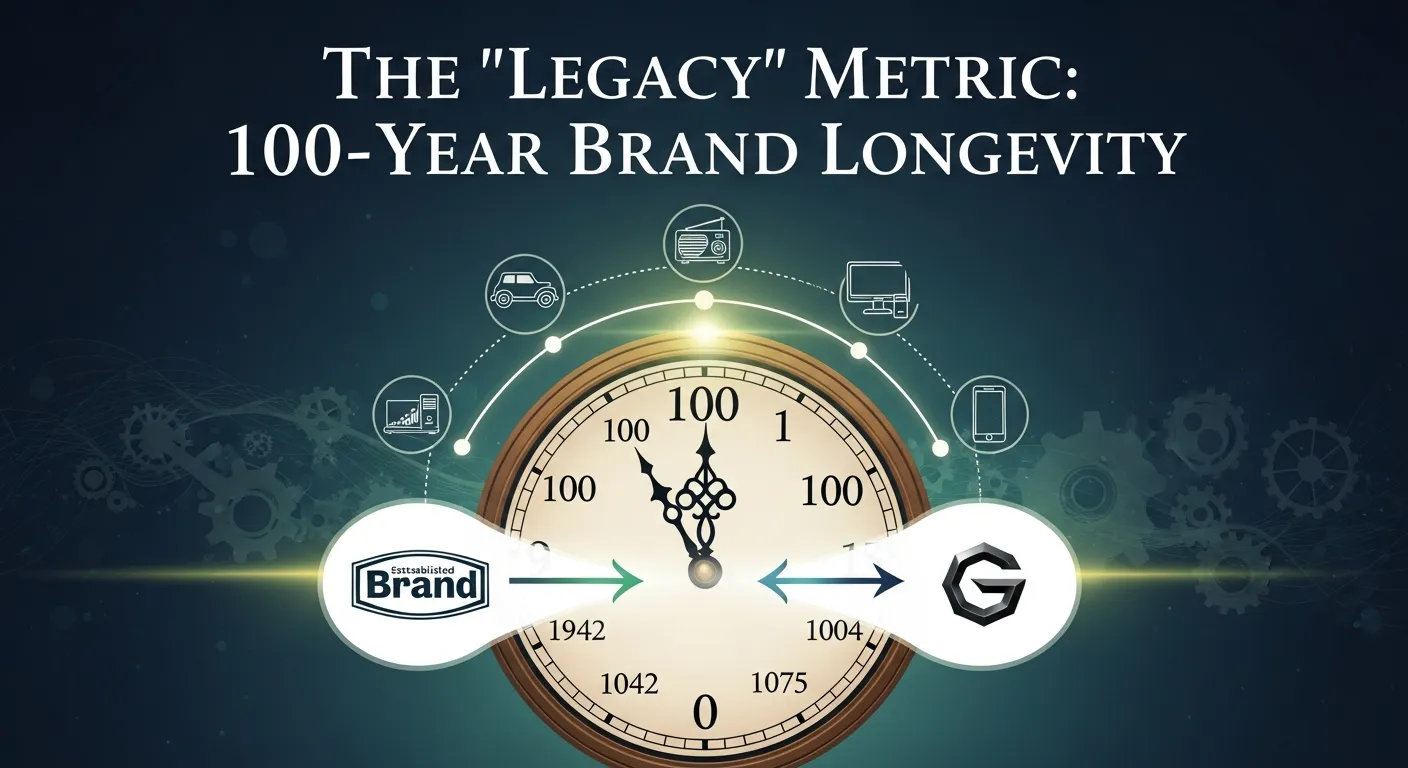
In an era of “Micro-Trends,” the ultimate future opportunity is Brand Longevity.
- The Opportunity: Moving away from “Viral Content” toward sustainable online reputation management.
- The Strategy: Focusing on Brand Purpose Development. Brands that solve generational problems (like climate change or data ethics) build a reputation that survives the “hype cycles” of the 2020s.
Future-Proofing Table: Reputation Opportunities (2026-2030)
| Era | Focus | Key Technology |
| Current (2026) | Verification & SEO | AI Sentiment & GEO |
| Next (2027-2028) | Predictive Trust | Predictive Modeling & Emotion AI |
| Future (2029-2030) | Decentralized Authority | ZKP Privacy & DAO Community Governance |
Conclusion
A solid Online Reputation Management strategy is no longer optional; it is the most liquid asset on your balance sheet. By prioritizing authenticity, leveraging AI-powered sentiment analysis, and consistently delivering on your brand promise, you ensure your outbound campaigns convert browsers into buyers. Once trust is established, revenue growth follows naturally. Start controlling companies’ online reputation today to secure your market share tomorrow.
FAQs: Online Reputation Management & Outbound Success
1. What is the fastest way to build a positive reputation?
The fastest way to establish a positive reputation is through proactive online reputation management. This involves consistently delivering high-value products or services while encouraging satisfied customers to share their experiences publicly. Video testimonials, in particular, are highly effective because they combine authenticity, visual proof, and storytelling. By capturing and promoting genuine customer experiences, brands not only build trust among potential buyers but also create content that AI answer engines can cite as authoritative.
2. How do I handle a negative review effectively?
Handling negative feedback effectively requires speed, empathy, and accountability. Responding quickly shows customers that their concerns matter. Empathizing demonstrates that you understand their experience, while offering a public resolution highlights your commitment to customer satisfaction. Beyond the immediate response, integrating customer journey mapping ensures that feedback leads to actionable improvements. Brands that manage complaints strategically reinforce trust and signal to both customers and AI-driven systems that they are reliable and responsible.
3. What is AI-powered sentiment analysis?
AI-powered sentiment analysis is a technology that leverages chatbots, natural language processing, and machine learning to evaluate text across social media, reviews, and forums. It identifies whether public perception of a brand is positive, negative, or neutral. For outbound campaigns, sentiment analysis is critical because it provides real-time insights into audience mood, enabling marketers to adjust messaging, target high-potential leads, and prevent minor issues from becoming viral reputational risks.
4. Can I remove a fake review?
Removing fake reviews usually begins with flagging content for platform policy violations. Leading platforms such as Google and Trustpilot provide formal channels for reporting spam, fraudulent, or abusive reviews. If removal is not possible, the alternative is a reputation suppression strategy, which uses search engine optimization to push negative or fake reviews off the first page of search results. This ensures that your positive reputation remains the first impression for potential customers.
5. How does reputation affect SEO?
Reputation is now a core SEO signal. Google and other search engines prioritize brands that demonstrate authority, consistency, and trustworthiness. Positive reviews, high-quality backlinks, and verified customer engagement all contribute to higher organic rankings. Strong online reputation management enhances brand positioning strategy by signaling to both search engines and AI-driven platforms that your brand is credible, reliable, and preferred by customers, which directly impacts lead generation and outbound campaign effectiveness.
6. What is the ROI of online reputation management?
The return on investment of online reputation management is significant and measurable. Brands with strong reputations experience lower customer acquisition costs (CAC) because trust reduces hesitation, and inbound referrals increase. Customer lifetime value (LTV) grows as satisfied customers return and engage repeatedly. For premium or luxury offerings, a high brand reputation allows for pricing power, letting companies charge more while maintaining conversion. Essentially, reputation turns intangible trust into tangible revenue.
7. Why is social media monitoring important?
Social media monitoring provides real-time visibility into trends, conversations, and emerging risks. By tracking brand mentions, hashtags, and sentiment, marketers can engage proactively, address misinformation, and adapt campaigns to current perceptions. This form of digital reputation management allows companies to stay ahead of competitors, refine outbound messaging, and maintain alignment between brand voice strategy and public perception.
8. How do I create a crisis management plan?
Creating a crisis management plan involves defining clear escalation triggers, selecting a spokesperson, and mapping out communication channels to ensure a rapid, consistent response. The plan should integrate with your overall brand voice strategy, ensuring that all messaging during a crisis remains authentic and aligned with core values. This preparedness allows brands to protect their reputation, maintain customer trust, and minimize the impact of unforeseen negative events.
9. What is “Sonic Branding”?
Sonic branding is the use of a unique audio identity, such as a jingle, voice, or sound signature, to create instant brand recognition. In 2026, with the rise of voice-first interfaces like Gemini Live, sonic branding has become a key tool for building trust. Each interaction, whether through AI assistants or voice-enabled searches, reinforces familiarity and credibility, strengthening both emotional connection and brand recall in environments where visual branding is absent.
10. How can I manage online reputation for e-commerce?
For e-commerce businesses, managing online reputation involves a combination of customer review management and the use of automated reputation management tools. Promptly asking for feedback post-purchase ensures that positive experiences are captured while early warning signals of dissatisfaction are identified. Tools that aggregate reviews, monitor mentions, and analyze sentiment across multiple platforms allow e-commerce brands to maintain a consistent, trustworthy presence, which directly improves conversion, repeat purchases, and the success of outbound marketing campaigns.