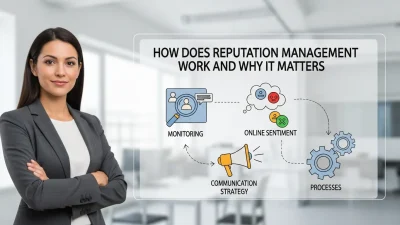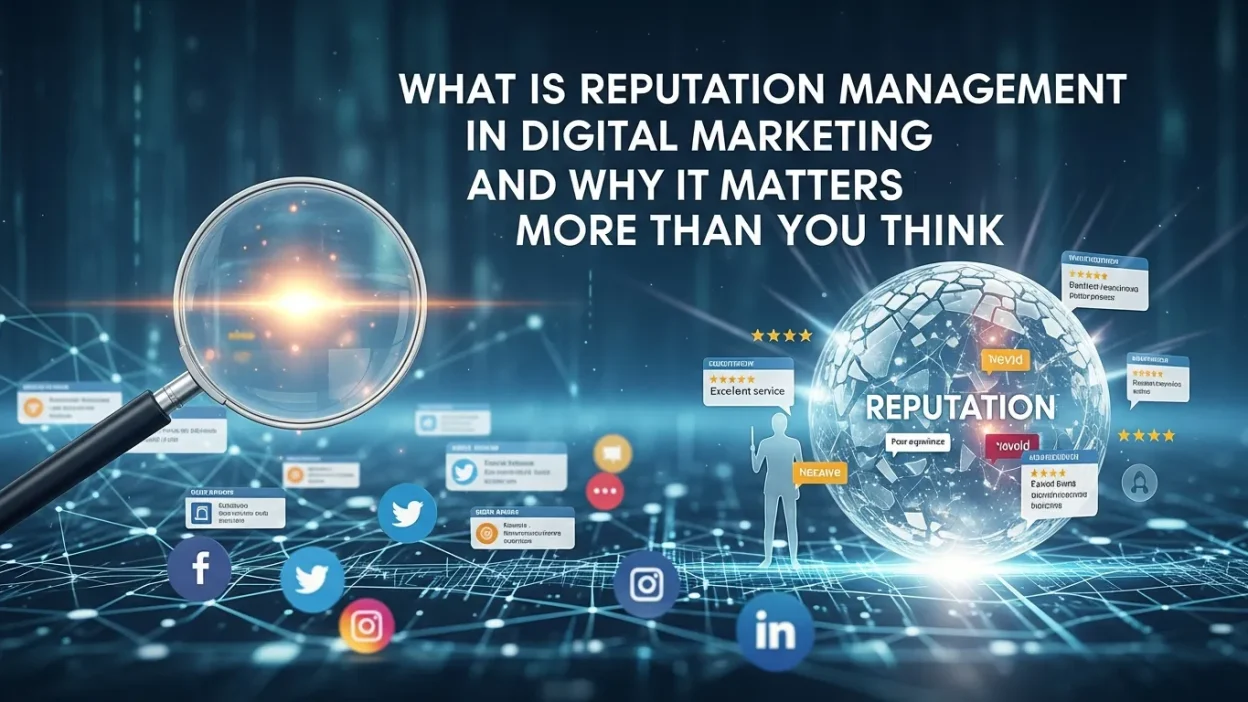
In an era where a single viral post can redefine your future, mastering Reputation Management in Digital Marketing is the ultimate safeguard for your professional and corporate success.
This comprehensive guide explores how Reputation Management in Digital Marketing functions as a strategic shield. We cover the shift to AI-driven monitoring, the nuances of search engine results management, and actionable tactics to convert negative feedback into sustainable brand growth and customer loyalty.
What is Reputation Management in Digital Marketing?
To define it simply, Reputation Management in Digital Marketing is the practice of monitoring, influencing, and maintaining the public perception of an entity across digital platforms. It is no longer enough to just “have a website.” In 2026, your brand exists in a fragmented ecosystem of social media, AI-driven search engines, and decentralized review portals.
The transition from traditional PR to digital reputation management means that conversations are now two-way, instantaneous, and permanent. Whether you are an individual professional or a global corporation, your digital footprint is your resume. Understanding Reputation Management in Digital Marketing involves curating this narrative to ensure that what people find online matches your true brand personality in marketing.
Why Reputation Management Matters More Than You Think
Many businesses treat reputation as an afterthought—something to fix only when a crisis hits. However, the matters of online reputation management are deeply tied to your bottom line.
1. The Power of First Impressions
When a prospect searches for your company, the search engine reputation management you have performed dictates their first impression. If the first page of Google is filled with unresolved complaints, your brand awareness efforts are essentially driving customers to your competitors.
2. Trust as Currency
Statistics consistently show that roughly 93% of consumers read online reviews before buying. In a world of luxury brand marketing or even CPG brand marketing, trust is the primary differentiator. Online reputation management ensures that this trust is nurtured through transparency and active engagement.
3. Impact on SEO and E-E-A-T
Google’s algorithms prioritize Experience, Expertise, Authoritativeness, and Trustworthiness (E-E-A-T). A brand with a poor reputation—marked by high bounce rates and negative sentiment—will struggle to rank, regardless of how good its SEO services are. Reputation Management in Digital Marketing is, therefore, a core component of modern search strategy.
Core Elements: The Pillars of a Reputation System
To execute a successful brand strategy framework, you must integrate several moving parts. Here is how the system ticks:
Monitoring Online Reviews and Feedback
Review management isn’t just about deleting the bad; it’s about monitoring customer feedback to understand the customer journey. Platforms like Google Business Profile, Yelp, and Trustpilot are the “front porch” of your business.
- What is customer review management? It is the process of soliciting, responding to, and analyzing customer feedback to improve service.
- Proactive Online Reputation Management: This involves setting up AI-powered sentiment analysis to catch shifts in public mood before they peak.
Search Engine Results Page (SERP) Management
Your goal is to own the narrative on page one. This is achieved through integrated marketing and content creation.
- Google Business Profile Optimizing: Keeping your local listing fresh with posts and photos.
- Ethical Link Building: Generating high-quality backlinks to positive press releases and guest posts to push negative content down.
- Social Media Monitoring and Engagement
What is social media monitoring? It is the act of using tools like Hootsuite or Brand24 to track every mention of your brand. In Reputation Management in Digital Marketing, social media acts as a real-time focus group.
-
Brand Voice Strategy: Your responses should be consistent with your brand voice, whether you are dealing with a compliment on Instagram or a “call-out” on X (Twitter).
Advanced Strategies: AI and Machine Learning

The landscape has changed with the introduction of AI-driven online reputation management. We are now in the era of advanced online reputation management, where algorithms do the heavy lifting.
AI-Powered Sentiment Analysis
Traditional keyword tracking is dead. Modern AI-powered online management uses natural language processing to detect the intent behind words. It can distinguish between a user being sarcastic and a user who is genuinely angry, allowing for a more nuanced customer feedback strategy.
Deepfakes and AI Reputation Management
One of the newest challenges is Deepfakes AI reputation management. Malicious actors can now create synthetic media to damage a brand. Part of a modern reputation management policy includes monitoring for unauthorized AI-generated content and having a “verified” content protocol.
Handling the Storm: Crisis Management and Recovery
Every brand will face a challenge eventually. The difference between survival and failure is your brand crisis management plan.
How to Create a Crisis Management Plan
- Identify the Crisis Team: Designate a spokesperson and a legal advisor.
- Immediate Response: Acknowledge the issue within the first hour. Reputation Management in Digital Marketing requires speed.
- Authentic Apology: Own the mistake. Avoid corporate jargon.
- Fix the Root Cause: Use learning online reputation management to ensure the error doesn’t happen again.
Recovering Online Reputation
If your brand has been damaged, recovering online reputation takes time. You must implement a brand resilience strategy that includes:
- Removing negative content: Utilizing legal channels if the content is defamatory or violates platform terms.
- Video Testimonials: Building trust with video testimonials from loyal clients to counter the negative narrative.
- Rebranding Case Studies: Sometimes, a brand refresh or full rebranding is necessary to signal a new chapter.
ROI and Business Value
Many ask about the ROI of online reputation management. It can be measured through:
- Lower Customer Acquisition Cost (CAC): Trusted customers convert faster.
- Higher Employee Satisfaction: People want to work for a company with a high brand equity in marketing.
- Brand Longevity: A strong reputation protects you against market volatility and competitive brand analysis.
Industry-Specific Reputation Tips
Real Estate
Online reputation tips for real estate agents focus on hyper-local trust. Since real estate is a high-ticket, emotional purchase, personal brand strategy is just as important as the corporate brand.
E-commerce
E-commerce reputation management relies on volume. Utilizing AI chatbots and machine learning to handle routine complaints can turn negative reviews into growth opportunities for e-commerce by showing rapid response times.
Luxury Brands
Luxury brand marketing requires a different touch. Here, sensory branding and brand purpose development are key. The reputation must feel exclusive, making brand safety in digital marketing a top priority.
Generative Engine Optimization (GEO): The Post-SEO Era
As AI-powered search (SGE) becomes the primary way users find information, Reputation Management in Digital Marketing must shift toward Generative Engine Optimization (GEO).
- Beyond Keywords: AI models synthesize reviews and articles to create summaries. If the consensus on Reddit or specialized forums is negative, the AI will report that as “fact.”
- Strategy: Building high-authority citations in diverse datasets (research papers, niche forums, and verified news) to influence the training data that AI models use to describe your brand.
The Rise of “Dark Social” Monitoring
A significant portion of online reputation management now happens in private spaces like WhatsApp, Telegram, and Discord. This “Dark Social” is invisible to traditional scrapers.
- Opportunity: Brands are now using influencer marketing services to place advocates within these private communities.
- Community Engagement: Instead of “monitoring” from the outside, companies are building their own Discord servers to centralize and moderate the conversation directly.
Hyper-Personalization via AI Chatbots and Machine Learning
In 2026, AI chatbots and machine learning will not justbe for FAQ. They are reputation-saving tools.
- Proactive Outreach: AI can now predict which customers are likely to leave a negative review based on their customer journey mapping and reach out with a resolution before the customer even vents online.
- Sentiment-Driven Routing: If a user’s tone is detected as “high-risk,” the AI immediately routes the chat to a high-level digital marketing expert.
Ethical Branding as a Competitive Advantage

Consumers are increasingly holding brands accountable for their “internal” reputation. Ethical branding is no longer a PR stunt; it’s a core brand positioning strategy.
- Transparency: Using blockchain to verify supply chain claims.
- Reputation Signal: Brands that prove their social impact through data, rather than just slogans, see a 25% higher brand equity score.
Managing Deepfakes and Synthetic Media Threats
The “Dark Side” of AI includes the ease of creating Deepfakes. A fake video of a CEO can wipe millions off a company’s valuation in minutes.
- Future Opportunity: Companies are investing in deepfakes AI reputation management, insurance, and real-time biometric verification for all public video statements.
- Media Buying Services: Using paid media to blast “Verification” notices across social networks during a synthetic media attack.
The “Human Premium” and Employee Advocacy
As AI-generated content floods the web, authentic human voices carry a “Trust Premium.” Personal branding vs reputation comes to the forefront here.
- Employees as Influencers: Training your team in personal brand strategy makes the corporate brand more resilient.
- Trust Factor: People trust an employee’s LinkedIn post 3x more than a corporate press release.
Regulatory Shifts: The Death of the “Incentivized Review.”
New global laws (like the UK’s DMCCA) have made it illegal to offer rewards for reviews.
- Strategic Shift: Customer review management must move toward “organic delight.”
- Action: Focusing on user experience and branding so that the product itself triggers the review, rather than a discount code.
Sonic Branding and Voice Search Reputation
With the proliferation of smart speakers and Gemini Live, how your brand sounds matters.
- Sonic Branding: Developing a specific brand voice and sound logo that AI assistants recognize.
- Voice SEO: Optimizing for natural language queries (e.g., “Who is the most trusted real estate agent near me?”) is now a vital part of local SEO services.
Integrating Customer Experience (CX) with Reputation
Reputation is the “output” of your customer experience integration.
- Feedback Loops: Using monitoring customer feedback to change product design in real-time.
- ROI: High CX scores directly correlate with high brand longevity challenges being overcome, as loyalists will defend the brand during a crisis.
The Metaverse and Immersive Reputation
As VR and AR commerce grow, your brand needs a physical-digital reputation.
- Avatar Branding: How your brand’s virtual representatives behave in digital spaces.
- Spatial SEO: Managing how your business is “rated” in augmented reality overlays (e.g., what someone sees when looking at your storefront through AR glasses).
Data Privacy as a Brand Asset
In 2026, a brand’s digital payment solution and data handling are reputation signals.
- Zero-Party Data: Brands that ask for permission and offer value in exchange for data build brand authority.
- Privacy-First Marketing: Moving away from invasive tracking to inbound marketing strategies that respect user boundaries.
Predictive Crisis Modeling
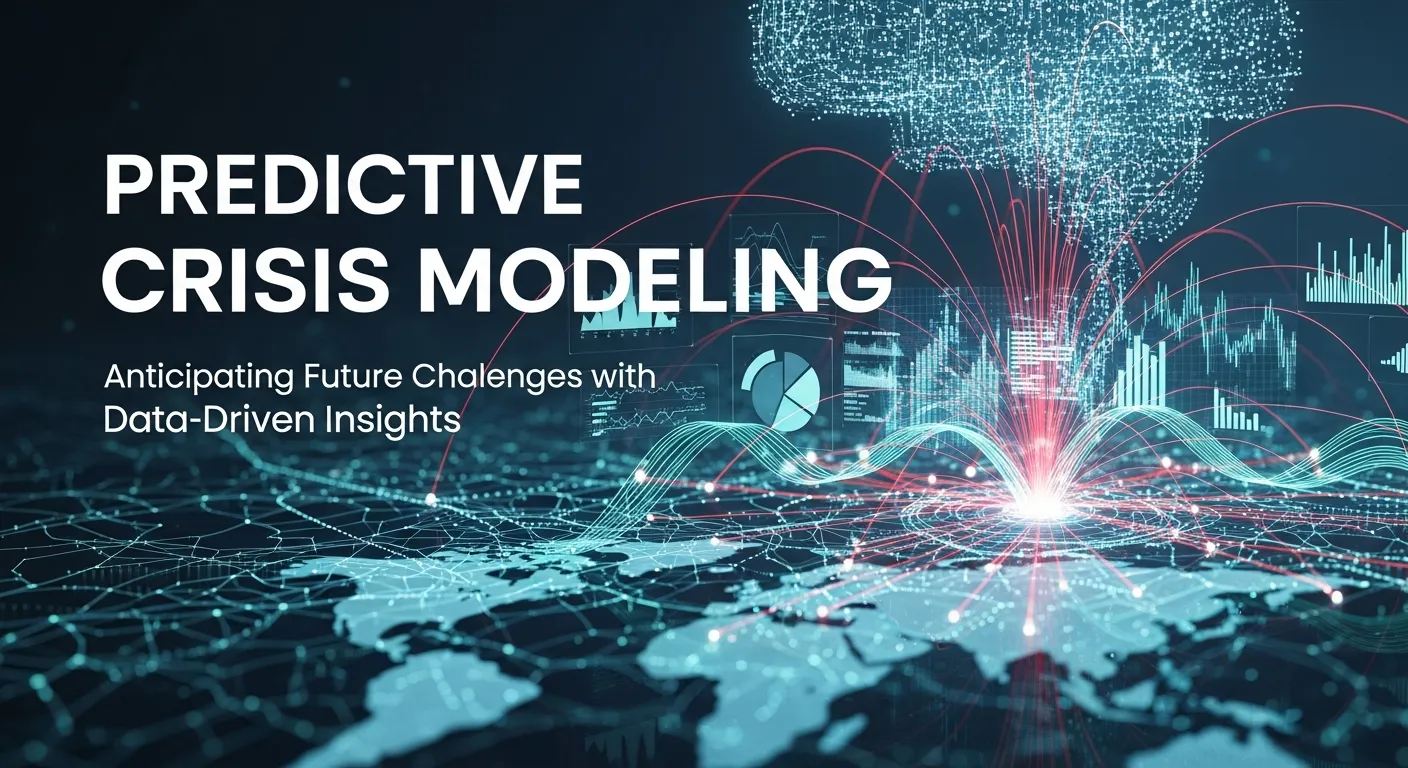
Instead of reacting to a crisis, the future is predictive trend marketing.
- Simulation: Using AI to run “stress tests” on your brand’s reputation. What happens if a shipment is late? What happens if a celebrity endorses a competitor?
- Crisis Management Plan: Having pre-recorded, verified responses ready for a dozen potential scenarios.
Collaborative Reputation: The Power of Co-Branding
Co-branding in marketing is a powerful way to “borrow” reputation.
- Strategic Partnerships: A startup partnering with a legacy brand to gain immediate brand perception in marketing points.
- Risk Management: Learning to vet a partner’s reputation as thoroughly as your own to avoid brand cannibalization.
Video SEO and the Visual Narrative
Video is the most consumed content type. Video SEO is now a mandatory part of Reputation Management in Digital Marketing.
- Action: Dominating the “Video” tab on Google with video testimonials and “behind-the-scenes” content.
- YouTube Discussion: Engaging with creators who review your product to ensure the visual narrative is balanced.
The Chief Reputation Officer (CRO)
The ultimate future opportunity is the professionalization of this field. We are seeing the rise of the Chief Reputation Officer.
- Role: This executive sits between Marketing, Legal, and Operations.
- Mission: Ensuring brand alignment across every department, from how the software development services are coded to how the outbound email marketing is worded.
Comparison of Current vs. Future Reputation Metrics
| Metric | 2024 Standards | 2026+ Future Standards |
| Primary Goal | Star Rating (4.5+) | Trust Coefficient & AI Citation Frequency |
| Tooling | Manual Review Sites | AI-Driven Trend Forecasting |
| Key Channel | Search Engines (Links) | Generative AI & Immersive Spaces (AR/VR) |
| Response Time | 24 Hours | Real-Time Automated Interaction |
| Brand Control | Centralized PR | Decentralized Employee Advocacy |
Share of Model (SOM): The New Reputation Metric
In the age of AI, “Share of Voice” is evolving into Share of Model (SOM). This measures how often and how positively your brand is cited by LLMs like Gemini, ChatGPT, and Claude.
- The AI Gatekeeper: AI models now act as advisors. If an AI doesn’t “know” your brand’s expertise, you essentially don’t exist for 45% of consumers using AI for recommendations.
- Actionable Tactic: Focus on Answer Engine Optimization (AEO) by providing direct, structured data that AI can easily ingest and cite.
The “Golden Moment” vs. The Golden Hour
The traditional “Golden Hour” to respond to a crisis has shrunk to the Golden Moment—a 15 to 30-minute window.
- Algorithmic Firestorms: Automated bots and algorithms can amplify a negative narrative to millions before a human moderator even logs in.
- The Technical Defense: Brands must have pre-verified “Content Credentials” (C2PA) to prove that their official statements are real and not AI-generated fakes.
Fighting “AI Slop” with Radical Authenticity
The internet is being flooded with “AI slop”—low-quality, synthetic content. This creates a massive trust deficit.
- The Human Premium: In Reputation Management in Digital Marketing, “human-made” is becoming a luxury signal.
- Actionable Tactic: Use Video Testimonials and raw, “behind-the-scenes” employee content to prove there are real people behind the corporate logo.
Reddit: The New Reputation Battleground
As search engines prioritize “hidden gems” and forum discussions, Reddit has become the primary source for unfiltered truth.
- Unvarnished Feedback: AI models frequently use Reddit to determine if a brand is “actually good” or just has a good PR team.
- Strategy: Authentic engagement in subreddits (without marketing speak) is now a mandatory part of Business Reputation Management.
Biometric and Digital Identity Protection
With the rise of identity theft and executive impersonation, protecting the “faces” of your brand is critical.
- Executive Reputation: Managing the digital identity of your C-suite is now a security task as much as a marketing one.
- Opportunity: Implementing biometric-verified communication channels to ensure that stakeholders know a message from the CEO is genuine.
Bionic PR: Human Empathy + AI Speed
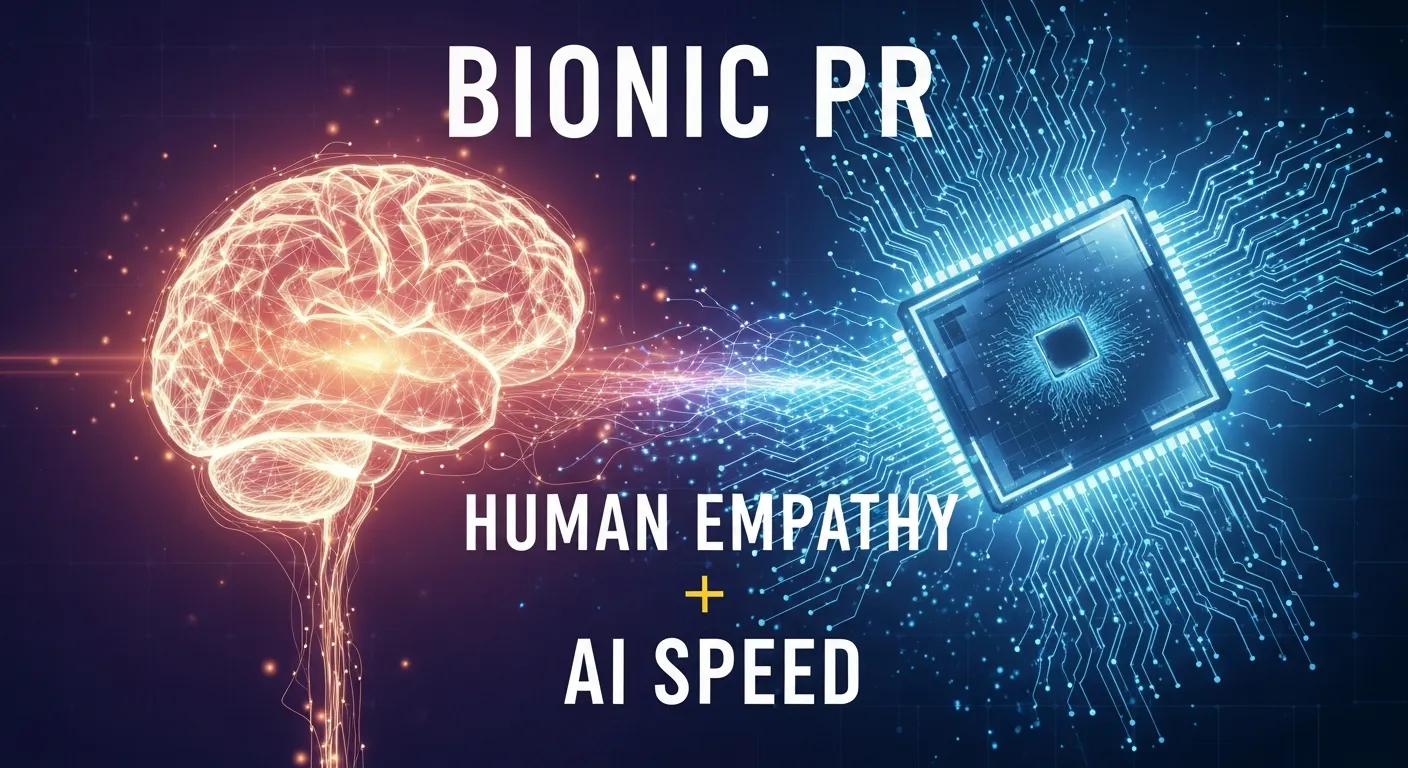
The future of PR is “bionic.” This means using AI to process thousands of mentions in seconds while leaving the emotional nuances to humans.
- Sentiment Precision: AI-powered sentiment analysis can now detect “sarcasm” and “cultural context” with 90%+ accuracy.
- Opportunity: Use AI to draft the first 10 versions of a response, but have a human “Empathy Officer” select and refine the final message.
Global Regulatory Compliance (DMCCA & FTC)
2026 brings the hammer down on “fake” engagement. Under the UK’s DMCCA and new FTC guidelines, businesses are legally responsible for the integrity of their reviews.
- The End of Incentives: Offering discounts for reviews is now a high-risk legal liability.
- Strategy: Move toward Sustainable Online Reputation Management by focusing on organic “customer delight” triggers rather than artificial boosters.
Predictive Crisis Modeling & Stress Testing
Don’t wait for a crisis to happen; simulate it.
- AI War Rooms: Use AI to act as a “hostile critic” or a specific internet subculture to stress-test your marketing campaigns before they launch.
- Opportunity: Identify “Reputation Vulnerabilities” in your Brand Strategy Road Map before they can be exploited by competitors.
Zero-Click Search & Knowledge Graph Supremacy
Over 60% of searches now end without a click. Users get their information directly from the search result page.
- Entity Recognition: If your brand doesn’t have a robust Google Business Profile or a verified Wikipedia entry, AI assistants may ignore you.
- Actionable Tactic: Treat your Knowledge Panel as your “new homepage.” It must be the most accurate reflection of your brand online.
The Chief Reputation Officer (CRO) as a Core Role
Reputation is no longer a sub-task of the Marketing Manager. We are seeing the rise of the Chief Reputation Officer.
- Cross-Functional Leadership: The CRO aligns Legal, Marketing, and Customer Service to ensure a unified Brand Voice Strategy.
- Metric of Success: They are measured not by “likes,” but by Brand Resilience—how quickly the brand’s stock or sales recover after a negative event.
Comparison: Reputation Channels of 2026
| Channel | Priority Level | Strategic Focus |
| AI Assistants | Critical | Being cited as a trusted source. |
| Niche Forums (Reddit) | High | Authentic community participation. |
| Short-Form Video | High | Visual proof and “Human Premium” content. |
| Traditional News | Medium | Backlink authority and “halo” effect. |
Reputation in the Age of AI Answer Engines (GEO vs. SEO)
In 2026, the traditional search landscape has been disrupted by Generative Engine Optimization (GEO). Consumers no longer just scroll through links; they ask AI agents (like Gemini, ChatGPT, or Perplexity) for summaries.
- The “Citation” War: Your reputation now depends on being a cited source in AI-generated responses. If an AI agent summarizes your brand as “unreliable” based on a few old forum posts, your sales will crater before the user ever hits your site.
- Semantic Authority: Reputation Management in Digital Marketing now requires building “semantic clusters” of positive information. This means ensuring your brand is mentioned alongside positive sentiment on high-authority platforms like Wikipedia, Reddit, and industry-specific journals that AI models use for training.
- Opportunity: Use tools like LLMrefs or Spotlight to monitor your “Share of Model”—a new metric that tracks how often and how favorably AI models recommend your brand compared to competitors.
Radical Transparency and the “Open-Source” Brand Narrative
The 2026 consumer is cynical about polished PR. They value Radical Transparency—the practice of airing your own flaws and how you’re fixing them before someone else does.
- The “Build in Public” Reputation: Brands that share their supply chain challenges, diversity stats, and even product failures in real-time are winning the trust of Gen Z and Gen Alpha.
- Vulnerability as a Shield: By being the first to report a mistake, you control the narrative. This proactive online reputation management strategy prevents “cancel culture” from gaining traction because the brand has already addressed the issue with a Business Recovery Plan.
- Actionable Tactic: Host monthly “Reputation Town Halls” via webinars where leadership answers unfiltered customer questions, demonstrating an unbreakable commitment to ethical branding.
Biometric Trust and the Protection of Digital Personas
As Deepfakes become indistinguishable from reality, protecting the “faces” of your brand—executives, founders, and influencers—is a critical pillar of corporate reputation management.
- Identity Watermarking: In 2026, reputable brands are using C2PA (Content Provenance and Authenticity) standards to “watermark” their official videos. This allows consumers to verify that a video of your CEO is legitimate and not a synthetic smear campaign.
- The Executive Shield: Managing the personal reputation of high-level leaders is no longer optional. A single AI-generated fake audio clip of an executive can tank stock prices.
- Opportunity: Offer “Verified Human” badges on all your video testimonials and executive communications. This not only protects the brand but creates a luxury brand marketing strategy focused on authenticity in a world of “AI slop.”
Strategic Summary: The 2026 Reputation Stack
| Component | Focus Area | 2026 Competitive Advantage |
| GEO Strategy | AI Chatbots/Summaries | Ensuring your brand is a “Preferred Recommendation.” |
| Human Premium | Radical Transparency | Building trust through unpolished, real-time updates. |
| Content Provenance | Deepfake Protection | Using blockchain/watermarks to verify official voice. |
| Social Listening | AI Sentiment Analysis | Identifying “Vibe Shifts” before they become crises. |
Conclusion
Reputation Management in Digital Marketing is not just about cleaning up mistakes; it is about building a proactive, resilient identity. By integrating AI-driven trend forecasting with authentic brand storytelling, you move from being a passenger in your brand’s narrative to being the driver. In the digital economy of 2026, your reputation is your most stable asset—invest in it wisely.
FAQs
1. What is reputation management in digital marketing?
Reputation management in digital marketing is the strategic process of shaping public perception online. It involves monitoring brand mentions, managing reviews, creating positive content, and responding to feedback across search engines, social media, forums, and review platforms.
Its purpose is not just damage control, but long-term trust building—ensuring your brand narrative remains accurate, credible, and competitive.
2. How can I monitor my business reputation online?
You can start with free tools like Google Alerts, which notify you when your brand is mentioned online.
For deeper insights, professional platforms such as SEMrush and Hootsuite offer advanced social listening, sentiment analysis, competitor tracking, and historical data—essential for scalable online reputation management.
3. What is the difference between personal branding and reputation?
Personal branding is proactive and intentional—it’s how you design your message, positioning, and online presence. Reputation is reactive and earned—it’s how the public perceives you based on reviews, experiences, behavior, and third-party content.
Strong reputation management aligns branding with reality so your intended image is consistently reinforced by real-world proof.
4. How do you remove fake reviews?
You generally cannot delete reviews yourself. However, fake or policy-violating reviews can be reported to platforms like Google and Yelp if they involve spam, harassment, conflicts of interest, or false information.
When removal isn’t possible, negative content management strategies—such as publishing positive content and acquiring authentic reviews—help suppress harmful visibility.
5. Why do I need online reputation management for my small business?
Because trust drives purchasing decisions. The majority of consumers read reviews before contacting a business, and a few negative reviews can dominate search visibility.
Without active reputation management, even one unresolved complaint can overshadow years of good work, pushing potential customers toward competitors who appear more credible online.
6. What is AI-powered sentiment analysis?
AI-powered sentiment analysis uses machine learning and natural language processing to assess the emotional tone of customer mentions in real time.
It helps brands understand not just what people are saying, but how they feel—allowing faster responses to dissatisfaction, early crisis detection, and smarter decision-making at scale.
7. How does customer feedback build a brand?
Customer feedback strengthens a brand by revealing what works and what needs improvement. Positive feedback highlights strengths you should amplify, while negative feedback identifies gaps you can fix.
When acted upon transparently, feedback creates a loop of continuous improvement that increases trust, loyalty, and long-term brand equity.
8. What is a brand audit?
A brand audit is a structured evaluation of how your brand is currently perceived across search engines, reviews, social media, competitors, and customer sentiment.
It identifies gaps between your goals and public perception, uncovering risks, missed opportunities, and areas where reputation strategy needs refinement.
9. How do video testimonials help reputation?
Video testimonials are powerful because they show real people, real emotions, and real experiences—making them more credible than text reviews.
They improve engagement, enhance trust signals, and often rank prominently in search results, making them a key asset in modern online reputation strategies.
10. Can SEO help my reputation?
Yes. Search engine reputation management (SERM) uses SEO techniques to ensure that positive, owned, and authoritative content—such as blogs, profiles, and media features—ranks higher than negative or outdated third-party content.
Since most users never scroll past page one, SEO directly shapes how your reputation is perceived.
You can learn more: What Is Search Engine Reputation Management