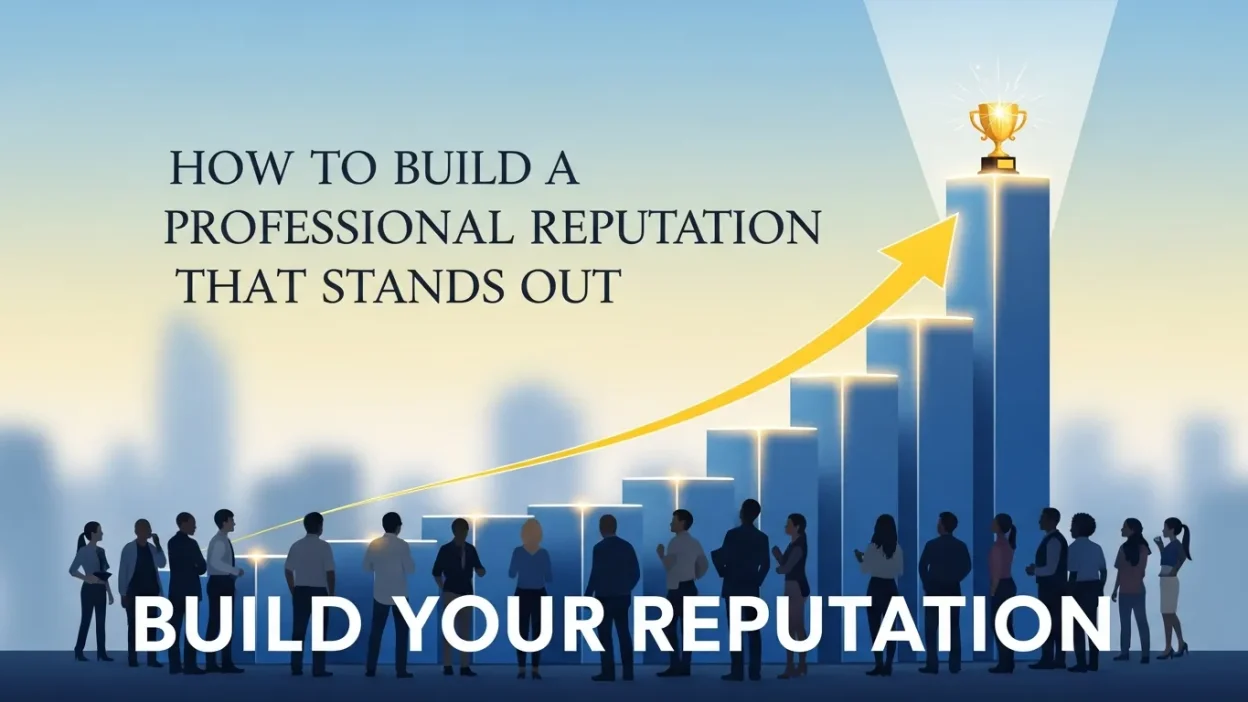
Your career success depends not only on skills but on perception. Learning how to build a professional reputation ensures trust, credibility, and long-term professional growth.
Building a strong professional reputation requires competence, integrity, visibility, and consistency. This guide explains how to build a professional reputation through personal branding, online reputation management, AI-powered tools, feedback systems, and crisis preparedness—helping professionals and businesses create sustainable trust and authority.
What Does It Really Mean to Build a Professional Reputation?
Understanding how to build a professional reputation begins with a clear understanding of what reputation truly represents in a professional context. A professional reputation is not a single action, title, or achievement—it is the accumulated perception others form over time based on repeated interactions, outcomes, and experiences.
Your professional reputation is shaped by how consistently you show up, how effectively you deliver value, and how people feel after working with you. It exists whether you actively manage it or not, and once formed, it significantly influences career opportunities, trust levels, and long-term success.
At its core, a professional reputation is built on several interconnected dimensions:
- Your behavior: How you conduct yourself in meetings, under pressure, during conflict, and when no one is watching. Professionalism, accountability, and emotional intelligence play a critical role in shaping perception.
- Your expertise: The depth of your knowledge, your ability to solve problems, and the quality of results you deliver. Demonstrated competence is essential when learning how to build a professional reputation that commands respect.
- Your reliability: Whether people can depend on you to meet deadlines, follow through on commitments, and maintain consistency over time. Reliability reinforces trust and predictability.
- Your digital footprint: What appears when someone searches your name online, including LinkedIn activity, published content, reviews, and social media presence. In today’s world, online reputation management is inseparable from professional reputation.
- Your communication style: How clearly, respectfully, and transparently you communicate with colleagues, clients, and stakeholders. Strong communication strengthens relationships and reduces misunderstandings.
Unlike personal branding, which is largely self-created and message-driven, a professional reputation is experience-driven and shaped by others. Personal branding is what you claim about your skills and values; reputation is what people confirm through direct interaction and observable outcomes.
This distinction is critical. You can promote yourself effectively, but if your actions don’t align with your message, your reputation will eventually override your brand narrative. That’s why learning how to build a professional reputation requires aligning behavior, performance, and presence—both online and offline.
Ultimately, your professional reputation answers one powerful question for others:
“Can I trust this person to deliver value consistently and ethically?”
When the answer is yes, opportunities follow.
Personal Branding vs Reputation
| Aspect | Personal Branding | Professional Reputation |
|---|---|---|
| Control | Self-driven | Public-driven |
| Focus | Messaging | Experience |
| Timeline | Short-term | Long-term |
| Trust | Aspirational | Earned |
Understanding this difference is foundational to building a professional reputation that lasts.
The Core Pillars of a Strong Professional Reputation

1. Competence: The Foundation of a Strong Professional Reputation
When learning how to build a professional reputation, integrity is the pillar that determines whether trust survives pressure. Skills may attract opportunities, but integrity determines whether those opportunities last. In professional environments, trust compounds faster than talent—and once broken, it is extremely difficult to restore.
Integrity means acting consistently with ethical standards, even when it is inconvenient or invisible. It is reflected not only in major decisions but also in everyday conduct.
Practice Transparency in All Interactions
Transparency builds confidence and reduces uncertainty.
- Communicate honestly about capabilities and limitations
- Set realistic expectations with clients, teams, and stakeholders
- Share progress updates openly—especially when challenges arise
Transparent professionals are seen as dependable because they eliminate surprises, a critical factor in building a professional reputation that others trust.
Own Mistakes Without Deflection
Mistakes are inevitable. How you respond to them defines your character.
- Acknowledge errors promptly
- Avoid excuses or shifting blame
- Focus on solutions and corrective action
Taking responsibility demonstrates maturity and accountability—two traits that strongly influence corporate reputation management and personal credibility.
Respect Confidentiality and Boundaries
Trust erodes quickly when sensitive information is mishandled.
- Protect client data and internal discussions
- Avoid gossip or oversharing
- Handle privileged information with discretion
Respecting confidentiality signals professionalism and ethical awareness, making integrity a cornerstone of both personal reputation management and organizational trust.
3. Relationship Skills: How You Make People Feel Matters
Your professional reputation is not built in isolation—it is shaped by interactions. Understanding how to build a professional reputation means recognizing that people remember experiences more than achievements. Strong relationship skills determine whether others want to work with you again.
Practice Empathy Consistently
Empathy improves communication, reduces conflict, and strengthens collaboration.
- Listen actively instead of reacting defensively
- Consider perspectives beyond your own
- Acknowledge emotions during disagreements
Empathetic professionals are perceived as emotionally intelligent and trustworthy—qualities essential for leadership and long-term influence.
Collaborate Instead of Competing Internally
Collaboration strengthens reputation far more than individual wins.
- Share credit generously
- Support team goals over ego
- Offer help without being asked
Collaborative behavior directly supports customer feedback strategy, internal morale, and cross-functional success.
Resolve Conflict Professionally
Conflict is unavoidable, but reputation damage is not.
- Address issues early
- Focus on facts, not personalities
- Seek solutions instead of victories
Professionals who handle conflict calmly and constructively often become trusted mediators, reinforcing stakeholder trust and contributing to effective business recovery plans when challenges arise.
4. Visibility: Reputation Cannot Grow in Silence
One of the most overlooked aspects of how to build a professional reputation is visibility. Excellence without exposure limits impact. If people don’t see your work, they cannot recognize its value.
Visibility is not self-promotion—it is strategic contribution.
Speak at Events and Industry Forums
Sharing knowledge publicly positions you as a subject-matter authority.
- Participate in conferences, webinars, and panels
- Offer insights based on real-world experience
- Engage in meaningful discussions
Public speaking enhances credibility and strengthens brand perception in marketing and professional ecosystems.
Publish Insights That Educate and Add Value
Content builds reputation at scale.
- Write articles, blogs, or LinkedIn posts
- Share case studies and lessons learned
- Explain complex topics in simple terms
Publishing thought leadership supports online reputation management, improves discoverability, and reinforces expertise in search results.
Share Results Responsibly and Authentically
Visibility must be balanced with humility and accuracy.
- Share achievements without exaggeration
- Use data to support claims
- Credit collaborators appropriately
Responsible visibility strengthens search engine reputation management while maintaining authenticity and trust.
Why Professional Reputation Matters More Than Ever
Understanding how to build a professional reputation has become critical in today’s digital-first economy, where perception often precedes interaction. Long before meetings, interviews, or contracts, people form opinions based on what they find online. In many cases, decisions are made before a single conversation takes place.
In the modern professional landscape:
- Employers Google candidates to evaluate credibility, consistency, and cultural fit before interviews
- Clients read reviews and testimonials to assess reliability and trustworthiness
- Business partners analyze online sentiment across social media, search engines, and professional platforms
Every search result, comment, and review contributes to a narrative about who you are and how you operate. This reality explains why you need online reputation management as a core professional strategy—not a reactive afterthought.
The Digital Footprint Effect
Your digital footprint is now an extension of your professional identity. LinkedIn profiles, Google search results, articles, videos, customer feedback, and even tagged social media posts collectively influence reputation. Without proactive online reputation management, this footprint can become fragmented, outdated, or misleading.
Professionals and businesses that actively manage their presence through search engine reputation management, review management services, and social media monitoring maintain control over how they are perceived.
The Strategic Advantages of a Strong Professional Reputation
A well-managed reputation delivers measurable advantages:
- Increased job security: Trusted professionals are more resilient during organizational changes, layoffs, or economic downturns
- Enhanced brand equity: Strong reputations elevate both personal and corporate brands, increasing perceived value
- Stronger leadership credibility: People are more willing to follow leaders with proven integrity and consistency
- Higher ROI of online reputation management: Positive sentiment reduces acquisition costs, shortens sales cycles, and improves conversion rates
A strong reputation becomes a competitive advantage that compounds over time, reinforcing why learning how to build a professional reputation is a long-term investment.
The Cost of a Poor Professional Reputation
Failing to understand how to build a professional reputation can be far more expensive than most professionals realize. Reputation damage doesn’t always happen suddenly—it often erodes quietly until opportunities disappear without explanation.
The consequences include:
- Lost career opportunities: Employers and clients may exclude you without feedback or discussion
- Damaged trust: Once confidence is lost, rebuilding credibility can take years
- Reduced authority and influence: Your voice carries less weight in decision-making environments
- Long and complex recovery cycles: Repairing reputation often requires significant time, effort, and resources
The Escalation Risk of Unmanaged Feedback
Negative reviews, misinformation, outdated content, or unresolved complaints can escalate rapidly—especially in digital environments where visibility is high and attention spans are short. Without proactive online reputation management, small issues can snowball into long-term damage.
Unaddressed challenges such as:
- Negative reviews left unanswered
- False or misleading content
- Poor customer feedback handling
- Inconsistent messaging
can weaken trust and stall professional growth.
How to Build a Professional Reputation Step by Step
Understanding how to build a professional reputation requires more than good intentions—it demands structured, repeatable actions. Reputation is not built overnight; it is created through consistent behaviors, strategic visibility, and deliberate reputation management. The following steps outline a practical framework professionals can apply across industries and career stages.
1. Master Your Craft Relentlessly
Competence is the foundation of how to build a professional reputation. Without demonstrable expertise, visibility, and branding efforts lack substance. Professionals who are respected long-term are those who consistently deliver value through skill, insight, and execution.
Actionable Ways to Strengthen Competence:
- Earn relevant certifications to validate expertise and demonstrate commitment to excellence
- Attend workshops, webinars, and industry conferences to stay current with best practices
- Study industry trends to anticipate change rather than react to it
- Learn AI-driven online reputation management tools to understand sentiment, visibility, and perception
Professionals who leverage AI chatbots and machine learning for analytics, customer response workflows, and performance insights gain a strategic advantage. These tools improve accuracy, efficiency, and decision-making—qualities that significantly enhance professional credibility.
Mastery signals seriousness. When others see you investing in growth, they associate your name with competence and authority.
2. Deliver Consistently and Predictably
Reputation is built on reliability. One strong performance can create interest, but consistency creates trust. Understanding how to build a professional reputation means recognizing that people trust patterns—not promises.
Best Practices for Reliable Performance :
- Under-promise and over-deliver whenever possible
- Maintain documentation for projects, processes, and commitments
- Track deliverables and timelines to ensure accountability
Consistent delivery strengthens business reputation management and reinforces leadership trust. Predictability reduces friction, increases confidence, and positions you as someone others can rely on—especially during high-stakes or high-pressure situations.
3. Communicate With Intent and Empathy
Communication is one of the most visible indicators of professionalism. Strong communication is essential to how to build a professional reputation, particularly in digital and hybrid work environments.
Effective communication supports:
- Conflict resolution by reducing misunderstandings
- Handling negative feedback constructively and professionally
- Crisis management services, where clarity and tone matter most
In reputation management in social media and digital workplaces, communication happens publicly and permanently. Thoughtful language, timely responses, and emotional intelligence protect credibility and reinforce trust.
Professionals who communicate with empathy—not ego—are seen as leaders, not just contributors.
4. Build a Strategic Personal Brand
Personal branding amplifies reputation when aligned with real performance. A strategic personal brand ensures that what people see aligns with what they experience.
Core Elements of an Effective Personal Brand:
- A clear value proposition that defines what you do and why it matters
- Consistent messaging across platforms and interactions
- A professional tone online, even in informal spaces
Publishing insights on topics such as what digital reputation management is or how to monitor business reputation online demonstrates subject-matter expertise and thought leadership. This content not only increases visibility but also reinforces authority and relevance.
When personal branding reflects genuine capability, it accelerates how to build a professional reputation rather than undermining it.
5. Use Online Reputation Management Intentionally
Your digital footprint shapes perception long before personal interaction occurs. In modern careers, online reputation management is inseparable from professional reputation.
Key Platforms That Influence Reputation
- LinkedIn, for professional identity and authority
- Google Business Profile, especially for consultants, executives, and service professionals
- Industry forums and communities, where peer perception forms
- Review platforms, which influence trust and credibility
Optimizing Google Business Profile optimizing, using review management services, and implementing social media monitoring are critical steps in controlling narrative and visibility.
Intentional online reputation management ensures accuracy, consistency, and alignment across channels—protecting and enhancing your professional image at scale.
AI-Powered Online Reputation Management

Modern reputation building has evolved far beyond manual monitoring and reactive responses. Today, understanding how to build a professional reputation requires leveraging intelligent systems that analyze, predict, and protect perception at scale. This is where AI-powered online reputation management becomes a strategic advantage rather than a technical add-on.
What AI Brings to Reputation Management
AI-driven tools transform reputation management from reactive to proactive by enabling:
- AI-powered online management that automates review tracking, alerts, and response prioritization
- AI-driven sentiment analysis that evaluates emotional tone across reviews, comments, and social conversations
- Automated brand monitoring services that track mentions across search engines, news platforms, forums, and social media in real time
These tools help professionals and organizations:
- Monitor customer feedback continuously
- Detect negative content before it escalates
- Identify crisis early warnings through sentiment shifts and anomaly detection
Online reputation management with AI and social listening allows professionals to anticipate issues, respond strategically, and maintain control over public perception—an essential capability in fast-moving digital environments.
How to Handle Negative Feedback Without Damage
Negative feedback is inevitable, regardless of expertise or experience. What separates respected professionals from vulnerable ones is how they respond. Mastering this response is a critical part of how to build a professional reputation that remains resilient under pressure.
Best Practices for Handling Negative Feedback
- Respond calmly: Emotional reactions amplify damage and erode credibility
- Acknowledge concerns: Recognition validates the experience, even if you disagree
- Offer resolution: Shift the conversation from complaint to solution
- Document patterns: Repeated feedback often reveals systemic issues worth fixing
Handled correctly, criticism becomes a feedback loop for improvement rather than a reputational threat. This mindset transforms negative reviews into growth opportunities for e-commerce and service professionals, strengthening trust and long-term loyalty.
How to Manage a Negative Review Professionally
Public reviews shape perception quickly. Knowing how to build a professional reputation includes mastering the mechanics of public response.
Step-by-Step Review Management Process
- Respond publicly with empathy to demonstrate accountability and care
- Take the discussion offline to avoid escalation and protect privacy
- Resolve transparently, offering clear explanations or corrective steps
- Follow up to show commitment and closure
Professionals should also understand how to remove fake reviews through platform policies, documentation, and appeals. This capability is a core component of advanced online reputation management, especially in competitive or high-visibility industries.
Digital Reputation Management in the AI Era
As AI advances, reputation risks have grown more complex. Learning how to build a professional reputation today also means defending it against emerging digital threats.
Key AI-Driven Reputation Risks
- Deepfakes AI reputation management risks, including fabricated videos or audio
- Fake testimonials designed to mislead audiences
- Manipulated content that distorts context or intent
To counter these risks, professionals and organizations must implement:
- A formal reputation management policy
- Content verification and identity authentication tools
- Continuous monitoring systems for anomaly detection
Proactive defense ensures credibility remains intact even in an environment where misinformation spreads rapidly.
Building Trust With Video Testimonials
Trust is increasingly visual. Written claims are easy to doubt—but faces, voices, and real stories humanize credibility. Video testimonials have become a powerful asset in how to build a professional reputation that feels authentic and verifiable.
Why Video Testimonials Matter
Video testimonials:
- Increase authenticity by showing real people and experiences
- Improve brand perception through emotional connection
- Enhance conversion by reducing skepticism and uncertainty
They are particularly effective for:
- Building trust with video testimonial strategies
- Luxury brand marketing, where credibility and emotion drive value
- Personal brand strategy, where reputation depends on relatability and proof
When used responsibly, video testimonials reinforce integrity, transparency, and trust—qualities central to sustainable reputation growth.
Frequently Asked Questions (FAQs)
1. How long does it take to build a professional reputation?
Building a professional reputation often takes several months of consistent performance before noticeable trust is established. However, sustaining authority and credibility requires years of deliberate effort. Reputation compounds through repeated positive experiences, meaning every interaction either strengthens or weakens how you are perceived. This is why understanding how to build a professional reputation is a long-term commitment rather than a short-term goal.
2. What is the difference between personal branding and reputation?
Personal branding is the message you intentionally project—your positioning, values, and expertise. Reputation, on the other hand, is how others actually experience and describe you based on real interactions and outcomes. While personal branding can shape first impressions, reputation ultimately validates or disproves those claims. Aligning both is essential to how to build a professional reputation that feels authentic and trustworthy.
3. Why is online reputation management important for professionals?
Online reputation management matters because employers, clients, investors, and partners often form opinions before direct contact. Search results, reviews, social media activity, and published content influence credibility. Without proactive online reputation management, outdated or negative information can dominate perception, limiting opportunities and growth.
4. How can AI help manage a professional reputation?
AI-powered sentiment analysis and social listening tools help professionals monitor public perception in real time. These systems detect emotional tone, identify emerging risks, and automate alerts across platforms. AI-driven online reputation management reduces response time, improves accuracy, and supports proactive decision-making—an essential advantage in modern reputation strategy.
5. How should professionals respond to negative reviews?
Negative reviews should be addressed with empathy, transparency, and a clear resolution path. A calm, respectful response demonstrates accountability and professionalism. Defensive or dismissive reactions often escalate issues and damage trust. Effective handling of criticism is a critical skill in how to build a professional reputation that remains resilient.
6. Can fake reviews damage a professional reputation?
Yes, fake or malicious reviews can harm credibility if left unaddressed. Most platforms provide mechanisms to report and remove fraudulent content through documentation and policy enforcement. Knowing how to identify and escalate fake reviews is a core part of advanced online reputation management.
7. What role does LinkedIn play in reputation building?
LinkedIn serves as a primary credibility platform for professionals. It supports visibility, authority, and networking when used strategically. Consistent posting, thoughtful engagement, and a well-optimized profile reinforce expertise and professional reliability, making LinkedIn a key channel in how to build a professional reputation.
8. How does customer feedback build reputation?
Customer feedback acts as social proof. Positive feedback validates trust, while constructive criticism highlights opportunities for improvement. Monitoring and responding to feedback publicly demonstrates accountability and commitment to quality, strengthening overall perception and long-term credibility.
9. Is reputation management only for businesses?
No. Reputation management is equally critical for individuals. Executives, founders, consultants, freelancers, and job seekers all rely on personal reputation to secure opportunities and influence decisions. Personal reputation management is a vital component of career sustainability and professional growth.
10. What is the biggest mistake in reputation building?
The most common mistake is inconsistency—between words, actions, and online presence. Misalignment erodes trust quickly. Professionals who succeed in how to build a professional reputation ensure that messaging, behavior, and digital footprint consistently reinforce the same values and standards.
You can Learn about: Online Reputation Management for Your Business